Structural steel assembly errors can lead to costly delays, safety risks, and rework on site. For operators and users involved in installation, understanding the most common mistakes in structural steel assembly—and how to fix them—is essential for improving accuracy, efficiency, and long-term performance. This guide outlines practical problems and solutions to help ensure reliable results in real project conditions.
What are the most common structural steel assembly errors?
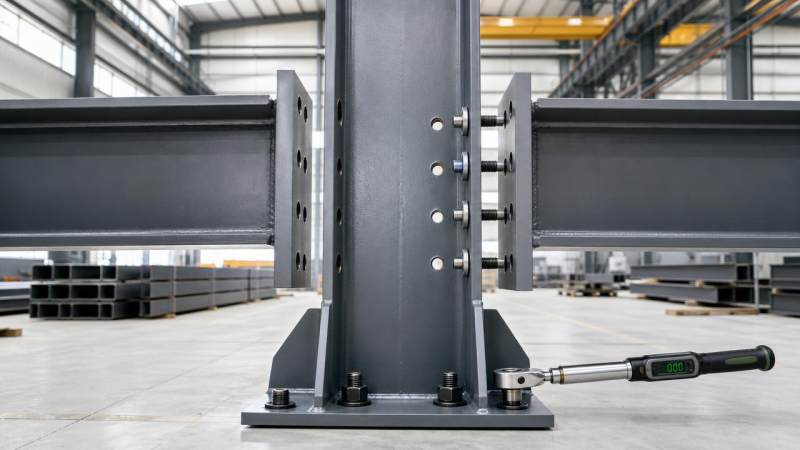
The most frequent structural steel assembly problems begin before lifting starts. Small planning gaps often become major fit-up issues during erection.
Common structural steel assembly errors include wrong member orientation, mismatched hole alignment, poor bolt tightening, missing shims, and inaccurate base positioning.
Surface contamination is another issue. Rust scale, paint on contact surfaces, and debris can reduce friction performance and affect connection quality.
Some teams also assemble components without checking erection marks carefully. That creates confusion between similar beams, channels, braces, or custom fabricated parts.
In structural steel assembly, mistakes usually come from three sources:
- drawing interpretation errors
- dimensional control failures
- connection and sequencing mistakes
When these issues combine, structural steel assembly becomes slower, less safe, and more expensive. Early identification is the fastest way to control downstream losses.
Why do alignment and fit-up problems happen so often?
Alignment problems are among the biggest causes of structural steel assembly delay. They often appear when foundation tolerances and fabricated dimensions do not match.
Base plates may sit unevenly. Anchor bolts may shift slightly. Column plumbness may drift during temporary bracing. Each small deviation affects the next connection.
Fit-up trouble also occurs when members are lifted in the wrong order. A rigid frame may lock before final adjustment is possible.
Typical signs of alignment failure
- bolt holes require forcing or drifting
- gaps appear at splice plates
- members twist under temporary restraint
- deck or railing lines look visually inconsistent
The best fix is not force. Forcing parts together can damage holes, reduce connection performance, and create hidden stress in the frame.
Instead, verify survey points, recheck member tags, inspect anchor bolt spacing, and confirm elevation before tightening any permanent connection.
A staged approach works better. Set columns, confirm plumb, install temporary bracing, then close beams and secondary members after geometry is stable.
How can connection mistakes affect safety and long-term performance?
Connection errors are critical in structural steel assembly because loads transfer through bolts, welds, plates, and bearing surfaces.
If bolts are under-tensioned, joints may slip. If over-tightened, bolts or threads may be damaged. Missing washers can also reduce proper load distribution.
Another frequent mistake is mixing bolt grades or lengths. This happens when similar hardware is stored together without strict identification.
Weld-related problems include poor edge preparation, moisture contamination, and welding before final dimensional confirmation. These can create distortion and difficult repairs.
Practical fixes for connection quality
- Separate hardware by grade, diameter, and connection location.
- Follow the specified tightening sequence for each joint.
- Inspect faying surfaces before assembly.
- Use calibrated tools for controlled bolt tension.
- Delay final welding until fit-up and alignment are approved.
In many projects, connection reliability determines whether structural steel assembly meets schedule and inspection requirements on the first attempt.
How do material selection and component quality influence assembly results?
Even skilled erection teams struggle when components arrive with inconsistent dimensions, unclear markings, or unsuitable surface conditions.
Reliable structural steel assembly depends on accurate fabrication, controlled tolerances, and traceable quality records from the supply stage.
This is especially important for projects combining standard sections with special-use steel products. A good example is Rail.
For railway rail, bridge railings, or deck handrail structures, dimensional consistency supports easier positioning and cleaner connection work.
Available grades include U74, U71Mn, PD2, PD3, BNbRE, Q235, 55Q, 50Q, U71, and 45Mn, in carbon steel or medium manganese steel.
Typical sizes cover 12m-30m lengths, 3mm-24mm thickness, 134-170mm rail height, 68-73mm head width, and 114-150mm bottom width.
For projects with integrated track or railing structures, stable supply and clear standards such as ISO9001-2008 and ISO14001:2004 help reduce assembly uncertainty.
During structural steel assembly, well-manufactured parts shorten adjustment time and lower the chance of field modification.
What checks should be done before and during structural steel assembly?
A disciplined inspection routine prevents many common errors. The best time to solve structural steel assembly issues is before they affect multiple connections.
Pre-assembly checklist
- Confirm drawing revision and erection sequence.
- Check member identification against packing lists.
- Verify dimensions of base plates, holes, and connection plates.
- Inspect coatings, contact surfaces, and edge condition.
- Prepare temporary supports and lifting points.
During-assembly checks
- Monitor plumbness and level after each major lift.
- Tighten bolts only after confirming geometry.
- Record nonconformities immediately.
- Protect completed joints from impact or contamination.
These checks improve structural steel assembly quality and make later inspections more predictable. They also reduce disputes about fabrication versus erection responsibility.
How can errors be fixed without causing bigger delays or costs?
Not every problem needs re-fabrication. The right correction depends on whether the issue is dimensional, procedural, or material-related.
Fast correction starts with clear documentation. Photos, measurements, and connection references help engineering teams decide whether local repair is acceptable.
In structural steel assembly, uncontrolled field fixes often create larger compliance and safety problems. Every repair should match project standards and approval procedures.
What practices help prevent repeat structural steel assembly mistakes?
Prevention depends on coordination between design, fabrication, packing, transport, and site installation. Structural steel assembly quality is not created by erection alone.
The most effective preventive measures are simple and repeatable:
- use clear member marking and bundle separation
- review critical tolerances before shipment
- protect machined or contact surfaces during transport
- train crews on sequence-sensitive connections
- keep a live punch list during erection
A dependable steel supplier also matters. Consistent production, international standard compliance, and stable lead times reduce uncertainty across global projects.
Hongteng Fengda supports structural steel applications with angle steel, channel steel, steel beams, cold formed profiles, and customized components for export projects.
With strict quality control and experience serving North America, Europe, the Middle East, and Southeast Asia, the company helps reduce sourcing risk and site rework.
Better structural steel assembly starts with accurate components, practical inspection, and disciplined installation. Review drawings early, verify tolerances, and correct small issues before they spread. When supply quality and site control work together, projects move faster, safer, and with fewer expensive surprises.
Please give us a message


Please enter what you want to find