When researching structural steel beams, the term i beam i beam can be confusing, especially for buyers comparing product names, standards, and cross-section shapes.
In most cases, it refers to an I-shaped steel beam, but details such as flange width, web thickness, material grade, and applicable standards can vary.
This guide explains whether i beam i beam is the same as a standard I beam, and what differences matter in real steel projects.
Basic Meaning of i beam i beam in Structural Steel
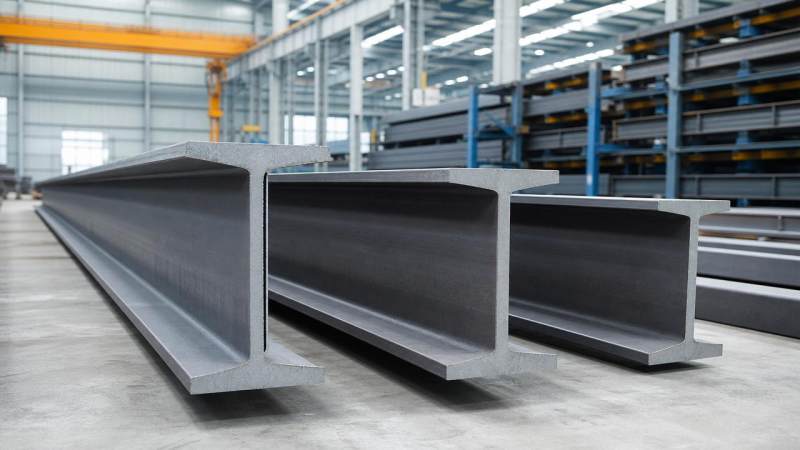
The phrase i beam i beam is not normally a formal steel standard name.
It is usually a repeated search term, a listing title, or a simplified product phrase for an I-shaped beam.
A standard I beam has a vertical web and two horizontal flanges, forming a cross-section similar to the letter I.
This shape provides bending resistance while keeping weight lower than a solid rectangular steel section.
In practical sourcing, i beam i beam may refer to hot rolled I beams, universal beams, or regional I-section products.
The important point is not the repeated wording, but the beam geometry, grade, dimensions, and standard.
Why the Term Causes Confusion
Steel markets use different names for similar structural sections.
A product called i beam i beam in one catalog may be listed as IPE, IPN, W beam, or universal beam elsewhere.
Some suppliers also use broad keywords to describe multiple beam series in one product page.
Therefore, i beam i beam should be treated as a starting phrase, not a complete specification.
Standard I Beam Compared With Similar Beam Sections
A standard I beam is defined by more than its outline.
Its flange slope, flange width, web thickness, radius, weight, and tolerances determine how it performs.
When evaluating i beam i beam, compare the actual drawing or dimension table with the required project standard.
The phrase i beam i beam can describe any of these if the supplier uses it loosely.
For engineering use, always verify the section designation, not only the product title.
Industry Background and Current Selection Focus
Global construction and manufacturing projects increasingly compare steel beams across ASTM, EN, JIS, and GB standards.
This makes i beam i beam searches common during early sourcing, especially when drawings are still being checked.
However, international procurement requires consistent interpretation between drawings, mill certificates, and delivered materials.
- Dimensional compatibility remains the first selection factor.
- Material grade affects yield strength, weldability, and design safety.
- Surface condition influences corrosion protection and site handling.
- Standard compliance reduces inspection and approval risk.
- Reliable lead time supports project scheduling and fabrication planning.
For many projects, i beam i beam is only one part of a larger structural steel package.
Angle steel, channel steel, cold formed profiles, plates, and coated sheets may also be required.
Material Grade, Dimensions, and Standards That Matter
A standard I beam must match the loading condition defined by structural calculation.
Height, flange width, web thickness, theoretical weight, and moment of inertia are essential values.
If i beam i beam appears in a quotation, request a full specification table before confirming the order.
Common Standards to Confirm
- ASTM standards for North American projects.
- EN standards for European structural sections.
- JIS standards for Japanese dimensional systems.
- GB standards for Chinese structural steel supply.
Material grades such as Q235, Q355, S235, S355, A36, or SS400 may be available depending on production route.
The correct grade depends on design strength, weldability, temperature conditions, and inspection requirements.
For export orders, i beam i beam should be linked with chemical composition and mechanical property certificates.
Related Steel Products in Structural Packages
Structural projects rarely use beams alone.
Corrosion-resistant sheet products, channels, angles, and customized profiles often support the same building or industrial system.
For coated sheet requirements, Galvanised Sheet Steel Suppliers may be relevant within a combined sourcing plan.
Available galvanized sheet grades include DX51D, DX52D, DX53D, DX54D, DX56D, DX57D, SGCC, and S220GD to S550GD.
Typical sheet thickness ranges from 0.12mm to 6.00mm, with widths from 600mm to 1500mm.
Lengths from 1m to 12m can support fabrication, construction, appliance, transportation, and energy applications.
These products can complement i beam i beam orders where roofing, enclosure, equipment panels, or corrosion protection are involved.
Application Value in Construction and Industrial Projects
The value of an I-shaped beam comes from efficient load transfer.
Flanges resist bending stress, while the web carries shear force across the beam depth.
When correctly selected, i beam i beam can reduce unnecessary steel weight without compromising structural performance.
In each case, i beam i beam must correspond to actual engineering requirements.
A similar-looking beam may fail approval if dimensions or mechanical properties differ from the design.
Typical Classification Paths for Beam Selection
Beam selection becomes easier when the requirement is classified before price comparison.
The term i beam i beam should be converted into measurable purchasing criteria.
By Section Series
Confirm whether the project needs a traditional I beam, wide flange beam, IPE, IPN, or welded H-section.
By Production Method
Hot rolled beams are common for standard sections.
Welded beams may be suitable for non-standard sizes, heavy loads, or special engineering drawings.
By Surface Condition
Black steel, shot-blasted steel, primed steel, and galvanized solutions serve different environments.
For outdoor or humid conditions, surface protection should be planned together with i beam i beam selection.
Practical Procurement and Engineering Checks
Before confirming an order, gather all documents needed for design, fabrication, and inspection.
This prevents confusion caused by product titles, local naming habits, or incomplete online listings.
- Request the exact section designation and dimensional drawing.
- Check flange width, web thickness, radius, and theoretical weight.
- Confirm steel grade, standard, and testing requirements.
- Review tolerances for length, straightness, and surface condition.
- Match certificates with heat numbers and shipping documents.
- Clarify packing, marking, loading method, and delivery schedule.
If the quotation only states i beam i beam, the description is not sufficient for structural acceptance.
A professional supplier should provide standard references, production capacity, quality control details, and export documentation support.
Common Mistakes When Comparing Beam Offers
The lowest unit price may not represent the best total project cost.
Differences in weight tolerance, grade substitution, and coating preparation can change fabrication results.
Another mistake is assuming i beam i beam always equals a locally recognized standard I beam.
- Do not compare beams without checking theoretical weight per meter.
- Do not accept vague grade descriptions without certificates.
- Do not ignore flange shape and connection compatibility.
- Do not overlook corrosion protection for outdoor structures.
- Do not mix different standards without engineering review.
These checks are especially important for cross-border sourcing.
Clear specifications help reduce rework, inspection delays, and unexpected replacement costs.
How Hongteng Fengda Supports Structural Steel Supply
Hongteng Fengda is a structural steel manufacturer and exporter based in China.
The company supplies angle steel, channel steel, steel beams, cold formed profiles, and customized structural components.
Products can be supplied according to major standards, including ASTM, EN, JIS, and GB.
For i beam i beam requirements, technical communication can focus on dimensions, grade, tolerance, and project documentation.
Stable production capacity and quality control help support construction, industrial, and manufacturing projects worldwide.
Conclusion and Next Step for Correct Beam Selection
So, is i beam i beam the same as a standard I beam?
Usually, it points to an I-shaped steel beam, but it is not a complete technical definition.
The correct answer depends on section series, dimensions, steel grade, standard, and project acceptance rules.
Before ordering, convert the phrase i beam i beam into a precise specification with drawings, certificates, and delivery requirements.
For project-based sourcing, share the required standard, beam size, grade, quantity, length, and surface treatment for technical confirmation.
Please give us a message


Please enter what you want to find