When sourcing flexible steel wire for fencing, lightweight steel tube for modular structures, or high strength steel tubing for load-bearing applications, professionals across construction and manufacturing often question: is 'kink-free' truly a performance guarantee—or just marketing gloss? At Hongteng Fengda, a trusted structural steel manufacturer and exporter from China, we test steel wire gauge, steel rod diameter, and galvanized sheet for roofing against real-world coiling, tension, and installation stresses. Backed by ASTM/EN-compliant structural steel grades—and supported by precise H-beam weight charts and steel sheet size specifications—we help technical evaluators, procurement teams, and project managers make confident, risk-reduced decisions.
What “Kink-Free” Really Means—And Why It’s Not a Standalone Guarantee
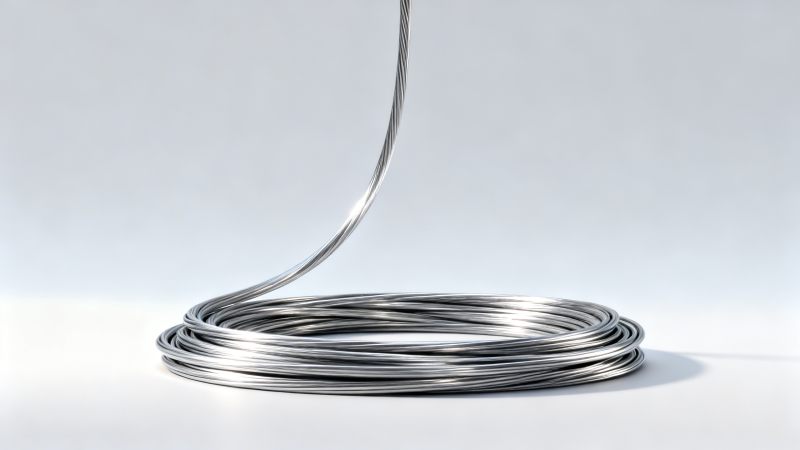
“Kink-free” is widely used in product literature for flexible steel wire—but it’s not a standardized technical term. Unlike ASTM A641 (zinc-coated steel wire) or EN 10270-1 (spring steel wire), no international specification defines minimum bend recovery, residual coil set, or angular deviation thresholds for “kink-free” claims. Instead, the label typically reflects a combination of material ductility, cold-drawing precision, and post-annealing control—factors that vary significantly between production batches and supplier capabilities.
In practice, what users observe as “kink-free” behavior often depends on three variables: (1) coiling speed (<5 rpm reduces torque-induced deformation), (2) mandrel diameter (≥12× wire diameter prevents localized strain), and (3) ambient temperature (10℃–25℃ maintains optimal yield-to-tensile ratio). Deviations in any of these increase visible kinks—even with high-purity Q195-grade feedstock.
That’s why reputable structural steel manufacturers like Hongteng Fengda correlate wire performance not only to tensile strength (e.g., 370–430 MPa for Q195) but also to elongation at break (≥27% per GB/T 700), surface decarburization depth (≤0.15 mm), and microstructure uniformity (ferrite + pearlite, grain size ≥8 per ASTM E112). These are measurable, auditable parameters—not marketing descriptors.
How Structural Steel Components Anchor Real-World Reliability
While flexible wire faces coiling stress, structural components like angle steel absorb dynamic loads, torsional moments, and thermal expansion—making dimensional stability and metallurgical consistency non-negotiable. For example, Q195 angle steel serves as primary framing in transmission towers and container racks, where misalignment >±1.2 mm per meter triggers cumulative deflection in multi-span assemblies.
Hongteng Fengda produces Q195 angle steel across 15 model variants (HT220–HT2000), each calibrated for specific thickness (3–24 mm), leg width (20–200 mm), and length ranges (3–19 m). All meet ASTM A6/A6M, EN 10025-2, and GB/T 700 requirements—with certified tensile strength (315–430 MPa), yield point (≥195 MPa), and impact toughness (27 J at 0°C).
Unlike commodity wire, structural profiles undergo full-section ultrasonic testing, 100% visual inspection for scale adhesion and edge cracking, and batch-specific mill test reports (MTRs) traceable to heat number. This level of process control ensures predictable behavior under cyclic loading—critical for bridges, lifting machinery, and power piping supports.
Key Performance Parameters Across Common Structural Grades
This table shows how mechanical properties scale with grade—enabling engineers to match material selection to service conditions. For instance, Q195’s higher elongation makes it ideal for applications requiring cold bending or welding without preheating, while Q345 delivers superior fatigue resistance for dynamic-load environments.
Procurement Checklist: 5 Critical Verification Steps Before Ordering
Sourcing structural steel isn’t about lowest unit price—it’s about minimizing total cost of ownership. Hongteng Fengda advises procurement teams and project managers to verify the following before finalizing orders:
- Mill Test Report (MTR) alignment: Confirm chemical composition (C ≤0.12%, Mn ≤0.50% for Q195) and mechanical test results match the specified standard (e.g., GB/T 700 or ASTM A6).
- Dimensional tolerance compliance: Check section size deviation (±0.8 mm for legs ≤50 mm per EN 10056-1), straightness (≤2 mm/m), and twist (≤1.5°/m).
- Surface finish verification: Specify required appearance (Pickled/Black/Bright) and request photo evidence of batch samples—especially for galvanized or painted finishes.
- Traceability documentation: Ensure heat number, rolling date, and inspection stamp are recorded per piece or bundle—not just on delivery notes.
- Lead time buffer planning: Allow 7–15 days for custom lengths (e.g., 4–19 m), plus 3–5 days for third-party inspection (SGS/BV) if required.
Why Global Buyers Choose Hongteng Fengda for Structural Steel Sourcing
From North America to Southeast Asia, engineering firms and contractors rely on Hongteng Fengda not just for product specs—but for end-to-end sourcing confidence. We combine ISO 9001-certified production, 12+ years of export experience, and dedicated technical support—including free structural design consultation, customized packaging for sea freight, and bilingual documentation (English + local language).
Our factory in Hebei Province maintains stable capacity for angle steel, channel steel, and cold-formed profiles—with monthly output exceeding 15,000 metric tons. Every shipment includes MTRs, EN/ASTM conformity statements, and optional third-party certification. For urgent projects, we offer expedited production (2–4 weeks) and consolidated logistics across 30+ ports worldwide.
Ready to validate your next structural steel requirement? Contact us today for: (1) Q195 angle steel dimensional drawings and weight calculations, (2) OEM sample approval within 5 working days, (3) FOB/CIF pricing with lead time confirmation, or (4) compliance review for ASTM/EN/JIS/GB standards. Let’s build reliability—together.
Please give us a message


Please enter what you want to find