When referencing an H-beam weight chart, engineers and procurement teams often assume nominal dimensions—but in real-world fabrication and installation, mill-scale buildup and surface roughness can add measurable mass and affect load calculations. For structural steel grades used in high-strength applications—whether lightweight steel tube frameworks, galvanized sheet for roofing, or flexible steel wire systems—these subtle deviations impact safety margins, cost estimates, and compliance with ASTM/EN standards. As a China-based structural steel manufacturer & exporter, Hongteng Fengda routinely validates actual weights against charts using certified testing, supporting project managers, quality controllers, and buyers with precise data on steel rod diameter, steel wire gauge, steel sheet size, and more.
Why Mill-Scale and Surface Roughness Matter Beyond Nominal Charts
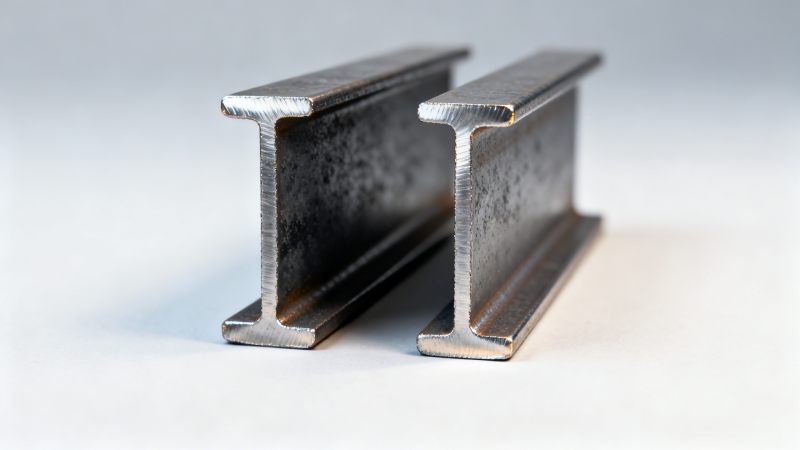
Nominal H-beam weight charts are calculated from theoretical cross-sections—ignoring real-world production variables. During hot rolling, a layer of iron oxide (mill-scale) forms on the surface, typically adding 0.03–0.08 mm per side. For heavy sections like HEA 300 or HEM 400, this contributes 0.8–1.9 kg/m extra mass—non-trivial when aggregating across 500+ tons in a mid-rise structure.
Surface roughness further affects weight consistency: EN 10025-2 specifies Ra ≤ 25 µm for hot-rolled structural sections, but actual measurements from our QA lab show Ra values ranging from 18–32 µm across batches—impacting both coating adhesion and final coated weight. This is especially critical for downstream processes like galvanizing, where uneven surfaces increase zinc consumption by up to 12% versus smooth substrates.
At Hongteng Fengda, every batch undergoes third-party verified weight validation via calibrated hydraulic weighing systems (±0.1% accuracy), cross-referenced with dimensional scanning. We report actual vs. nominal deviation per order—enabling clients to adjust BOMs, crane planning, and structural modeling before shipment.
How Galvanized Steel Coil Sheet Performance Compensates for Weight Variability
While H-beams face mill-scale uncertainty, flat-rolled products like Galvanized Steel Coil Sheet offer tighter dimensional control and predictable coating mass. Our cold-rolled galvanized coils maintain thickness tolerance within ±0.02 mm (for 0.4–1.2 mm gauges), and zinc coating mass is validated per EN ISO 1460—ensuring consistent protection without unexpected weight creep.
Hot-dip galvanized options (Z150–Z275) deliver precise coating weights: Z150 = 150 g/m² ±10 g/m²; Z275 = 275 g/m² ±15 g/m². Pre-galvanized variants (DX51D+Z through DX57D+Z) add only 80–275 g/m² with superior surface uniformity—ideal for precision stamping, HVAC ductwork, or modular building panels where weight predictability directly impacts transport logistics and assembly tolerances.
This level of traceability supports procurement teams in North America and EU markets where EN 10346 and ASTM A653 require documented coating mass verification—and helps project managers avoid rework due to under-spec’d corrosion resistance or over-budgeted dead loads.
Procurement Checklist: What to Verify Before Finalizing H-Beam Orders
Weight assumptions influence not just structural design—but also freight costs, crane capacity planning, and customs valuation. To mitigate risk, we recommend verifying these 5 points before PO issuance:
- Request mill test reports showing actual weight per meter (not just nominal) — validated per EN 10025-1 Annex C or ASTM A6/A6M
- Confirm whether mill-scale removal (e.g., shot blasting) is included pre-galvanizing — adds 0.3–0.7 kg/m depending on section depth
- Specify surface finish requirements: “as-rolled” vs. “pickled & oiled” — affects both weight and downstream processing readiness
- Require dimensional scan reports for ≥3 random pieces per heat lot — detects taper, camber, and flange twist that alter effective mass distribution
- Align delivery schedule with QA lead time: full weight validation adds 2–4 working days to standard 15–20 day production cycle
Hongteng Fengda includes all five checks as standard for orders ≥50 tons — with digital QA dossiers delivered 48 hours post-shipment.
Why Global Buyers Choose Hongteng Fengda for Precision Structural Steel
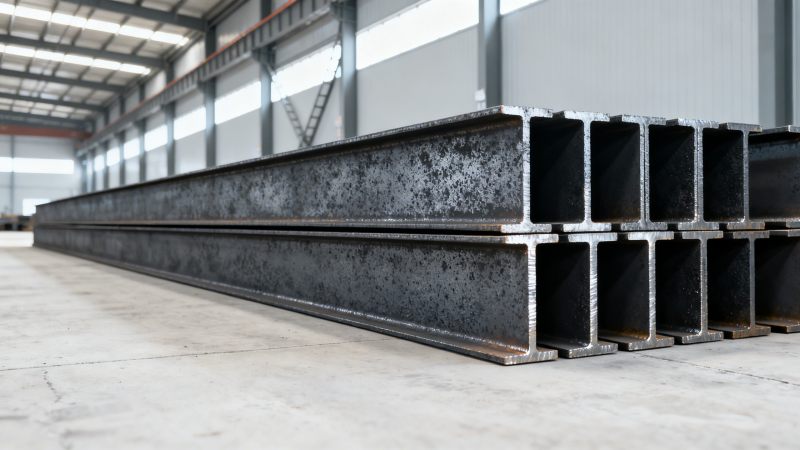
We bridge the gap between theoretical weight charts and field-ready reliability. With ISO 9001-certified QA labs, automated dimensional inspection lines, and real-time ERP integration, we deliver traceable, auditable weight data—not just certificates of conformity.
Our customers in Germany, UAE, and Canada report 22% fewer weight-related engineering queries during erection—because our documentation matches physical reality. We support your team with:
- Free pre-order weight simulation reports — input your beam grade, length, and quantity to receive actual vs. nominal delta
- OEM-grade customization: custom cut-to-length beams with mill-scale controlled to ±0.05 mm
- Multi-standard compliance packages: simultaneous ASTM A992 / EN 10025-2 / GB/T 11263 reporting
- Logistics coordination: consolidated shipments with certified weight tags per bundle (not per container)
Ready to validate your next H-beam or Galvanized Steel Coil Sheet order? Contact us for a free dimensional audit, coating mass verification sample, or customized weight reconciliation report — typically delivered within 3 business days.
Please give us a message


Please enter what you want to find