When comparing H-beam weight charts across suppliers, even minor discrepancies—driven by variations in structural steel grades, steel sheet size tolerances, or galvanized sheet for roofing thickness assumptions—can skew your project’s total tonnage by 3% or more. For procurement personnel, project managers, and financial approvers, this means unexpected cost overruns, logistics miscalculations, or compliance risks. Whether you’re specifying lightweight steel tube for façades or high strength steel tubing for load-bearing frames, accurate H-beam weight chart data is foundational. At Hongteng Fengda, we align every calculation with ASTM/EN standards—and clarify how steel rod diameter, steel wire gauge, and flexible steel wire applications impact real-world mass estimation.
Why H-beam weight charts vary—and where the 3% error really comes from
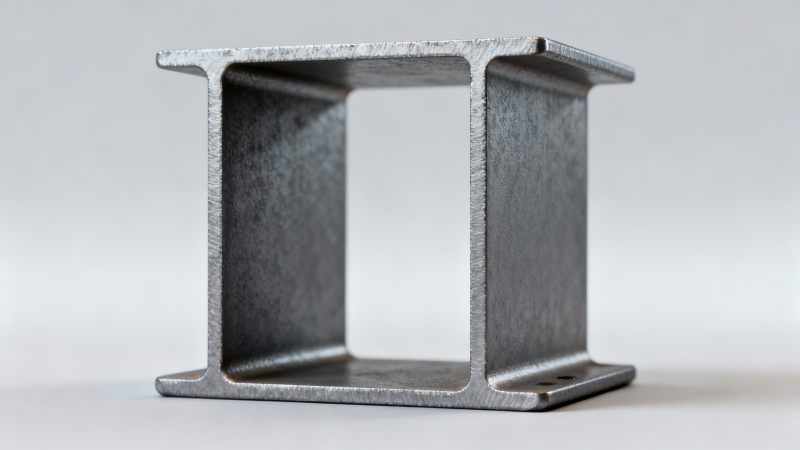
H-beam weight calculations are not universal. They depend on precise input parameters: nominal dimensions (height × width × web/thickness), steel density (typically 7,850 kg/m³), and—critically—the actual cross-sectional geometry used in manufacturing. Minor deviations in flange taper, fillet radius, or web-to-flange transition can shift theoretical weight by ±0.8%–1.2% per section. When aggregated across hundreds of tons in a mid-rise structure, that compounds into 3–5% variance in total tonnage estimates.
More importantly, many suppliers apply inconsistent assumptions about surface treatments. For example, hot-dip galvanizing adds 60–275 g/m² of zinc coating—yet some weight charts omit this entirely, while others assume full double-sided coverage on all surfaces. This directly affects weight-based logistics planning, crane capacity validation, and even foundation load calculations.
At Hongteng Fengda, we calculate H-beam weights using EN 10365:2017 and ASTM A6/A6M-23 formulas, incorporating verified mill test reports for each batch. Our weight tables reflect actual as-rolled dimensions—not idealized nominal values—and include optional galvanizing uplifts based on specified zinc layer mass (e.g., Z275 = +2.75 kg/tonne).
How galvanized sheeting specifications impact structural weight modeling
Galvanized sheeting is frequently integrated into composite structural systems—roof decks, wall cladding, or secondary bracing—where its mass contributes directly to dead load calculations. But inconsistency here multiplies error risk. A supplier quoting Galv Sheeting at DX51D+Z with 0.5 mm thickness and Z120 coating may differ by up to 1.4 kg/m² from another quoting SGCC at 0.5 mm with Z275—despite identical nominal specs.
Our standard Galv Sheeting range covers thicknesses from 0.12 mm to 6.00 mm, widths 600–1500 mm, and customizable lengths (1–12 m). Zinc layers span hot-dip (60–275 g/m²) and pre-galvanized (80–275 g/m²) options—each validated via EN 10346 and ASTM A653 tensile testing. This granularity ensures your structural model accounts for real-world mass—not brochure approximations.
This table shows how grade selection changes both mechanical performance and mass contribution. Using S350GD+Z instead of DX51D+Z at equal thickness adds ~0.46 kg/m²—but delivers 67% higher yield strength. That trade-off matters when modeling wind-suction loads on roof diaphragms or seismic bracing systems.
Procurement checklist: 5 non-negotiable weight verification points
Before finalizing any H-beam or sheeting order, verify these five technical checkpoints—each tied to measurable, auditable criteria:
- Mill Test Report (MTR) alignment: Does the supplier provide certified MTRs showing actual measured dimensions—not just nominal sizes—for each heat lot? (Required under ASTM A6/A6M-23 Section 7.2)
- Zinc layer verification method: Is coating mass confirmed via gravimetric analysis (ASTM A90/A90M) or coulometric titration (ISO 1460)? Not just “as per specification.”
- Density assumption transparency: Is steel density stated as 7,850 kg/m³—or adjusted for alloy content (e.g., 7,830 kg/m³ for low-alloy HSS)?
- Tolerance adherence: Are dimensional tolerances referenced to EN 10034 (beams) or EN 10142 (sheeting)—not internal guidelines?
- Weight recalculations for custom cuts: Does the quote include revised tonnage for cut-to-length orders, factoring in kerf loss and end-trimming allowances (±1.5 mm typical)?
Why Hongteng Fengda eliminates weight uncertainty—for global projects
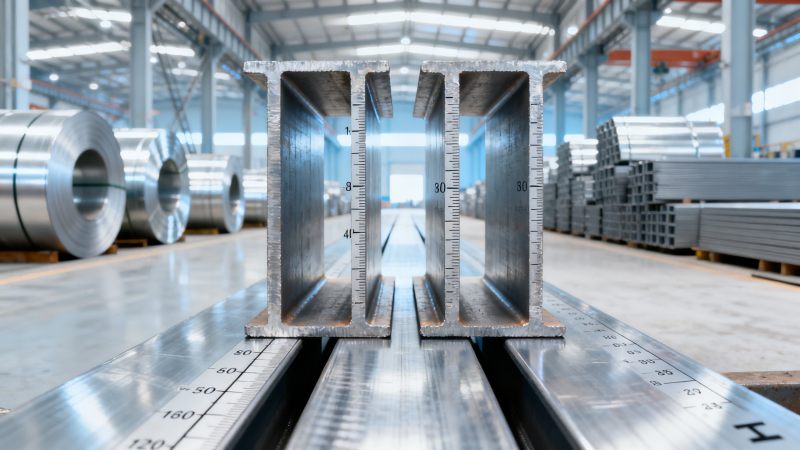
We don’t publish static weight charts. Instead, we deliver dynamic, project-specific weight packs—including certified MTRs, EN 10204 3.1 mill certificates, and Excel-based calculators pre-loaded with your exact grade, tolerance band, and galvanizing spec. For North American clients, we cross-validate against AISI/ASTM; for EU buyers, we map to EN 10025-2 and EN 10365.
Our production facilities maintain ±0.25 mm tolerance control on all hot-rolled beams and ±0.02 mm on cold-formed profiles—validated daily via CMM inspection. Lead times remain stable at 2–4 weeks for standard H-beams and 3–6 weeks for custom Galv Sheeting orders, with 100% traceability from coil to cut sheet.
Whether you need weight-verified beams for a Dubai high-rise, corrosion-resistant sheeting for a Vietnam aquaculture facility, or OEM-spec cold-formed sections for German automotive tooling—we provide the documentation, data, and delivery consistency to keep your project on budget, on time, and compliant.
Ready to validate your next tonnage estimate?
Send us your project’s beam schedule, sheeting spec sheet, and required certifications (ASTM/EN/GB/JIS). Within 48 hours, you’ll receive:
- A side-by-side comparison of your current weight assumptions vs. our certified calculations
- Revised tonnage totals—including galvanizing uplift, cutting waste, and packaging mass
- Lead time confirmation with port-of-loading options (Qingdao, Tianjin, or Shanghai)
- Free sample kits for critical grades (available within 7–10 business days)
Contact our engineering sales team today to lock in weight-accurate pricing—before your procurement cycle closes.
Please give us a message


Please enter what you want to find