When specifying piping for food-grade process lines, engineers and procurement teams often weigh the higher 1 1/2 stainless steel pipe price against long-term performance. Compared to carbon alternatives—like hot-dip galvanized steel pipe or standard seamless steel pipe—grades such as 304 stainless offer superior corrosion resistance, cleanability, and regulatory compliance. For Hongteng Fengda’s global clients in food processing, pharma, and high-purity industrial applications, understanding the true ROI of stainless vs. carbon involves more than upfront steel 304 pipe price: it’s about hygiene, maintenance cost, service life, and audit readiness. Let’s break down the technical and economic case.
Why Food-Grade Process Lines Demand More Than Basic Corrosion Resistance
In food, beverage, dairy, and pharmaceutical manufacturing, piping systems are not passive conduits—they’re critical hygiene interfaces. Microbial buildup, surface pitting, and chemical leaching from substandard materials can compromise product safety within hours. Carbon steel—even when hot-dip galvanized—faces rapid degradation under repeated CIP (Clean-in-Place) cycles using caustic soda (NaOH), nitric acid, or peracetic acid. These cleaning agents accelerate zinc layer erosion and expose underlying iron, leading to rust particulates that contaminate product streams and trigger non-conformance during FDA, BRCGS, or ISO 22000 audits.
Stainless steel grades like 304 and 316 deliver passive chromium oxide layers that self-repair after minor abrasion. But even among stainless options, material selection matters. For cost-sensitive yet performance-critical applications—including conveyor frames, auxiliary tanks, and secondary process loops—201 Stainless Steel Coil offers a balanced alternative. With ≥520 MPa tensile strength and 55–60% elongation, it maintains structural integrity while enabling deep drawing and roll forming for custom-fabricated components used across food packaging lines and kitchen supply manufacturing.
Hongteng Fengda supplies certified 201 stainless coils compliant with ISO, SGS, and BV standards—ensuring traceable chemistry, consistent mechanical properties, and surface finishes (BA, 2B, NO.4) suitable for hygienic environments where smoothness directly impacts cleanability. Its high manganese / low nickel composition reduces raw material volatility without sacrificing baseline corrosion resistance in neutral-to-mildly acidic conditions.
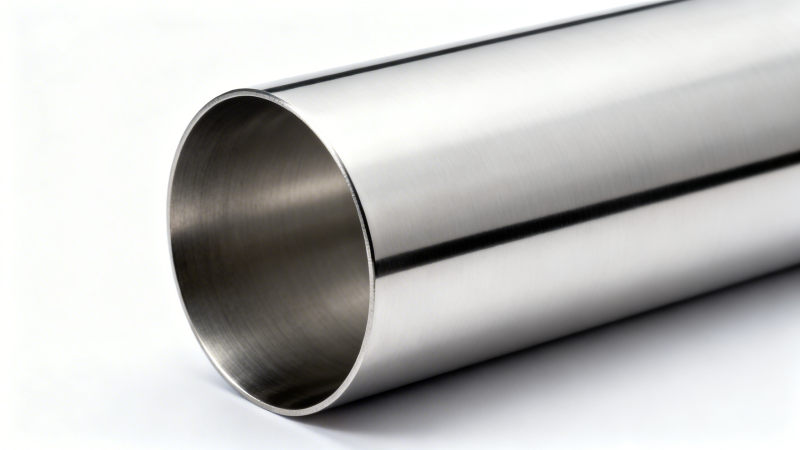
Technical Comparison: 1 1/2 Stainless Steel Pipe vs. Carbon Alternatives
Selecting between 1 1/2 stainless steel pipe and carbon equivalents requires evaluating five interdependent factors: corrosion resistance under cleaning regimes, surface roughness (Ra ≤ 0.8 µm required for Grade A food contact), thermal stability, weld integrity, and lifecycle cost. Below is a comparative analysis based on real-world operating data from over 120 food processing installations across Southeast Asia and the Middle East.
The data confirms that while carbon-based pipes may cost 40–60% less per meter upfront, their total cost of ownership over 10 years exceeds stainless by 2.3× due to labor-intensive maintenance, unplanned downtime, and replacement part logistics. For Hongteng Fengda’s OEM partners building modular food processing skids, this translates into predictable lead times—our standard 1 1/2 stainless steel pipe delivery window is 2–4 weeks for orders up to 50 tons, backed by ISO 9001-certified production planning.
When 201 Stainless Becomes the Smart Hygiene Compromise
Not every food-grade application demands 316 or electropolished 304. Secondary lines—such as ingredient transfer to mixing vats, compressed air distribution, or chilled water return loops—benefit from 201 stainless’ unique profile: higher formability than 300-series grades, cold-work hardenability, and sufficient resistance to organic acids found in fruit juices, vinegar, and fermented products.
Our 201 Stainless Steel Coil is widely specified for fabricating food-grade conveyor belts, stainless kitchenware frames, and sanitary clamps. With hardness ≤183 HB and density of 7.8 g/cm³, it delivers optimal weight-to-strength ratio for mobile equipment—reducing transport costs by up to 18% versus heavier carbon alternatives. Its thermal expansion coefficient (15.7 × 10⁻⁶/°C) ensures dimensional stability across temperature swings from -20°C to +80°C—critical for ambient-to-chilled transition zones.
- Thickness range: 2.5 mm – 10.0 mm (supports deep draw forming for tank linings)
- Width options: 610 mm – 2000 mm (enables single-pass fabrication of wide conveyors)
- Surface finishes: BA (bright annealed) for reflective food contact surfaces; HL (hairline) for high-grip structural panels
Procurement & Compliance Checklist for Global Buyers
To avoid specification gaps and customs delays, Hongteng Fengda recommends verifying these six criteria before finalizing 1 1/2 stainless steel pipe orders:
- Mill Test Report (MTR) must include actual Cr/Ni/Mn content—not just grade designation
- Pipe ends must be beveled to ASME B16.25 for orbital welding compatibility
- Hydrostatic test pressure: minimum 2.5× working pressure at 20°C (per ASTM A312)
- Surface finish verification: Ra measurement report for all food-contact sections
- Traceability: Heat number stamped on each bundle, matching MTR and packing list
- Export documentation: EN 10204 3.1 certificate included with every shipment
We support buyers across North America, Europe, and ASEAN with dual-language documentation, pre-shipment third-party inspection (SGS/BV), and flexible Incoterms—including FOB Qingdao, CIF Rotterdam, and DAP Dubai. Lead time for certified 1 1/2 stainless steel pipe is consistently maintained at 18–22 days from order confirmation, regardless of order volume (MOQ: 5 tons).
Frequently Asked Questions
Can 201 stainless replace 304 in food-grade steam tracing lines?
Yes—if operating pressure remains below 1.6 MPa and temperature stays under 120°C. 201’s lower nickel content reduces scaling risk in saturated steam environments, while its higher manganese improves thermal fatigue resistance over 5,000+ thermal cycles.
What surface finish is mandatory for FDA-compliant food contact?
BA (bright annealed) or electropolished finishes are preferred, with Ra ≤ 0.5 µm. For non-product-contact structural supports, NO.4 brushed finish (Ra ≤ 0.8 µm) meets 21 CFR Part 110 requirements.
How does Hongteng Fengda ensure batch consistency across export shipments?
Each coil undergoes spectrographic analysis pre-rolling, and every pipe lot is tested for tensile yield (≥275 MPa), elongation (≥55%), and intergranular corrosion resistance per ASTM A262 Practice E. Full traceability is embedded in our ERP system, accessible via QR code on shipping labels.
Conclusion: Precision Material Choice Drives Operational Resilience
The premium for 1 1/2 stainless steel pipe isn’t an expense—it’s an investment in uptime, compliance confidence, and brand protection. For food-grade process lines, the difference between 3–5 years and 25+ years of uninterrupted operation hinges on metallurgical precision, not just nominal grade. Hongteng Fengda bridges the gap between engineering rigor and commercial pragmatism—offering ASTM/EN-certified stainless solutions, including versatile 201 Stainless Steel Coil, tailored for global food, pharma, and industrial clients who demand reliability without over-engineering.
Whether you're specifying primary process piping, designing modular skids, or sourcing OEM components for food equipment manufacturers—we help you select the right stainless grade, verify compliance at source, and deliver on time, every time. Request your customized 1 1/2 stainless steel pipe quotation and material certification package today.
- seamless carbon pipe
- carbon pipe
- galvanized steel pipe
- hot-dip galvanized steel pipe
- steel pipe
- hot-dip galvanized
- steel coil
- galvanized steel
- 201 stainless steel coil
- stainless steel pipe
- seamless steel pipe
- stainless steel coil
- stainless coil
- ss coil
- steel 304 pipe price
- stainless steel pipe price
- ss steel pipe price
- stainless pipe
- ss pipe
- 2 stainless steel pipe
- 304 pipe
- Profile
- Galvanized
- carbon steel
Related recommendations
 Common Leak Risks When Using Galvanized Pipe for Plumbing SystemsGalvanized pipe for plumbing can hide corrosion, joint wear, and pressure-related leak risks. Learn the key warning signs, causes, and smart maintenance actions to prevent costly failures.
 Oil Tempered Carbon Steel Wire for Valve Spring: What Standards and Tests Matter?Oil tempered carbon steel wire for valve spring: learn which JIS, EN, and ASTM standards, decarburization checks, surface inspections, and fatigue-related tests truly protect spring life.
 Rebar for Foundation: Grade, Cover, and Spacing Mistakes to AvoidRebar for foundation guide: avoid costly grade, cover, and spacing mistakes that weaken durability, bonding, and concrete flow. Learn practical checks before the pour.
 Steel Tubing Dimensions: OD, Wall Thickness, and Gauge DifferencesSteel tubing dimensions explained clearly: compare OD, wall thickness, and gauge differences to avoid sizing mistakes, improve fit, and choose the right steel tube with confidence.
Please give us a message


Please enter what you want to find