Understanding I beam weight per foot is essential for accurate steel selection, budgeting, and structural planning, yet many estimates fail because buyers rely on incomplete dimensions or the wrong I beam weight chart. In this guide, we explain the key factors behind calculation errors, compare practical selection methods, and show how experienced structural steel suppliers help reduce cost, safety, and procurement risks.
Why I Beam Weight per Foot Matters More Than Many Buyers Expect
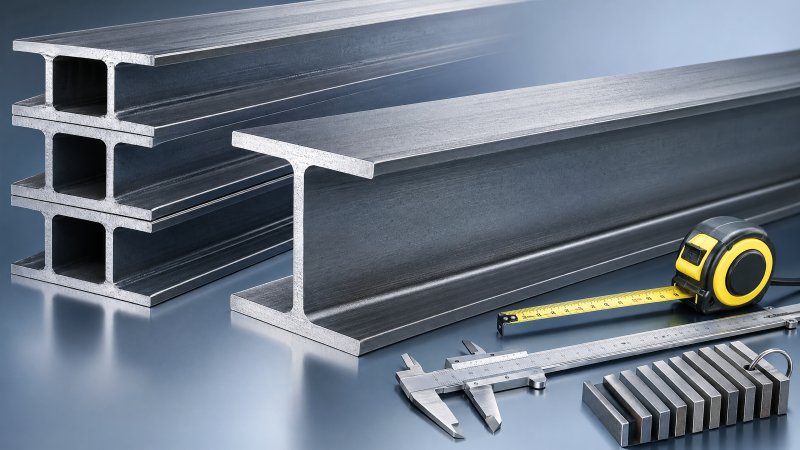
When someone searches for “I beam weight per foot,” they usually do not want theory. They want a number they can trust for quoting, transport planning, structural review, fabrication, or purchasing approval. In real projects, even a small mistake in beam weight can affect freight cost, crane capacity, installation planning, coating consumption, and sometimes the structural design itself. That is why the most useful answer is not just a chart, but an explanation of how to avoid the common errors behind wrong estimates.
The first important point is this: I beam weight per foot cannot be estimated accurately from beam depth alone. Many people assume that a “10-inch I beam” or “12-inch beam” has one standard weight, but in reality multiple sections may share a similar nominal depth while having very different flange width, web thickness, flange thickness, and total mass. A beam that looks similar in profile can produce a noticeably different result in the field and on the invoice.
For contractors, fabricators, and procurement teams, weight per foot is directly connected to cost control. Steel is commonly priced by weight, shipping is billed by weight or volume, and installation resources are planned around weight. For engineers and technical evaluators, the beam’s weight is also tied to section properties, structural capacity, and code compliance. For quality and safety personnel, incorrect assumptions can create handling and lifting risks. In short, this is not just a dimension question; it is a decision-quality question.
What “I Beam Weight per Foot” Actually Means
I beam weight per foot refers to the linear mass of a steel beam over one foot of length. In imperial systems, it is usually expressed in pounds per foot, such as 25 lb/ft or 40 lb/ft. In metric environments, similar values may be presented as kilograms per meter. This figure is based on the beam’s actual cross-sectional area and the density of the steel, not simply on its height.
The most reliable method starts with the exact section designation. For example, a beam marked under ASTM, AISC, EN, JIS, or GB standards will have a defined geometry. Once the designation is known, the published theoretical weight can be taken from a standard table. If the section is custom-made or nonstandard, then the weight must be calculated from the drawing dimensions and material density. This distinction is where many estimate errors begin.
It is also important to understand that “I beam” is often used loosely in the market. Some people use it to describe wide flange beams, standard I sections, H beams, or even custom rolled sections. However, these categories differ in geometry and weight. If one party asks for an I beam while another quotes an H beam of similar depth, the resulting weight per foot may be significantly different. Mislabeling the product is one of the fastest ways to get the wrong estimate.
Why Estimates Go Wrong: The Most Common Causes
The most common reason estimates go wrong is incomplete dimensional input. To calculate weight correctly, you need the web height, web thickness, flange width, flange thickness, and beam length, or a recognized section designation. If even one of these values is missing or assumed, the result can be off enough to affect purchasing and logistics. A beam’s visible depth alone does not provide enough information.
Another common problem is using the wrong standard chart. A buyer may search online for an I beam weight chart, find a table from a different country or standard, and assume it applies to the requested product. But ASTM beam sizes do not always match EN, JIS, or GB sections in geometry or weight. Similar naming can be misleading. This is especially risky in international sourcing, where project drawings, supplier catalogs, and customer expectations may not follow the same standard system.
Unit conversion errors also cause frequent mistakes. Weight can be listed in lb/ft, kg/m, or total metric tons. Dimensions may be shown in inches or millimeters. In many practical situations, the beam itself is correct, but the estimate is wrong because someone converted meter-to-foot or kilogram-to-pound values incorrectly. These mistakes often remain hidden until packaging, shipping, or on-site handling reveals a mismatch.
Corrosion protection and finish assumptions can create another layer of confusion. Hot-dip galvanized beams are heavier than black steel beams because of the zinc coating. Painted systems also add weight, though usually less than galvanizing. If a quote is based on bare steel weight but the final supply includes protective coating, the actual delivered mass will be higher. For procurement and finance teams, that can affect freight, customs, and total landed cost.
Finally, custom fabrication changes the number. Holes, weld plates, stiffeners, end plates, coping, brackets, and connection details all influence final steel weight. A structural drawing may specify a standard beam section, but the fabricated member shipped to site is no longer just the beam from the handbook. Estimating from the base section alone is often acceptable in early budgeting, but not for final logistics or exact commercial settlement.
How to Calculate I Beam Weight per Foot Correctly
There are two practical ways to calculate beam weight accurately. The first is to use a recognized section table. This is the fastest and most reliable approach when the beam belongs to a standard series. Once the exact designation is confirmed, the theoretical weight per foot is already defined. This method reduces risk because it avoids manual geometry assumptions and aligns better with engineering and procurement documentation.
The second method is cross-sectional calculation. In simplified form, weight per foot is derived from cross-sectional area multiplied by steel density and the unit length. In practice, the section is broken into flanges and web, with overlap handled correctly according to the geometry. This method works for custom sections or when checking a supplier drawing, but it requires precise dimensions and attention to detail. If radii, taper, or manufacturing variations are ignored, the result may differ from theoretical handbook values.
For project use, a good workflow is simple: first identify the standard and section designation; second verify units; third confirm whether the weight needed is theoretical, coated, fabricated, or shipping weight; fourth check the total quantity and total tonnage. This process sounds basic, but it prevents most expensive mistakes. For decision-makers, the key is not whether the beam weight can be calculated, but whether the number being used matches the real commercial and engineering purpose.
Which Weight Figure Should You Use: Theoretical, Actual, or Shipping Weight?
One of the most overlooked issues is that there is more than one “correct” weight depending on context. Theoretical weight is the standard handbook value based on nominal section dimensions and material density. This is usually the right number for early design review, budgetary comparison, and standard product quotation. It is the most common reference in steel catalogs and engineering tables.
Actual weight can vary because of rolling tolerances, steel density variation within accepted ranges, surface condition, and manufacturing method. In many cases the variation is small enough for general planning, but in large orders it still matters. If your cost model, transport arrangement, or crane selection is sensitive, actual mill data or supplier confirmation may be necessary before final approval.
Shipping weight goes one step further. It may include galvanizing, fabrication attachments, bundled packaging, pallets, strapping, or container loading assumptions. This is the number that matters most for freight budgeting, customs planning, and receiving operations. Many disputes happen because one side discusses theoretical beam weight while the other budgets based on shipped gross weight. The term “weight per foot” only becomes useful when everyone agrees on which weight they are talking about.
How Buyers, Engineers, and Project Teams Can Avoid Expensive Errors
If you are buying or specifying steel beams, the best way to avoid errors is to request a complete section identity rather than a generic beam description. Ask for the applicable standard, exact profile designation, material grade, length, surface treatment, and whether fabrication is included. This gives engineers enough information to verify technical suitability and gives procurement teams a clean basis for quotation comparison.
It is also wise to validate the beam weight against the real application. For example, a warehouse project may focus on tonnage and delivery speed, while a heavy industrial platform may require closer checking of section properties, coating system, and fabrication details. A distributor may need predictable stock sizes, but an EPC contractor may need strict documentation and traceability. The “right” beam is not just the one with the lowest weight or price; it is the one that fits the project’s risk profile.
Cross-functional review can save money. Technical evaluators should verify section compliance and load-bearing suitability. Quality and safety teams should review tolerances, coating, and handling implications. Commercial teams should confirm pricing basis, freight assumptions, and delivery terms. Finance approvers should look at total landed cost, not only ex-works or FOB steel price. When all of these checks happen before order confirmation, wrong beam weight estimates are much less likely to disrupt the project.
Why Standard Matching Matters in Global Steel Sourcing
For international buyers, standard matching is often more important than the beam weight formula itself. A supplier may manufacture to ASTM, EN, JIS, or GB, and each standard can define sections differently. If the buyer’s drawing calls for one system but the offered material follows another, the nominal size may appear close while the true weight and performance differ. This is not automatically a problem, but substitution must be evaluated carefully.
An experienced structural steel manufacturer can help by translating between standards, checking equivalency, and clarifying where exact matching is possible and where redesign or approval may be needed. This is especially valuable in export business, where project owners, consultants, fabricators, and end users may all work from different reference systems. Clear technical communication reduces the chance of ordering a beam that looks acceptable on paper but creates downstream problems in fabrication or site installation.
Hongteng Fengda supports global buyers by supplying structural steel products under major international standards, including ASTM, EN, JIS, and GB, with stable production capacity and documented quality control. For buyers evaluating not only I beams but related support members, secondary framing, and steel accessories, product consistency across categories is just as important as the beam itself. In many projects, channels, angles, and cold formed profiles are ordered together, and mismatched standards can affect the entire package.
Related Structural Sections Also Affect Weight Planning
Beam weight planning is rarely isolated. Many projects use channels, purlins, brackets, wall beams, and other structural members alongside I beams. If these secondary members are estimated loosely, total steel tonnage can still drift far from the original budget. That is why experienced buyers often evaluate the full steel package instead of checking only the primary beams.
For example, Channel In Steel is widely used in construction, automobile manufacture, steel structure purlins, wall beams, lightweight roofs, brackets, mechanical columns, and light manufacturing applications. Available in grades such as Q195, Q235, Q345B, Duplex, and stainless options including 201, 202, 304, and 316, these sections can be supplied in thicknesses from 1.5 mm to 25 mm, heights from 80 mm to 160 mm, and lengths from 6 m to 12 m or customized lengths. For project teams, this matters because channel selection influences not only material cost but also assembly method, corrosion strategy, and transport efficiency.
In practical sourcing, buyers also look at tolerance, coating type, and certification. Structural channels with controlled thickness tolerance, galvanized finish, and compliance with standards such as AISI, ASTM, DIN, JIS, BS, and GB/T can improve fit-up quality and reduce field adjustments. When suppliers can provide supporting certifications such as ISO, CE, SGS, or BV, technical and commercial review becomes easier. This broader material planning approach often leads to better budget accuracy than focusing on beam weight in isolation.
What to Ask a Supplier Before You Approve a Beam Order
If you want to avoid surprises, ask the supplier five direct questions. First, what exact standard and section designation is being quoted? Second, is the listed weight theoretical or based on actual mill data? Third, does the weight include galvanizing, painting, or fabrication attachments? Fourth, what tolerances apply to size and mass? Fifth, what total shipment weight should be expected for transport and customs documents? These questions reveal whether the quote is precise enough for a real project decision.
You should also request supporting documents when the project is sensitive. Typical useful documents include section drawings, mill test certificates, coating specifications, inspection records, packing lists, and loading plans. For larger contracts, pre-shipment verification can be worth the effort. The goal is not paperwork for its own sake; it is to make sure the weight used in design, pricing, shipping, and site planning all refer to the same physical product.
Reliable suppliers understand that buyers need more than a low unit price. They need consistency, predictable lead times, export coordination, and technical clarity. When a supplier can explain weight differences, standard equivalency, and fabrication impact clearly, procurement risk goes down. That is especially important for distributors, project managers, and enterprise decision-makers who must approve purchases across multiple stakeholders.
Final Takeaway: A Good I Beam Weight Estimate Depends on Good Information
The main reason I beam weight per foot estimates go wrong is not that the formula is difficult. It is that the input information is incomplete, mislabeled, converted incorrectly, or disconnected from the real project scope. Beam depth alone is not enough. A random online chart is not always reliable. And theoretical weight is not the same as fabricated or shipping weight.
For most readers, the practical takeaway is clear: identify the exact beam section, match the correct standard, confirm units, and define which weight basis matters for your decision. If you are budgeting, theoretical weight may be enough. If you are shipping, lifting, or approving final procurement, you need a more complete number. This simple distinction prevents many cost, schedule, and safety problems.
In global structural steel sourcing, experienced suppliers add value not only by making steel, but by helping buyers use the right data for the right purpose. When beam selection, related structural sections, documentation, and export coordination are handled professionally, weight estimates become more accurate and projects move with fewer surprises. That is ultimately why understanding I beam weight per foot matters: better numbers lead to better decisions.
Please give us a message


Please enter what you want to find