Delays from an angle stainless steel supplier can disrupt budgets, schedules, and quality control across construction and manufacturing projects. Whether you source steel angle for construction, angle iron for trailer applications, or work with a stainless steel pipe supplier, understanding the real causes of late delivery helps buyers reduce risk, compare suppliers more effectively, and keep projects moving with confidence.
Why do angle stainless steel supplier delays happen in real projects?
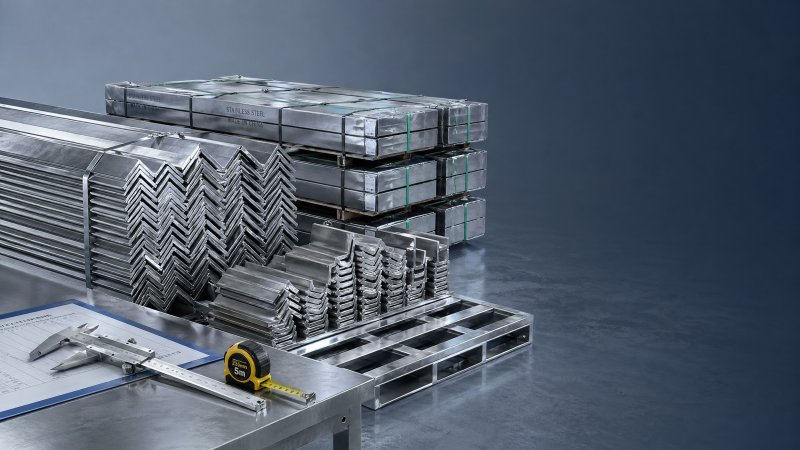
In steel procurement, a delivery delay rarely comes from one single issue. In most cases, it is the result of 3 to 5 linked factors across production, raw material planning, technical confirmation, and export coordination. For project managers, procurement teams, and technical evaluators, the main risk is not only receiving material late, but also losing installation windows, labor efficiency, and budget control.
An angle stainless steel supplier may face lead time pressure when order specifications are not standard, when thickness or grade is changed after confirmation, or when the supplier has limited rolling capacity. In structural steel projects, even a 7 to 15 day delay can affect downstream fabrication, surface treatment scheduling, container booking, and site installation sequencing.
Buyers often focus on quoted price first, but the steel industry works on a chain of availability: billet or coil sourcing, rolling schedule, cutting, punching, inspection, packing, and export release. If one node is weak, the overall lead time becomes unstable. This is especially important for global buyers importing from Asia to North America, Europe, the Middle East, or Southeast Asia, where ocean transit already adds 2 to 6 weeks.
The most common delay sources buyers should check early
- Raw material mismatch, such as grade substitution, coil shortage, or size not available in the planned production window.
- Unclear drawings or late revision of hole positions, tolerance, length, edge condition, or surface treatment.
- Overloaded production lines during peak construction seasons or before major export holidays.
- Quality rework after dimensional deviation, coating issues, or failed documentation review.
- Port congestion, container shortage, customs documentation errors, or vessel schedule changes.
For this reason, a dependable structural steel manufacturer must control not only production, but also specification review, capacity planning, inspection discipline, and shipment coordination. That is where experienced exporters such as Hongteng Fengda can reduce sourcing risk through stable manufacturing, international standard familiarity, and practical communication with overseas buyers.
Which delay factors matter most: material, production, quality, or shipping?
Not every delay has the same impact. Some issues can be absorbed within 2 to 3 working days, while others can push a project back by several weeks. Buyers comparing angle steel suppliers should separate internal delays from external ones and ask which stage has the highest risk for their order type, quantity level, and compliance requirement.
The table below helps procurement and project teams identify where lead time breaks down most often in structural steel orders. It is especially useful when you compare standard stock sizes against custom punching, galvanizing, or OEM fabrication.
This breakdown shows why a low ex-works price does not always mean lower total procurement cost. If one supplier is cheaper by a small percentage but causes a 10 day site delay, the final cost may rise through idle labor, crane rescheduling, liquidated damages, or emergency local purchases.
Why custom steel orders are more likely to slip
Standard angle steel is usually easier to schedule than custom processed items. Once buyers request hole punching, welded tabs, special lengths, unique edge treatment, or mixed containers with different profiles, the supplier must coordinate more production nodes. Each additional process adds at least 1 checkpoint and often extends the internal cycle by 2 to 5 days.
A related example in structural steel sourcing
Many buyers who source angle sections also need secondary framing products for the same project. For purlins, wall beams, lightweight roof trusses, brackets, or light mechanical components, C-beam can be a practical complementary option because it supports galvanized coated surfaces, thickness from 1mm to 12.mm, lengths such as 6m, 9m, and 12m, and processing services including bending, welding, punching, decoiling, and cutting. Integrating such products through one experienced exporter can reduce coordination gaps between multiple steel categories.
When these products are made under standards such as ASTM, EN, JIS, or GB, and with common grades including Q195, Q235, Q345, A36, SS400, and S235JR, technical review becomes more efficient. The main point is not to combine products blindly, but to simplify supply chain management where compatible specifications and delivery windows make sense.
How can buyers evaluate a supplier before delays happen?
A strong procurement process starts before the purchase order is issued. Instead of asking only for unit price and estimated lead time, buyers should evaluate 5 core dimensions: capacity, specification control, quality system, export readiness, and communication speed. This is relevant for distributors, EPC contractors, fabricators, and finance approvers who need predictable risk rather than optimistic promises.
A qualified structural steel supplier should be able to explain whether the quoted lead time covers raw material reservation, rolling, processing, inspection, packing, and shipment release. If the answer is vague, the schedule is likely not locked. In practice, a realistic steel lead time often has 3 phases: pre-production confirmation, manufacturing and inspection, and shipping preparation.
The comparison table below can be used as a practical checklist during supplier evaluation. It supports technical teams, purchasing managers, and commercial decision makers who want to compare offers beyond price alone.
This type of evaluation is particularly important when a supplier serves multiple overseas markets. Hongteng Fengda supports buyers across North America, Europe, the Middle East, and Southeast Asia, so project teams can discuss not only steel sizes and grades, but also destination-specific expectations related to standards, packing, and delivery coordination.
A practical 4-step pre-order review
- Confirm technical scope: grade, section, thickness, standard, tolerance, surface, and any machining requirement.
- Confirm delivery scope: packing method, Incoterms, destination port, and target on-board date.
- Confirm inspection scope: mill test records, dimensional checks, coating checks, and release criteria.
- Confirm communication scope: approved drawing version, response window, and change-control contact person.
These 4 steps sound simple, but they eliminate many preventable disputes. In steel projects, schedule reliability often depends more on early clarity than on late urgency.
What procurement and quality teams should ask about standards, tolerances, and processing
A common reason for delay is the late discovery that technical expectations were never aligned. This happens when the buyer refers to one standard, the contractor expects another, and the supplier manufactures to a third internal routine. In structural steel, this can affect dimensions, steel grade equivalency, surface finish, and inspection acceptance.
For stainless or carbon structural sections, technical teams should always ask which standard applies to the order, whether the material is rolled or cold formed, and what tolerance is realistic for the chosen process. For example, a processing tolerance around ±1% may be acceptable for some formed sections, while other project details require tighter dimensional control at critical interfaces.
When custom fabrication is involved, such as bending, welding, punching, or cutting, the approval sequence must be explicit. If the drawing is revised after production starts, the supplier may need to stop, rework, or replace material. That can shift shipment by 3 to 10 days depending on batch size and process complexity.
Five technical checkpoints that reduce late surprises
- Material grade and standard equivalency should be approved before production, especially where ASTM, EN, JIS, and GB references may overlap.
- Dimensional tolerances should be matched to use case, such as structural assembly, bracket fabrication, or machinery support frames.
- Surface treatment should be defined clearly, whether galvanized, black finish, or powder coating, because each route changes process time.
- Perforation, edge condition, and cutting length should follow the latest approved drawing revision only.
- Inspection documents should be listed before shipment, not requested after containers are booked.
For buyers sourcing multiple structural profiles from one manufacturer, this discipline can also improve planning consistency. A product like C-beam is often selected for purlins, wall beams, roof framing members, and light industrial structures, so documenting processing services and finish requirements upfront helps align all product categories under one project schedule.
How to reduce delay risk when importing structural steel from China
Importing from China can be highly efficient when the supplier combines stable production with export experience. The issue is not the country itself, but whether the manufacturer understands overseas project timing, documents, and standard-based communication. In many cases, the most successful buyers are those who manage the order as a timeline, not just a transaction.
A practical import plan should cover at least 6 service nodes: inquiry review, drawing confirmation, production scheduling, inspection release, packing and booking, and shipping follow-up. If any of these nodes are unclear, the buyer should expect uncertainty later. This is especially true for mixed-profile orders that include angle steel, channel steel, steel beams, cold formed sections, or OEM structural parts.
Hongteng Fengda operates as a structural steel manufacturer and exporter from China with focus on reliable steel products and customized solutions. For international buyers, the practical value is clear: one source for standard and OEM structural steel, modern manufacturing facilities, quality control aligned with major international standards, and communication built around stable production capacity and dependable lead times.
Risk control actions before shipment
- Freeze the approved order package at least 1 production cycle before rolling or forming starts.
- Request milestone updates at 3 key points: material ready, production completed, and packing completed.
- Align packing and loading requirements to destination handling conditions, especially for long lengths such as 6m, 9m, or 12m.
- Review shipping documents before final release to avoid customs or port delays caused by description mismatch.
For distributors, project contractors, and procurement heads, the best supplier is often the one that can explain where risk sits and how it is managed. That level of visibility improves internal approval, protects budget planning, and supports smoother on-site execution.
FAQ: what buyers usually ask about late steel deliveries
The questions below reflect common concerns from technical teams, buyers, commercial evaluators, and project leaders comparing steel suppliers for construction and manufacturing use.
How long is a normal lead time for angle steel or related structural sections?
It depends on whether the order is standard or customized. Standard sections may move faster if stock or routine rolling schedules are available. Custom orders involving punching, coating, nonstandard lengths, or mixed products usually take longer because they include additional production and inspection steps. For export orders, buyers should also add port and ocean transit time, which often exceeds factory processing time.
Is the cheapest supplier more likely to deliver late?
Not always, but very low prices can indicate hidden risk if they are based on unreserved raw material, overloaded subcontracting, incomplete quality control, or unrealistic shipment assumptions. Buyers should ask what is included in the promised timeline and whether capacity has been reserved. A credible quote explains both price and schedule logic.
What documents help prevent delay disputes?
At minimum, buyers should keep the approved drawing set, order specification, material grade confirmation, inspection scope, packing requirement, and shipment terms aligned. When international standards are involved, it is helpful to state the governing standard clearly at order stage rather than relying on generic material descriptions.
Can one supplier handle multiple structural steel categories efficiently?
Yes, if the manufacturer has real production and export coordination capability. Combining angle steel, channel steel, steel beams, cold formed profiles, and customized structural components with one qualified supplier can reduce communication gaps, document inconsistency, and split-shipment risk. The key is that each product line must still be technically confirmed and realistically scheduled.
Why choose us for structural steel supply and schedule control?
If your project depends on predictable steel delivery, supplier choice should be based on more than unit cost. You need a manufacturing and export partner that understands how raw material planning, specification control, quality inspection, and logistics coordination work together. That is the practical role Hongteng Fengda aims to play for global buyers.
We specialize in angle steel, channel steel, steel beams, cold formed steel profiles, and customized structural steel components for construction, industrial, and manufacturing projects. Our team supports standard specifications and OEM requirements, with production aligned to major standards including ASTM, EN, JIS, and GB, helping buyers compare options with greater technical clarity.
If you are evaluating an angle stainless steel supplier or planning a broader structural steel purchase, you can contact us to discuss 6 key topics: parameter confirmation, grade and standard matching, product selection, lead time planning, custom processing options, and shipping arrangement. We can also support sample requests, drawing review, quotation comparison, and certification-related communication for your target market.
For buyers who want fewer surprises and better project control, early technical alignment is the best starting point. Share your specification, application scenario, required quantity, destination, and target schedule, and we can help you review feasible delivery options before delay risk grows into project cost.
Please give us a message


Please enter what you want to find