Choosing between I beam and H beam strength is critical for structural integrity and cost efficiency in construction projects. As a leading structural steel manufacturer, Hongteng Fengda explains the key differences in load-bearing capacity, weight distribution, and material efficiency to help project managers make informed decisions. Discover which beam type best suits your structural requirements while optimizing your project budget.
Understanding I Beam vs H Beam Structural Properties
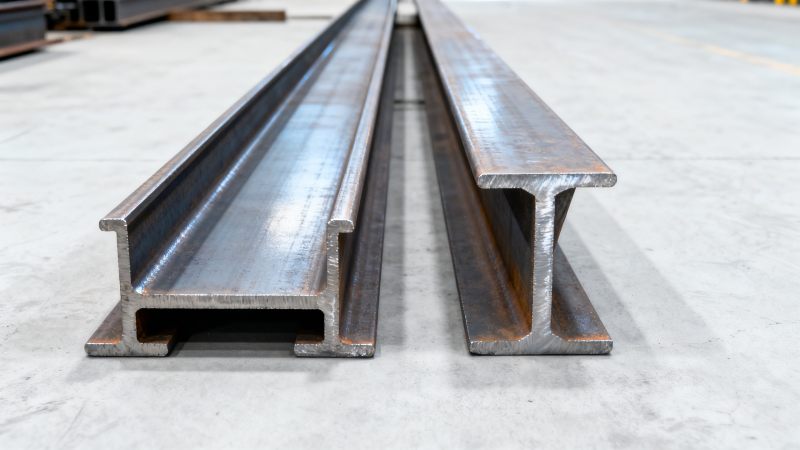
I beams and H beams serve as fundamental structural components in construction, but their geometric differences create distinct performance characteristics. The I beam's tapered flanges and narrow web create a cross-section resembling the letter "I", while H beams feature parallel flanges with equal thickness and a wider web.
Key strength parameters that differentiate these beams include:
- Moment of inertia (resistance to bending)
- Section modulus (bending strength capacity)
- Shear capacity (resistance to vertical forces)
- Torsional rigidity (resistance to twisting)
Load-Bearing Capacity Comparison
The following table compares critical strength parameters between standard I beams and H beams of equivalent weight per meter:
H beams typically provide 15-20% greater load-bearing capacity than I beams of equivalent weight due to their optimized flange-to-web ratio. However, I beams offer better performance in applications requiring precise directional loading.
Application-Specific Strength Considerations
For projects requiring specialized structural components like Stainless Steel Welded Mesh, beam selection must consider both primary structural needs and secondary support requirements. Our SS 201, 304, and 316L stainless steel meshes with 2-635mesh configurations complement both beam types in filtration and architectural applications.
When to Choose I Beams
I beams excel in these structural scenarios:
- Unidirectional loading applications (floor joists, roof purlins)
- Projects with strict weight limitations
- Structures requiring easier welding connections
- Budget-sensitive projects with moderate load requirements
When H Beams Deliver Superior Strength
H beams prove stronger for:
- Multi-directional loading conditions
- High-rise building columns and heavy industrial frames
- Applications requiring bolted connections
- Structures subject to seismic or dynamic loads
Material Efficiency and Cost Analysis
While H beams offer greater strength, I beams provide better material efficiency in certain applications. The table below compares typical cost and material usage factors:
Frequently Asked Questions
Can I beams and H beams be used interchangeably?
While sometimes possible for light loads, they shouldn't be directly substituted without engineering review. H beams typically provide 15-25% greater strength in equivalent sizes but may require different connection details.
How does beam selection impact project timelines?
H beams often require 2-3 weeks longer lead time for custom sizes, while standard I beam inventories allow for 7-10 day deliveries. Hongteng Fengda maintains both beam types in common sizes for immediate shipment.
What certifications should I verify for structural beams?
Essential certifications include ASTM A6 for structural steel, along with project-specific requirements like EN 10025 or JIS G3101. Our beams undergo rigorous testing with full traceability documentation.
Expert Structural Steel Solutions
Hongteng Fengda provides comprehensive support for your beam selection and procurement needs:
- Technical consultation for load calculations
- Custom cutting and drilling services
- ASTM/EN/JIS certified material options
- 30-45 day typical lead times for custom orders
Contact our engineering team today for beam specifications, project-specific strength calculations, or to discuss your structural steel requirements. We'll help you optimize both performance and budget with the right beam solution.
Please give us a message


Please enter what you want to find