Understanding the ASTM A106 Gr.B specification helps clarify whether a seamless carbon steel pipe truly fits high-temperature service, pressure duty, and project risk controls.
This guide explains the key requirements, practical review points, and sourcing checks that matter when comparing mills, documents, and real application conditions.
For global steel supply projects, clear standard interpretation reduces confusion, avoids mismatched materials, and supports better quality decisions across construction and industrial use.
When does the ASTM A106 Gr.B specification matter most?
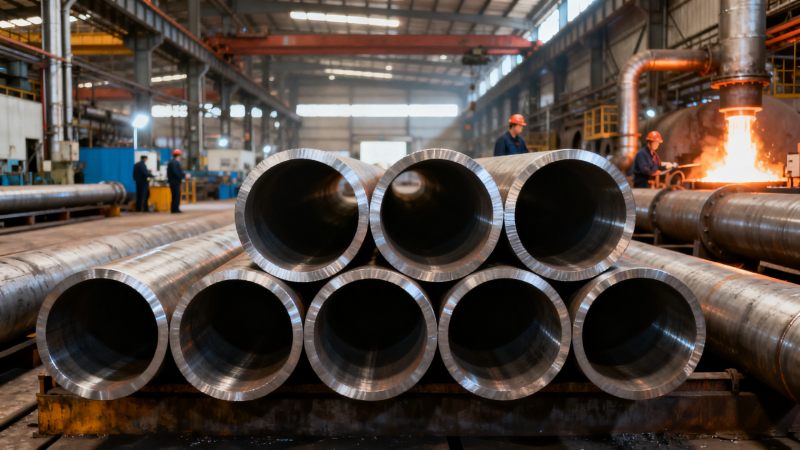
The ASTM A106 Gr.B specification is most relevant when seamless pipe is selected for elevated temperature service and pressure-containing systems.
It is commonly reviewed in power plants, refineries, process lines, mechanical systems, and general industrial piping projects.
In these scenarios, buyers do not only compare price. They compare chemistry, tensile properties, dimensions, traceability, and manufacturing consistency.
That is why the ASTM A106 Gr.B specification often appears during technical approval, bid comparison, and quality documentation review.
Which project scenarios require closer standard checking?
Different applications place different demands on seamless carbon steel pipe, even when the same grade is listed on drawings.
A correct reading of the ASTM A106 Gr.B specification depends on service temperature, working pressure, fluid type, fabrication method, and inspection level.
High-temperature process piping
This is the classic use case for the ASTM A106 Gr.B specification, especially where heat resistance and pressure performance are critical.
The core judgment point is not only grade name, but whether the supplied pipe meets the standard’s mechanical and testing requirements.
General industrial utility systems
Some utility lines specify A106 Gr.B for steam, compressed air, or process support systems because of reliable performance and wide market availability.
Here, dimensional tolerance, end finish, heat number traceability, and NDT expectations may affect installation efficiency more than basic strength values.
Fabrication and component conversion
Pipes are often cut, beveled, welded into assemblies, or matched with flanges and fittings before final installation.
In this scenario, surface condition, straightness, wall consistency, and document completeness become practical decision points.
What are the key requirements inside the ASTM A106 Gr.B specification?
At a glance, the ASTM A106 Gr.B specification defines seamless carbon steel pipe intended for high-temperature service.
However, the real value lies in the detailed requirements that affect acceptance, performance, and code compliance.
1. Manufacturing method
The material must be seamless. That means it is not an ERW or welded pipe substitute under this standard.
This point matters when project documents clearly require seamless construction for pressure service or elevated temperature operation.
2. Chemical composition
The ASTM A106 Gr.B specification includes limits for carbon, manganese, phosphorus, sulfur, silicon, and other elements as applicable.
These limits influence weldability, strength balance, and consistency across production heats.
3. Mechanical properties
Minimum tensile strength and minimum yield strength are essential checkpoints under the ASTM A106 Gr.B specification.
They help confirm whether the pipe can satisfy the baseline performance expected in industrial piping applications.
4. Heat treatment and finishing
Depending on production practice, pipe may be hot-finished or cold-drawn, with required process controls to achieve the specified condition.
Surface quality and finish should also be checked against order requirements and intended fabrication methods.
5. Testing and inspection
Hydrostatic testing or nondestructive electric testing is normally part of the ASTM A106 Gr.B specification review process.
Flattening, bending, and other mechanical verification steps may also apply depending on pipe size and manufacturing route.
How do material comparisons change across project needs?
The ASTM A106 Gr.B specification is often compared with A53, API grades, or regional standards during sourcing decisions.
A grade name match alone is not enough. The intended service scenario decides what should be checked more carefully.
In many steel supply chains, supporting products also need specification alignment for complete project execution.
For structural or fabrication support, Hot rolled Carbon Steel Round Bar may be selected for construction, water supplying, railings, furniture, or custom processing needs.
Available in carbon steel grades such as A106(A.B), A53(AB), S235JR, S355JR, and others, it offers excellent strength, wear resistance, flexible lengths, and export-ready packaging.
What should be checked before sourcing to ASTM A106 Gr.B specification?
A practical sourcing review should go beyond product title and focus on measurable acceptance points.
- Confirm seamless manufacturing, not welded substitution.
- Check chemical composition against mill test certificates.
- Verify tensile and yield values meet the ASTM A106 Gr.B specification.
- Review NPS, schedule, wall thickness, and length tolerance.
- Confirm hydro test or NDT records are available.
- Check marking, heat number, and traceability on each bundle or pipe.
- Match end condition with fabrication and installation requirements.
These checks make the ASTM A106 Gr.B specification more actionable and easier to compare across quotations.
Which misunderstandings cause the most common selection errors?
Several common mistakes appear when the ASTM A106 Gr.B specification is reviewed too quickly.
Confusing similar grades
Some users assume A53 Grade B and A106 Grade B are fully interchangeable in every case. They are not automatically equivalent.
Ignoring service temperature context
The ASTM A106 Gr.B specification is especially associated with high-temperature service. If that context is ignored, comparison may become misleading.
Reviewing certificates too late
Late document review can expose missing test records, incomplete traceability, or inconsistent dimensions after production is finished.
Focusing only on price
Lower cost may hide weaker inspection coverage, slower delivery certainty, or less reliable quality control.
How to match the ASTM A106 Gr.B specification with a reliable supply plan?
An effective supply plan connects standard review with manufacturing capability, export experience, and responsive technical support.
Hongteng Fengda, a structural steel manufacturer and exporter from China, supports global projects with stable production, quality control, and customized steel solutions.
Its product range covers angle steel, channel steel, steel beams, cold formed profiles, and custom structural components meeting ASTM, EN, JIS, and GB standards.
For buyers comparing the ASTM A106 Gr.B specification, a dependable partner can help align documentation, delivery timing, and related steel product needs.
Final decision steps for ASTM A106 Gr.B specification review
Start with the application scenario, then verify the exact ASTM A106 Gr.B specification requirements against technical documents and mill capability.
Next, compare chemistry, mechanical properties, testing method, dimensions, and traceability before approving supply.
This approach reduces sourcing risk and improves confidence when seamless carbon steel pipe is used in demanding industrial environments.
If a project also includes structural or fabricated steel demand, coordinated sourcing can improve consistency, lead time control, and overall execution efficiency.
Please give us a message


Please enter what you want to find