Understanding how to read SPCC steel specifications is essential for buyers, engineers, and sourcing teams working with SPCC steel for automotive industry needs. From thickness and temper to surface finish and forming performance, each detail affects part quality, compliance, and cost. This guide explains the key spec elements clearly, helping information-focused readers evaluate materials more accurately and make better sourcing decisions.
In automotive supply chains, a small mismatch in sheet specification can lead to stamping cracks, poor weldability, coating issues, or unnecessary cost increases. For information-focused readers, the goal is not only to identify what SPCC means, but also to interpret the full specification line in a practical way.
This matters even more when buyers compare multiple suppliers across Asia, Europe, or North America. A difference of 0.05 mm in thickness tolerance, one temper grade, or one surface designation can affect forming speed, scrap rate, and downstream consistency over 3 to 12 months of production.
What SPCC Means in Automotive Material Selection
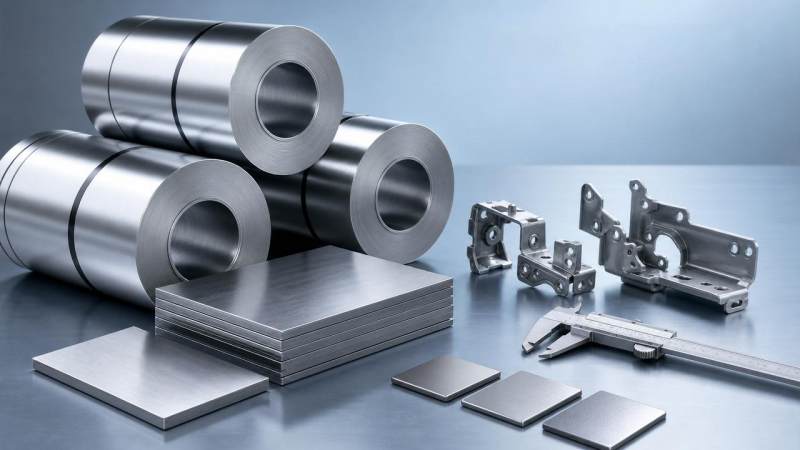
SPCC is a cold rolled commercial steel grade commonly referenced under JIS practice. In simple terms, it is a low-carbon cold rolled steel sheet used where stable dimensional accuracy, cleaner surface condition, and basic formability are required. For SPCC steel for automotive industry use, it is often considered for interior brackets, covers, reinforcement parts, small stampings, and non-exposed formed components.
However, SPCC is not a universal answer for every vehicle component. It usually fits applications with moderate forming demands rather than ultra-deep drawing or advanced crash-related structural parts. That is why reading the full spec matters more than relying on the steel grade name alone.
Basic meaning of the grade code
A typical interpretation is straightforward: the “SP” indicates steel plate or sheet, the second letter often relates to cold rolled classification, and the final letters point to commercial quality. In purchasing practice, though, the grade code alone covers only 30% to 40% of what a production engineer needs to confirm.
The rest usually comes from the detailed specification line, which may include thickness, width, coil or sheet form, temper or hardness condition, surface finish, edge condition, oiling, and sometimes flatness or coil inner diameter requirements.
Why automakers and suppliers pay attention to SPCC details
- Stamping quality can change significantly when thickness varies by even ±0.03 mm to ±0.08 mm.
- Surface condition affects painting, plating, lamination, and visible defect control.
- Hardness and temper influence bend radius, springback, and tool wear over thousands of cycles.
- Coil dimensions affect line setup efficiency, especially in batch runs of 2 to 8 tons.
Before comparing suppliers, it helps to separate “grade identification” from “production suitability.” The table below shows the difference.
The key takeaway is that SPCC steel for automotive industry projects should be evaluated as a package, not as a single grade label. Buyers who review only the grade often miss the process variables that create quality claims later.
How to Read the Full SPCC Steel Specification Line
A realistic specification line may include 6 to 10 data points. For example, a buyer may receive something like SPCC, 0.8 mm × 1250 mm, coil, bright finish, oiled, slit edge, standard hardness. Each item has a practical meaning that should be checked against the production drawing and process route.
1. Thickness and tolerance
Thickness is often the first value engineers look at, and for good reason. In automotive stampings, common cold rolled sheet thickness may range from 0.4 mm to 2.0 mm depending on the component. What matters is not just nominal thickness, but the acceptable tolerance band.
If a specification states 0.8 mm with a tolerance of ±0.05 mm, the actual sheet may range from 0.75 mm to 0.85 mm. That 0.10 mm spread can affect bending force, blank weight, welding current settings, and assembled gap control.
What to verify
- Nominal thickness on drawing and purchase order
- Permitted tolerance standard
- Whether tolerance applies across width, along length, or both
- Whether your press line can accept the upper-end thickness without overload
2. Width, length, and delivery form
SPCC may be supplied in coil, slit coil, or cut sheet. Width affects nesting efficiency and line compatibility. A 1000 mm width and a 1250 mm width may use the same grade, but the wider coil can change transport weight, decoiling stability, and scrap ratio.
For sheet form, buyers should confirm cut length tolerance, flatness, and whether corners must be square. For coil form, inner diameter, outer diameter, and coil weight per roll often matter. Many processors prefer coil weights in a manageable range such as 3 to 8 tons for smoother line feeding.
3. Temper, hardness, or forming condition
This is one of the most misunderstood fields. A softer temper generally supports better forming, while a harder temper improves resistance to denting and may hold shape better after forming. In automotive components with bends, flanges, or shallow draws, incorrect temper selection can raise scrap rates within the first 500 to 2,000 parts.
If the specification does not clearly state hardness or temper condition, ask for mechanical property ranges or intended forming suitability. In many sourcing cases, this single clarification prevents trial failures and production delays.
4. Surface finish and oiling condition
Automotive users often care about surface quality because it affects painting, electroplating, adhesive bonding, and visual inspection. A brighter or smoother finish may be required for visible trim-adjacent parts, while a standard finish may be acceptable for hidden brackets.
Oiling is also important. Light oil can improve rust resistance during 30 to 90 days of storage and transport, but too much oil may interfere with downstream cleaning or welding. Buyers should specify whether the material will be stamped, welded, phosphated, painted, or plated before finalizing the requirement.
The table below summarizes the most common spec fields and the questions procurement teams should ask before placing an order.
For SPCC steel for automotive industry procurement, the safest approach is to review the specification line alongside the process route. A sheet suitable for simple bracket stamping may not be suitable for a part that needs repeated flanging and spot welding.
Key Standards, Test Items, and Inspection Points
Once the specification line is understood, the next step is verification. Material approval should not depend on one certificate alone. In B2B automotive sourcing, teams typically review 4 categories: chemistry, mechanical properties, dimensional accuracy, and surface condition.
Common inspection checklist for incoming SPCC
- Thickness measurement at multiple points across the width
- Width and length verification against PO tolerance
- Surface review for dents, roll marks, stains, rust, and edge damage
- Mechanical property confirmation where forming performance is critical
- Coil tag and heat traceability review
- Packing condition after long-distance export shipment of 2 to 6 weeks
Why traceability matters
When parts move through blanking, stamping, welding, and assembly, it becomes difficult to isolate a defect source without traceability. A coil ID, heat number, production date, and inspection record can help identify whether the issue came from the steel, tooling, handling, or a later operation.
For exporters and global buyers, this is especially important because replacement time may extend from a few days to 3 or 4 weeks, depending on route and customs clearance. Good traceability reduces dispute time and protects production continuity.
A useful sourcing question
Instead of asking only for “mill test certificate,” ask whether the supplier can match each shipped coil to thickness records, inspection dates, and packing lists. This gives purchasing teams a clearer control point before material enters the line.
Common Purchasing Mistakes When Sourcing SPCC for Automotive Parts
Many sourcing problems do not come from the wrong steel grade, but from incomplete communication. Buyers may assume that all SPCC behaves similarly, while suppliers may quote based on minimum information. That gap often leads to re-qualification work, delayed stamping trials, or hidden cost increases.
Mistake 1: Buying by price per ton only
A lower quoted ton price may hide wider thickness tolerance, inconsistent surface condition, or weaker packaging for sea shipment. In practice, a 2% to 4% lower material price can be offset by higher scrap, slower press setup, or more incoming inspection time.
Mistake 2: Ignoring downstream process requirements
If the sheet will be welded, coated, or plated, those steps should be part of the material review. For example, a surface acceptable for a hidden support part may not be suitable for a coated automotive panel reinforcement. The earlier these needs are stated, the easier it is to align supplier output.
Mistake 3: Skipping sample or trial verification
For repeat parts or annual contracts, a trial lot is often worth the time. Even a 1-coil or 2-coil pilot can reveal practical issues in springback, edge cracking, lubrication response, or flatness. This is cheaper than discovering the mismatch after full-volume shipment.
Practical purchasing checklist
- Confirm grade, thickness, and tolerance
- Define temper or required forming level
- Specify surface finish and oiling condition
- Agree on coil or sheet dimensions and packing
- Request inspection documents and traceability details
- Validate the material through trial forming when risk is medium or high
In mixed-material procurement, some buyers also compare carbon steel and stainless options for non-structural automotive components. For example, where corrosion resistance, decorative finish, or non-magnetic requirements matter, alternatives such as 201 Stainless Steel Coil may be reviewed for selected automotive parts, kitchen-related vehicle fittings, or formed industrial components. Its published properties can include tensile strength of at least 520 MPa, yield strength of at least 275 MPa, elongation around 55% to 60%, and finishes such as BA, 2B, NO.4, HL, or 8K, depending on the application.
That said, material substitution should always be evaluated against forming behavior, corrosion environment, cost target, and joining process. Stainless and SPCC serve different roles, so comparison should be application-based rather than price-based alone.
How Global Steel Suppliers Can Support Better Automotive Sourcing Decisions
For buyers sourcing from China and other exporting regions, supplier capability is part of the specification discussion. A supplier should not only provide steel, but also help clarify standards, delivery form, processing options, and documentation requirements before an order is locked in.
Hongteng Fengda serves global industrial and manufacturing customers with structural steel products, customized solutions, and quality-focused supply support. While structural steel, profiles, beams, and fabricated components remain core areas, the same export discipline matters to any steel sourcing program: standard compliance, stable production, packaging control, and dependable lead time.
What information buyers should prepare before inquiry
- Target application and whether the part is visible, welded, or coated
- Required grade, thickness, width, and annual demand volume
- Coil or sheet preference and packing needs for export shipment
- Standard reference such as JIS, ASTM, EN, or internal drawing requirement
- Trial order quantity, approval timeline, and expected delivery window
Why this preparation improves sourcing outcomes
Clear technical input shortens quotation cycles, reduces revision rounds, and improves comparability between suppliers. In many cases, buyers can cut 1 to 2 weeks from the inquiry-to-approval stage simply by defining the key spec fields from the start.
It also helps avoid ordering “commercially correct but operationally unsuitable” steel. That distinction is especially important for SPCC steel for automotive industry use, where line compatibility matters just as much as the base material grade.
Final Guidance for Reading SPCC Steel Specs with Confidence
Reading SPCC specifications correctly means looking beyond the grade name and focusing on the full technical combination: thickness, tolerance, width, delivery form, temper, surface finish, oiling, and inspection requirements. For automotive applications, these details directly influence stamping stability, coating results, and total sourcing cost.
For buyers, engineers, and sourcing teams, the most reliable approach is to connect the material specification to the actual production process, then verify the details through documentation and trial use where needed. This reduces avoidable risk and supports more accurate supplier comparison.
If you are evaluating steel specifications for industrial or automotive-related projects and need practical supply support, customized processing input, or dependable export coordination, contact Hongteng Fengda to discuss your technical requirements, request a tailored solution, or learn more about suitable steel options for your next order.
Please give us a message


Please enter what you want to find