Using an I beam weight calculator correctly helps engineers, buyers, and project teams estimate load, cost, and material needs with greater accuracy. Whether you are comparing steel beam options, checking galvanized sheet price, reviewing ss pipe price, or planning rebar for concrete slab procurement, understanding the right calculation method can reduce sourcing risks and improve project efficiency.
Why does correct I beam weight calculation matter in steel purchasing and project planning?
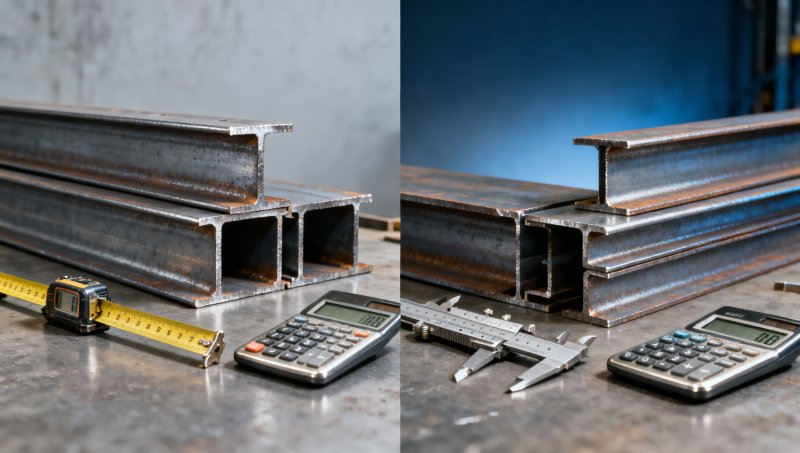
An I beam weight calculator is not just a convenience tool. In structural steel work, it directly affects freight budgeting, lifting plans, storage arrangements, fabrication cost estimation, and even whether the selected section is practical for the intended span. A small input error can multiply across 20, 50, or 200 pieces, which is why technical evaluators, procurement teams, and project managers should all understand the basic calculation logic.
In most projects, beam weight estimation is needed at 3 key stages: preliminary design comparison, supplier quotation review, and final material confirmation before production. At the early stage, teams use approximate section data to compare alternatives. During procurement, they check whether quoted tonnage matches the ordered beam type. Before shipment, they verify actual piece count, bundle weight, and loading feasibility for containers or trucks.
For steel importers and global contractors, weight also influences customs documentation, inland transport, and handling equipment selection. For example, a difference of 8 kg/m on a 12 m beam means 96 kg per piece. If the order includes 120 pieces, the total gap reaches 11,520 kg, enough to affect freight planning, crane selection, and landed cost calculations.
Hongteng Fengda, as a structural steel manufacturer and exporter from China, supports buyers who need both standard sections and customized structural steel solutions. This is especially important when buyers compare ASTM, EN, JIS, and GB based sections, because nominal dimensions may look similar while theoretical weight, tolerance range, and practical sourcing conditions can differ.
What an I beam weight calculator is actually used for
- Checking theoretical weight per meter before sending RFQs to 3–5 suppliers.
- Estimating total tonnage for a project package covering beams, channels, angle steel, and related components.
- Reviewing whether quoted shipping weight aligns with production drawings and section tables.
- Preparing lifting, warehousing, galvanizing, painting, and installation plans based on realistic weight ranges.
Theoretical weight versus actual delivered weight
Many misunderstandings begin here. An I beam weight calculator generally gives theoretical weight, calculated from section dimensions and steel density. Actual delivered weight can vary because of rolling tolerances, cut length tolerance, coating thickness, moisture during storage, or bundle packing differences. In practice, commercial review often uses theoretical weight, while warehouse acceptance may compare both theoretical and actual values within reasonable tolerance.
For purchasing decisions, this means teams should clarify one point early: is the quotation based on theoretical tonnage or actual weighbridge tonnage? This single distinction can reduce later disputes over invoicing, loading quantity, and shipment variance.
How to use an I beam weight calculator right: the 4-step method
If you want accurate results from an I beam weight calculator, treat it as part of a 4-step verification process rather than a one-click answer. Operators and buyers often focus only on beam size, but correct output depends on section standard, exact dimensions, material density assumption, and total order length. Missing any of these can distort both procurement and engineering decisions.
The first step is identifying the exact beam designation. A section listed under one national standard may not match another section with a similar name. The second step is confirming the unit basis, usually kg/m or kg/pc. The third step is applying the correct length, such as 5.8 m, 6 m, 9 m, or 12 m. The fourth step is reviewing the total quantity and whether accessories, end cuts, or coatings are included.
For project teams managing mixed structural steel packages, a consistent checking routine saves time. It is common to audit 5 key items before final approval: standard, size, weight per meter, order length, and total tonnage. This is especially useful when RFQs come from multiple regions and one buyer compares EN-style, ASTM-style, and GB-style material in the same project file.
Below is a practical guide that helps users avoid basic mistakes when using an I beam weight calculator for quotation review, technical assessment, and project execution.
Step-by-step checklist for reliable calculation
- Confirm the beam type and standard. Check whether it is a standard I beam, H beam, or custom fabricated section, and identify ASTM, EN, JIS, or GB reference.
- Input exact section dimensions. Web thickness, flange width, flange thickness, and overall height must match the standard table or supplier drawing.
- Apply the correct unit length. A beam at 6 m and the same beam at 12 m will produce a 2x total piece weight even though the section weight per meter stays unchanged.
- Multiply by exact quantity and verify practical extras. Include cutting loss, spares, galvanizing effect if relevant, and packing assumptions for shipping review.
Common input errors that create expensive problems
A frequent mistake is confusing nominal designation with real dimensions. Another is using a calculator configured for one standard while ordering a beam from another standard family. Teams also forget to separate beam net weight from package gross weight. In export business, these differences matter because freight quotations, container stuffing plans, and inland handling charges may all be linked to tonnage brackets.
A second group of errors comes from length assumptions. For example, if a calculator result is based on 12 m stock length but your site only accepts 6 m pieces, the purchase plan changes immediately. More cuts may be needed, handling becomes easier, but total processing cost may rise. Correct use of the calculator means linking numerical output to practical project conditions, not viewing it in isolation.
The table below summarizes the most common decision points when using an I beam weight calculator in real steel procurement workflows.
This table shows why correct calculator use is a cross-functional task. Engineering checks the profile, procurement reviews tonnage basis, logistics checks loading impact, and quality teams verify delivered material against the approved specification.
What should buyers compare besides beam weight?
A correct I beam weight calculator result is valuable, but smart procurement goes further. Buyers should compare grade, standard compatibility, corrosion protection needs, lead time, and total package integration. In many industrial and building projects, beams are not purchased alone. They are often sourced together with channels, angle steel, plates, pipes, cold formed profiles, or custom welded parts.
This is where supplier capability becomes important. A manufacturer that can support multiple structural steel categories often helps reduce sourcing fragmentation. Instead of coordinating 4 or 5 separate vendors, buyers can combine more items under one production and inspection workflow. That can improve schedule visibility over a 2–4 week production window and reduce communication risk for project managers and commercial teams.
For example, when a project needs beam systems plus bracing and support members, the decision may involve angle steel as well. A qualified Angle Steel Supplier can support framing, brackets, trim, reinforcements, and bracing components in carbon steel, stainless steel, or other alloys. Typical thickness ranges from 3–20 mm, and common size coverage can span from 20*20mm*3mm to 200*200mm*20mm, with lengths such as 5.8 m, 6 m, 9 m, and 12 m.
When comparing quotations, do not isolate price from usability. A slightly lower ton price may create higher downstream cost if tolerances are unstable, standards do not match project drawings, or the supplier cannot coordinate mixed products under ASTM, DIN, GB, JIS, bs, or AiSi related requirements. Strong purchasing decisions balance section weight, technical fit, compliance, and delivery reliability.
Practical comparison points for procurement teams
- Check whether the beam and accessory products can be sourced under one inspection plan.
- Confirm material grades such as Q235, Q345, Q420, Q460, S235JR, ST37-2, ST52, SS400, or St-37/52 based on design demand.
- Review whether standard stock sizes are available or whether OEM customization is needed.
- Ask for manufacturing tolerance control, test document availability, and packing method before order confirmation.
Why integrated steel sourcing can reduce risk
Integrated sourcing is especially useful for overseas buyers who need stable communication and dependable lead times. Hongteng Fengda serves customers across North America, Europe, the Middle East, and Southeast Asia with structural steel products and customized solutions. For buyers, this means less coordination friction when one package contains beam sections, angle members, channel steel, and fabricated components under one export workflow.
This approach also helps quality control personnel. Instead of checking documents from multiple small suppliers, they can review a more unified set of specifications, production records, and shipment details. Over a project cycle with 3 major milestones—technical approval, production release, and pre-shipment verification—that consistency can save both time and internal review effort.
The table below can help procurement, technical, and commercial teams compare beam supply options beyond simple unit price.
For most B2B buyers, the stronger option is not simply the lowest quoted figure. It is the supplier that helps align specification, tonnage, schedule, compliance, and shipment execution without creating hidden cost later.
How do standards, tolerances, and compliance affect calculator accuracy?
An I beam weight calculator becomes more reliable when it is used together with the correct standard and tolerance understanding. Structural steel products may comply with ASTM, EN, JIS, or GB related systems, and each standard family has its own section tables, naming logic, and dimensional conventions. If users select the wrong standard basis, the calculator may still produce a number, but that number may not match the beam being purchased.
Quality control and safety management personnel should also note that theoretical weight is not a substitute for dimensional inspection. A beam may fall within commercial weight expectation yet still require dimensional checks on height, flange width, web thickness, length tolerance, and straightness. For projects with high fit-up requirements, these checks are often done at 2 stages: pre-production approval and pre-shipment inspection.
For coated or processed material, calculation accuracy needs one more layer of review. Galvanized or painted structural steel may have additional mass due to coating, although quotation practice often still uses base theoretical steel weight. Buyers should confirm whether any finishing process changes billing basis, shipment planning, or installation handling requirements.
Suppliers with modern manufacturing facilities and strict quality control offer an advantage here. They can help buyers translate design intent into practical production data, especially when projects require customized structural steel components rather than simple stock sections.
5 checks before approving the final beam order
- Verify the exact section table and applicable standard.
- Match grade and mechanical requirement to design demand.
- Confirm whether tonnage is theoretical or actual.
- Review tolerance expectations for dimensions and length.
- Check whether test documents and inspection records are needed before shipment.
When should you ask the supplier to recheck the calculation?
Ask for a recheck whenever there is a mismatch between drawing section name and quoted section weight, when the length differs from normal stock length, when the project mixes several standards, or when the quoted total tonnage seems inconsistent with the piece count. These are common risk points in export procurement, and they are easier to solve before production than after shipment documents are issued.
A good practical rule is to trigger a manual review if the total tonnage difference exceeds the expected planning buffer for the project package. Even when the variance looks small on one line item, it can become meaningful when repeated across multiple beam sizes and several containers.
FAQ: what do users often get wrong about an I beam weight calculator?
This topic attracts users from different roles, so the questions are not always the same. An engineer may focus on section validity, while a buyer may care more about quotation consistency and landed cost. The FAQs below address the most common issues seen in structural steel sourcing and project execution.
If your project involves steel beams together with other structural products, it is worth treating calculator output as part of a broader technical-commercial review. That approach usually creates better results than using isolated figures copied from online tools.
The answers below are written for information researchers, operators, procurement teams, quality staff, project managers, distributors, and decision-makers who need practical rather than purely theoretical guidance.
Is the calculator result enough to place an order?
No. The calculator is a starting point, not a complete ordering basis. You still need to confirm standard, grade, dimensions, length, quantity, delivery condition, and quotation method. In real purchasing, at least 5 items should match before order release: section type, section standard, kg/m, cut length, and total tonnage basis.
Can I use one calculator for all I beams from different countries?
Not safely. Similar beam names can exist across different standard systems, but the dimensions and weight per meter may not be identical. If your project involves imported steel, always confirm whether the calculator data is tied to ASTM, EN, JIS, or GB tables. This is especially important in multinational procurement where design references and supplier stock may come from different regions.
What if my beam is customized or fabricated?
For customized structural steel components, a general I beam weight calculator may not be enough. Welded sections, drilled members, coped ends, base plates, stiffeners, or special coatings can all change the practical weight and manufacturing cost. In such cases, request a supplier check based on drawings, processing details, and final delivery condition.
How much does length affect total beam weight?
Length affects total piece weight directly and proportionally. If the section is 30 kg/m, then a 6 m piece weighs about 180 kg and a 12 m piece weighs about 360 kg before considering tolerance or finishing. This matters for transport, lifting, storage, and site handling. For projects with access limits, shorter lengths may be easier to install even if processing cost increases.
Why choose a structural steel partner that supports calculation, selection, and delivery together?
When buyers use an I beam weight calculator correctly, they make better decisions. But better decisions become easier when the supplier can also support standard interpretation, mixed-product coordination, manufacturing control, and export execution. That is where an experienced structural steel manufacturer and exporter adds value beyond quoting a number per ton.
Hongteng Fengda provides structural steel products and customized solutions for global construction, industrial, and manufacturing projects. The product range covers angle steel, channel steel, steel beams, cold formed steel profiles, and customized structural steel components. With modern manufacturing facilities and strict quality control, the company supports buyers who need stable production capacity, consistent quality, and dependable lead times across international markets.
If you are comparing beam sections, reviewing a supplier quotation, or planning a mixed steel package, you can ask for support on 6 practical points: parameter confirmation, section selection, standard matching, delivery cycle, customization feasibility, and documentation requirements. This helps reduce sourcing risk before contract confirmation and improves execution after the order is placed.
Contact us if you want help checking beam weight calculations, confirming steel grades, matching ASTM/EN/JIS/GB related requirements, reviewing cut lengths such as 5.8 m to 12 m, planning OEM structural steel components, or discussing sample support and quotation details for your project package.
Please give us a message


Please enter what you want to find