Reading ASTM steel pipe specifications can be confusing when every code, grade, and dimension affects performance, compliance, and cost. This guide helps information-focused buyers understand ASTM steel pipe specs clearly, so you can compare materials, avoid sourcing mistakes, and make more confident decisions for construction, industrial, and manufacturing applications.
What do ASTM steel pipe specs actually tell you?
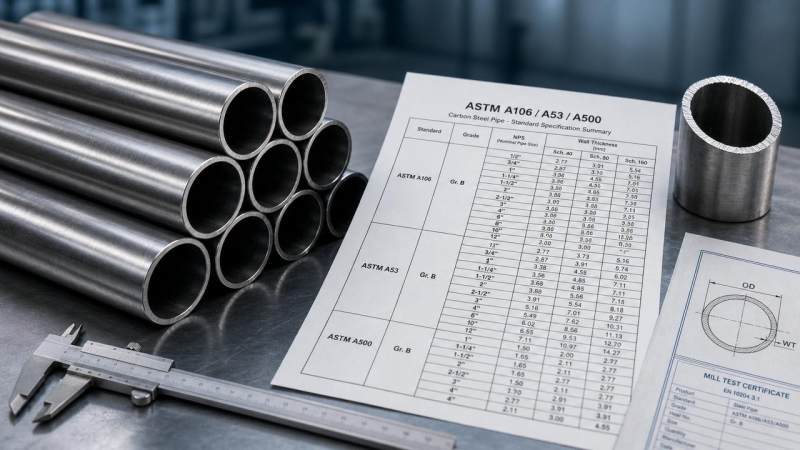
An ASTM steel pipe specification is not just a product label. It is a compact technical language that defines material chemistry, mechanical properties, manufacturing method, dimensional tolerance, testing requirements, and intended service conditions.
When buyers read ASTM steel pipe documents too quickly, they often focus only on outside diameter and wall thickness. That is risky. The standard number, grade, schedule, end finish, and inspection clauses can change whether the pipe is suitable for structural support, fluid transport, fabrication, or export compliance.
In steel sourcing, a small wording difference matters. ASTM A53 pipe, ASTM A500 tubing, and ASTM A106 pipe may look similar in a quotation sheet, but they are not interchangeable in every project. Understanding the spec helps you avoid overbuying, under-specifying, or delaying approval.
- The ASTM designation identifies the governing standard and the general product category.
- The grade defines key performance levels such as strength or pressure suitability.
- The size and schedule describe wall thickness and dimensional capacity, which directly affect load, flow, and weldability.
- Testing and certification clauses confirm whether the material can pass project review, third-party inspection, or destination market requirements.
How to break down an ASTM steel pipe spec line without missing details
A full ASTM steel pipe description often appears as a short line in a mill test certificate, purchase order, or supplier offer. The easiest way to read it is to separate it into fixed decision points.
A practical reading sequence
- Start with the ASTM standard number. This tells you the main technical framework, such as structural use, pressure service, or mechanical tubing use.
- Check the grade. Grade A, B, or other designations can mean different tensile and yield performance.
- Confirm manufacturing type. The spec may involve seamless, ERW, welded, or cold-formed production.
- Review dimensions carefully, including nominal pipe size, outside diameter, wall thickness, and schedule.
- Read end condition and length requirements. Plain end, beveled end, random length, or fixed length can affect installation efficiency.
- Look for test and document requirements, such as hydrostatic test, flattening test, nondestructive examination, and mill certification.
For information-focused buyers, this sequence reduces the chance of treating ASTM steel pipe as a generic commodity. It also makes supplier quotations easier to compare on a like-for-like basis.
Which ASTM steel pipe standards are most commonly confused?
Many sourcing errors begin when several common ASTM steel pipe standards are grouped together as if they serve the same function. The table below highlights major differences buyers should review before approving a material list.
This comparison shows why the ASTM standard number should be your first filter. If your project is structural, a product meeting a piping standard may not always be the most efficient solution. If your service is pressure-related, structural tubing may not satisfy code expectations.
Where buyers often get misled
- They assume similar dimensions mean equivalent performance.
- They compare only price per ton and ignore testing scope.
- They accept a substitute grade without checking end-use approval requirements.
What dimensions and technical data deserve the closest attention?
After identifying the standard and grade, the next step is dimensional reading. In ASTM steel pipe sourcing, thickness-related details drive both engineering performance and cost. Two pipes with the same diameter can behave very differently if schedule or wall thickness changes.
The table below summarizes the technical fields that buyers should verify before requesting a final quotation or approving production.
If your project includes fabrication, welding, or structural load transfer, it is wise to review tolerance and straightness requirements as well. Seemingly minor deviation can increase shop labor, especially when pipe must align with prefabricated steel frames or brackets.
How should buyers compare ASTM steel pipe for different applications?
Not every ASTM steel pipe is selected for the same purpose. Information researchers often need a simple application view before moving into quotations. The right choice depends on whether the pipe will carry media, support structure, resist external loads, or be cut into fabricated components.
Application-based decision points
- For structural frameworks, focus on section performance, weldability, dimensional consistency, and compatibility with steel beams, channels, and angle products.
- For pressure service, confirm temperature conditions, testing requirements, and applicable code acceptance before comparing unit price.
- For manufacturing use, evaluate machinability, straightness, and whether secondary processing such as drilling, bending, or coating is required.
- For project export procurement, pay attention to packaging, traceability, and whether ASTM documents align with destination-market documentation practices.
This is where an experienced structural steel supplier becomes useful. Hongteng Fengda manufactures and exports structural steel products from China for construction, industrial, and manufacturing projects, supporting buyers who need ASTM, EN, JIS, or GB-aligned products and coordinated sourcing decisions across multiple steel categories.
In some reinforced concrete projects, steel pipe is only one part of the material package. Buyers may also need reinforcing products for load-bearing, structural, and stirrup scenarios. For example, HPB300 Rebar is commonly considered where moderate cost, ease of processing, and standard yield strength of no less than 300 MPa are relevant to concrete reinforcement planning.
What compliance and documentation should you request before ordering?
ASTM steel pipe selection is not complete when the dimensions look correct. Documentation confirms whether the delivered material matches the approved specification. This step is especially important for import buyers, EPC contractors, fabricators, and distributors serving regulated projects.
Key documents to confirm
- Mill test certificate showing chemical composition and mechanical properties under the ordered standard and grade.
- Dimensional inspection records covering diameter, wall thickness, length, and applicable tolerances.
- Testing records when required, such as hydrostatic, flattening, or nondestructive examination results.
- Marking and traceability information to connect bundled products with production and certificate data.
- Export packing details, especially for sea freight, mixed container loading, or anti-corrosion protection requirements.
When a supplier manages multiple structural categories, buyers can also reduce coordination risk. A project may combine steel pipe with angle steel, channel steel, steel beams, cold formed profiles, and custom steel components. Coordinated quality control across these items helps prevent mismatched standards and separate delivery delays.
How can you avoid common sourcing mistakes with ASTM steel pipe?
The most expensive mistakes are not always visible at quotation stage. Many arise from assumptions, incomplete inquiry sheets, or incorrect substitutions. A disciplined review process protects both budget and schedule.
Common mistakes and practical fixes
For global buyers, these controls are especially useful when comparing suppliers across regions. Stable production capacity and consistent documentation can matter as much as unit price, particularly when the project timeline is tight or customs review is strict.
FAQ about ASTM steel pipe specs
How do I know whether ASTM A53 or ASTM A500 is the better choice?
Start with the project function, not the appearance. ASTM A53 is often used for general pipe service and can support some structural uses, while ASTM A500 is typically associated with structural tubing applications. If the item is part of a building frame or fabricated steel assembly, structural design requirements usually deserve priority.
Does a higher grade always mean better ASTM steel pipe?
Not necessarily. A higher grade may provide higher strength, but it can also affect cost, availability, or processing choices. The right grade is the one that satisfies design, code, fabrication, and budget needs without adding unnecessary specification burden.
What should be included in an inquiry for ASTM steel pipe?
A useful inquiry should include the ASTM standard, grade, size, wall thickness or schedule, length, end finish, quantity, application, test requirements, coating if needed, and destination market. If the pipe will be welded into larger assemblies, mention fabrication expectations and tolerance sensitivity.
Can one supplier help if my project includes pipe and other structural steel products?
Yes, and that often improves project coordination. When a supplier can support pipe together with angle steel, channel steel, steel beams, cold formed profiles, and customized components, buyers can simplify communication, control compatibility risk, and better align delivery schedules.
Why choose us when evaluating ASTM steel pipe and related steel products?
For information-stage buyers, the real challenge is not only understanding ASTM steel pipe. It is turning specifications into a practical sourcing decision with manageable risk. Hongteng Fengda supports that process with structural steel manufacturing and export experience focused on construction, industrial, and manufacturing projects.
Our team can help you review specification lines, compare standards, and coordinate related steel categories under one sourcing plan. We supply standard specifications and OEM-oriented solutions, with quality control aligned to major international standards such as ASTM, EN, JIS, and GB.
If you are comparing ASTM steel pipe options, you can contact us for practical support on parameter confirmation, grade selection, matching structural products, delivery planning, custom processing feasibility, documentation expectations, sample support, and quotation communication. If your project also involves reinforcing steel, HPB300 Rebar and related models can be discussed as part of a combined material solution.
A clear inquiry today can save time in engineering review, purchasing approval, and on-site installation later. When you send your required standard, dimensions, application, and destination, we can help you narrow the right solution faster and with fewer sourcing surprises.
Please give us a message


Please enter what you want to find