In wet areas, selecting 304 stainless steel pipe is only the starting point. Service life depends on inspection details, environmental exposure, fabrication quality, and maintenance planning.
When 304 stainless steel pipe works around moisture, splashing water, or condensation, small flaws can trigger staining, crevice corrosion, or premature performance loss.
For steel projects, checking the right points early helps control repair costs, improve safety, and keep structures stable in demanding operating conditions.
Basic Understanding of 304 Stainless Steel Pipe in Wet Areas
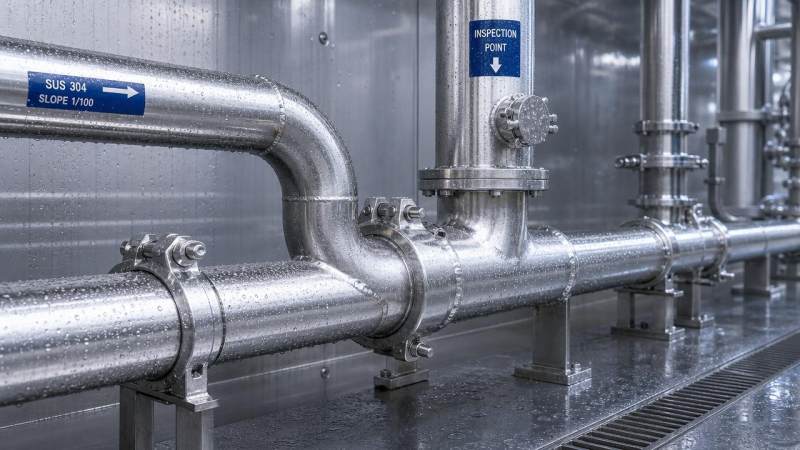
304 stainless steel pipe is an austenitic stainless steel product widely used for drainage supports, handrails, process lines, frames, and utility systems.
Its corrosion resistance comes from a chromium-rich passive layer. This protective film can reform naturally, but only if the environment is not overly aggressive.
In wet areas, the main risk is not clean water alone. Chlorides, trapped moisture, poor cleaning, and damaged surfaces often matter much more.
That is why 304 stainless steel pipe performs well in many indoor damp settings, yet may struggle in coastal, chemical, or salt-exposed locations.
A practical review should cover material confirmation, surface finish, weld integrity, support details, drainage slope, and nearby contamination sources.
Current Industry Concerns Around Moisture Exposure
Across construction and industrial steel applications, attention has shifted from simple material selection to total corrosion-risk management.
Several recurring warning signals appear when 304 stainless steel pipe is installed in wet or washdown areas:
- Tea staining near marine air or deicing salt exposure
- Rust spots caused by carbon steel contamination during fabrication
- Crevice attack under clamps, gaskets, or trapped debris
- Weld discoloration left untreated after installation
- Poor drainage causing permanent standing water on pipe surfaces
These issues show that corrosion performance is linked to design and workmanship, not only to the grade name on the mill certificate.
Key risk signals to review
Inspection Value for Steel Projects and Asset Reliability
A structured inspection process improves more than appearance. It protects uptime, hygiene, structural stability, and long-term cost control.
For example, early detection of weld tint on 304 stainless steel pipe can prevent local corrosion from spreading into difficult repair zones.
Likewise, checking support spacing and contact materials helps avoid abrasion, trapped moisture, and galvanic influence from incompatible metal contact.
Many steel systems combine stainless and galvanized components. In surrounding structures, Gi Sheet Coil may be used for building processing and construction enclosures.
With galvanized steel grades such as DX52D and SGCD1, thickness ranges from 0.12mm to 3.5mm, offering processing flexibility and corrosion protection for non-pipe structural parts.
This broader material coordination matters because runoff, fastener choice, and adjacent steel details can affect the wet-area performance of 304 stainless steel pipe.
Typical Wet-Area Applications and What to Check
Not all wet environments are equally severe. Inspection priorities should reflect water chemistry, cleaning frequency, and local geometry.
Common application categories
In lower-risk indoor spaces, 304 stainless steel pipe usually performs well if surfaces stay clean and water does not remain trapped.
In more aggressive areas, especially where chlorides accumulate, inspection should also question whether 304 remains the correct grade.
Practical Checklist for 304 Stainless Steel Pipe
A reliable field review should be systematic. The following checkpoints are useful during installation, acceptance, and maintenance cycles.
1. Verify material and traceability
- Confirm grade markings and mill test documentation
- Check pipe dimensions, wall thickness, and specification compliance
- Separate stainless materials from carbon steel storage areas
2. Examine surface condition
- Look for scratches, embedded iron, grinding marks, or surface rust
- Prefer clean, consistent finishes that shed water and dirt more easily
- Check whether protective film residue remains after installation
3. Check weld quality carefully
- Inspect for undercut, porosity, spatter, or incomplete fusion
- Review whether heat tint was removed by proper post-weld treatment
- Pay special attention to circumferential joints in splash zones
4. Review drainage and geometry
- Avoid flat pockets where water can sit for long periods
- Inspect low points, sleeves, clamps, and base connections
- Make sure condensate can escape instead of staying hidden
5. Assess environmental chlorides
- Identify bleach, salt spray, disinfectants, or brine residues
- Review cleaning chemicals and rinse practices
- If exposure is persistent, consider grade reassessment
6. Check surrounding steel details
Adjacent materials can influence condition. Fasteners, brackets, and cladding should not create contamination or water-retention problems.
Where galvanized enclosure parts are needed, products like Gi Sheet Coil can support corrosion-resistant construction elements with good forming and welding performance.
Maintenance Priorities and Next-Step Actions
Even correctly selected 304 stainless steel pipe needs periodic review in wet service. Inspection frequency should match exposure severity and cleanliness demands.
Routine maintenance should remove deposits before they concentrate chlorides. Gentle cleaning methods are usually better than aggressive abrasive treatment.
If discoloration appears, document location, moisture pattern, nearby chemicals, and fabrication details. This helps distinguish surface contamination from active corrosion.
When reviewing a project, create a simple checklist covering grade confirmation, surface finish, weld treatment, drainage, support design, and chemical exposure.
That approach makes 304 stainless steel pipe decisions more reliable and reduces the chance of hidden problems developing after handover.
For steel applications in wet areas, a careful inspection today is often the most cost-effective way to protect performance tomorrow.
Please give us a message


Please enter what you want to find