Ordering ASTM stainless steel can go wrong when buyers confuse grades, pipe standards, and application limits. From 304 pipe selection to comparing ASTM A106 pipe, many teams also misjudge dimensions, tolerances, and cost factors such as stainless steel square tube prices and ss square tube price. This guide explains the ASTM stainless steel specs that most often trigger purchasing errors and how to avoid them.
Why do ASTM stainless steel orders get misunderstood so often?
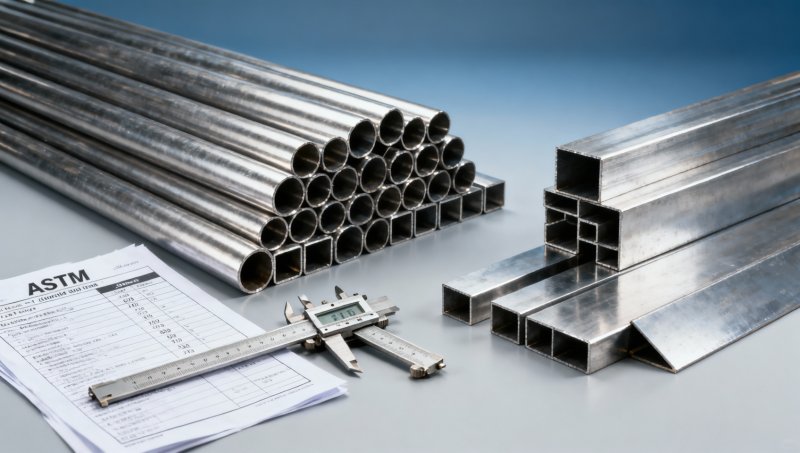
In steel purchasing, the term “ASTM stainless steel” sounds straightforward, but it often covers multiple product forms, chemical requirements, testing methods, and dimensional standards. A buyer may ask for 304 stainless steel pipe, while the engineering team actually needs a pressure pipe standard, a sanitary tube standard, or a welded ornamental tube with tighter surface expectations. That mismatch can create delays of 7–15 days, remake costs, or site installation problems.
Another common issue is mixing material grade with product standard. Grade 304 or 316 describes alloy composition, but ASTM specifications such as A312, A249, A554, or A240 define manufacturing route, tolerances, tests, and intended use. In the same project, a technical evaluator may focus on corrosion resistance, while procurement looks at price per ton and finance checks budget variance within 3%–8%. If the specification sheet is incomplete, each department may assume something different.
This confusion becomes more serious in export trade. Buyers across North America, Europe, the Middle East, and Southeast Asia often compare ASTM with EN, JIS, or GB references. If the purchase order only says “stainless pipe ASTM” or “SS square tube 304,” the supplier still needs to confirm wall thickness, OD range, welding process, finish, mill test requirements, and inspection scope. Missing just 1 of these 6 items can change both cost and suitability.
For project managers and quality teams, the safest approach is to treat ASTM ordering as a 4-part decision: alloy grade, product form, standard number, and end-use condition. Once those four are aligned, ordering mistakes drop sharply, and quotation comparisons become much more accurate.
The 5 confusion points that appear most in RFQs
- Using alloy names like 201, 304, 304L, 316, or 316L without naming the ASTM product standard.
- Confusing pipe, tube, hollow section, and square tube, even though tolerances and applications differ.
- Comparing stainless steel with carbon steel standards such as ASTM A106 pipe, which serves a very different material category.
- Ignoring finish, weld condition, or pickling requirements that affect both corrosion performance and appearance.
- Requesting the lowest ss square tube price without checking wall thickness tolerance, test documents, or application load.
Which ASTM specifications are most often mixed up in stainless steel purchasing?
Many ordering mistakes begin when teams compare standards that belong to different product families. ASTM stainless steel plate, sheet, pipe, tube, bar, and wire mesh each follow different specifications. Even when the grade is the same, the acceptance criteria are not. A 304 plate ordered under one standard cannot automatically replace a 304 welded tube ordered under another.
The table below helps clarify how common ASTM stainless steel specifications differ in purchasing practice. It is especially useful for procurement personnel, technical reviewers, and distributors who need fast alignment between quote, drawing, and final application.
The practical takeaway is simple: never approve a stainless steel order based only on grade. The ASTM number determines how the product is made, what tests apply, and what tolerances the mill must meet. For many projects, that distinction matters more than the alloy name alone.
A frequent search comparison is 304 stainless steel pipe versus ASTM A106 pipe. This comparison is misleading because ASTM A106 is a carbon steel seamless pipe standard used for high-temperature service, not a stainless steel standard. Teams sometimes compare them only because both products are called “pipe.” In reality, corrosion profile, alloy cost, and service environment are completely different. That mistake can distort technical review and budget planning in the first 2–3 quotation rounds.
How to read an ASTM stainless steel order line correctly
A complete order line should include at least the following fields. If one or two are missing, quotation accuracy drops and substitution risk rises. This is where many users, operators, and project teams lose time during clarification.
- Material grade, such as 304, 304L, 316, or 316L.
- ASTM product standard, such as A240, A312, or A554.
- Dimensions, including OD, wall thickness, length, or mesh count where relevant.
- Surface and delivery condition, for example annealed, pickled, polished, or mill finish.
- Inspection and documents, such as heat number traceability or mill test report.
A mid-project reminder on stainless steel beyond pipe and tube
Not every ASTM stainless steel procurement issue is about pipe. In filtration, screening, chemical handling, architecture, and residential applications, buyers also need wire-based products with controlled mesh opening, wire diameter, and corrosion behavior. In those cases, a product such as Stainless Steel Welded Mesh may be more relevant than tube or pipe, especially when the requirement focuses on sieve performance, rust resistance, and chemical exposure.
Typical options in this category include SS 201, 304, 304L, 316, 316L, and 430, with wire diameter ranges from 0.0008″ to 0.12″ and mesh from 2 to 635 mesh. For procurement and quality teams, these numbers matter because they directly affect open area, micron retention, and service life. Roll width can reach up to 240″ and roll length up to 2000′, so packaging, freight planning, and installation method should also be confirmed before order release.
When such products are used in chemical industry, mine industry, filters, or architectural screens, the key decision is not just grade selection. Teams should review 3 linked factors: corrosion medium, retention requirement, and mechanical durability. That prevents a low-cost choice from becoming an early replacement issue.
How should buyers compare grades, dimensions, and price without making a false economy decision?
In many RFQs, buyers ask for the best stainless steel square tube prices or the lowest ss square tube price, but price comparison without full dimensional alignment is unreliable. A square tube quoted at one price may use a different wall tolerance, polish condition, weld finish, or length basis. The result is that two suppliers appear to offer the same product, while one is actually quoting a lighter or lower-finish item.
The same principle applies to 304 pipe selection. If one supplier quotes ASTM A312 304 with pressure-grade testing and another quotes a decorative welded tube in 304, the lower number may look attractive but fail the intended service. For finance approvers and business evaluators, cost control should be based on total usable value, not only unit price per meter or per ton.
A practical comparison method is to review 5 dimensions together: grade, standard, size tolerance, finish, and test documentation. If even one of these differs, the offer is not a true apples-to-apples comparison. This approach typically reduces re-quotation cycles from 3 rounds to 1–2 rounds in organized sourcing projects.
The table below shows how purchasing teams can compare stainless steel offers more accurately when reviewing pipe, tube, or related stainless products.
This type of side-by-side review helps procurement, QC, and project leaders defend a sourcing decision internally. It also gives finance teams a clearer reason why one offer may be 5%–12% higher but still lower in total project risk.
Grade selection: when is 304 enough, and when should 316 or 304L be considered?
304 is widely used because it balances cost, availability, and corrosion resistance for many indoor, general industrial, architectural, and light chemical applications. However, where welding is extensive or intergranular corrosion concerns exist, 304L can be a better purchasing choice. In chloride-rich or marine-adjacent environments, 316 or 316L is often reviewed because molybdenum improves resistance compared with 304 in many common service conditions.
For decision-makers, the best practice is not to upgrade every order automatically. Instead, define the environment clearly: indoor dry, outdoor urban, washdown, chemical contact, or high-temperature service. Then verify whether the ASTM product standard and grade combination matches the duty cycle. This prevents both under-specification and unnecessary overspending.
What should technical, QC, and project teams check before approving an ASTM stainless steel PO?
Before purchase order release, approval should move through a short but disciplined review. In many steel projects, the difference between a smooth delivery and a site issue comes down to 6 inspection points checked before payment terms are finalized. This matters to quality managers, safety personnel, project engineers, and distributors who need reliable downstream performance.
First, verify standard and grade together. Second, confirm dimensions against drawing or use condition. Third, review finish and weld expectations. Fourth, define inspection documents. Fifth, confirm packing and marking. Sixth, check lead time and split shipment rules. These steps are simple, but they reduce claim risk significantly in cross-border steel procurement.
For export orders, lead time clarity is especially important. Standard stainless items may fit common production windows of 2–4 weeks depending on quantity, while customized structural steel components or non-standard processing can require longer coordination. A purchase order that says “urgent” but omits document timing, approval sequence, or packaging method can still miss the project milestone.
At Hongteng Fengda, the practical advantage for global buyers is coordinated support across standard steel products, customized structural steel components, and multi-standard export requirements. Because many projects involve ASTM, EN, JIS, and GB references at the same time, early clarification helps reduce sourcing risk, cost variance, and rework pressure.
A useful pre-approval checklist
- Confirm whether the item is pipe, tube, plate, bar, mesh, beam-related component, or a custom fabricated steel part.
- Match the ASTM specification with the intended service instead of relying on grade name only.
- Check tolerance expectations, especially on wall thickness, OD, straightness, cut length, or mesh opening.
- Request inspection records needed by the project, customer, or local code reviewer.
- Align shipment batch, marking, and packaging details before deposit or final approval.
Why cross-functional review matters
Operators focus on usability, engineers focus on compliance, procurement focuses on price, and finance focuses on budget. If these teams review different versions of the requirement, order accuracy falls fast. A short cross-functional signoff process, even just 3 stages of technical check, commercial review, and final approval, can prevent expensive mistakes later in manufacturing or installation.
This is particularly relevant in structural steel and industrial supply chains, where stainless items are often purchased together with angle steel, channel steel, beams, cold formed profiles, or customized steel assemblies. One supplier that can coordinate standard compliance, production planning, and export delivery creates a more stable procurement workflow.
Common FAQ before ordering ASTM stainless steel
Below are the questions most often raised by information researchers, technical evaluators, purchasing teams, distributors, and end users. These answers help narrow down specification risk before inquiry or order confirmation.
Is ASTM A106 pipe an alternative to stainless steel pipe?
No. ASTM A106 is a carbon steel seamless pipe standard for high-temperature service. It is not a stainless steel specification. If corrosion resistance is part of the service requirement, comparing ASTM A106 directly with 304 or 316 stainless pipe will lead to the wrong technical and cost conclusion.
What is the most common mistake when ordering 304 pipe?
The most common mistake is naming the grade but not the ASTM product standard. “304 pipe” may refer to different manufacturing and application types. Always confirm whether the project needs pressure pipe, mechanical tubing, sanitary tubing, or decorative tube. Also define size, schedule, finish, and documents in the RFQ.
How should I judge stainless steel square tube prices?
Judge them only after checking 4 items together: exact size, wall thickness, standard, and finish. A lower quote may reflect lighter actual weight, wider tolerance, or lower surface requirement. For fair comparison, ask suppliers to quote on the same basis, such as per 6 m length, per ton, or per piece with stated tolerance.
When should 304L or 316L be specified instead of 304 or 316?
Low-carbon “L” grades are commonly considered when welding is extensive or when post-weld corrosion behavior is a concern. Final selection should still depend on service medium, fabrication method, and project standard. In practical procurement, this should be reviewed before final drawing release, not after production starts.
Why choose a supplier that can clarify standards before quotation?
In steel sourcing, the best savings often come from preventing specification errors rather than only negotiating unit price. A supplier with manufacturing experience and export coordination capability can help confirm whether your order needs ASTM, EN, JIS, or GB alignment, whether the product should be pipe, tube, profile, or fabricated component, and whether documentation and packing meet the destination market expectation.
Hongteng Fengda supports global buyers with structural steel products, customized solutions, and stable production planning for construction, industrial, and manufacturing projects. For teams managing mixed procurement packages, this matters because one order may include standard steel sections, custom components, and stainless-related items that must still fit a single schedule and quality plan.
If you are comparing ASTM stainless steel specifications, checking 304 pipe suitability, reviewing differences from ASTM A106 pipe, or evaluating stainless steel square tube prices, it is worth clarifying the technical basis before you compare offers. A 15-minute specification review can prevent weeks of correction later.
You can contact us to discuss parameter confirmation, product selection, standard matching, delivery cycle planning, customized solutions, sample support, documentation needs, and quotation comparison. This is especially useful when your team needs fast alignment between engineering, procurement, QC, and commercial approval before placing the order.
Please give us a message


Please enter what you want to find