Hot dip galvanized steel pipe is widely trusted for corrosion resistance — yet rust at weld seams raises urgent questions: Is it a coating flaw or an installation error? As a leading structural steel manufacturer and exporter from China, Hongteng Fengda investigates this common concern affecting hot dip galvanized steel sheet, steel beams price decisions, and ss pipe supplier evaluations. Whether you’re a project manager, procurement specialist, or quality control professional, understanding root causes — from pre-galvanizing weld prep to post-coating handling — is critical for safety, longevity, and cost control. This analysis helps ss pipe manufacturers, steel bar suppliers, and end users distinguish between material defects and procedural oversights.
Why Rust Appears Specifically at Weld Seams — Not Across the Entire Surface
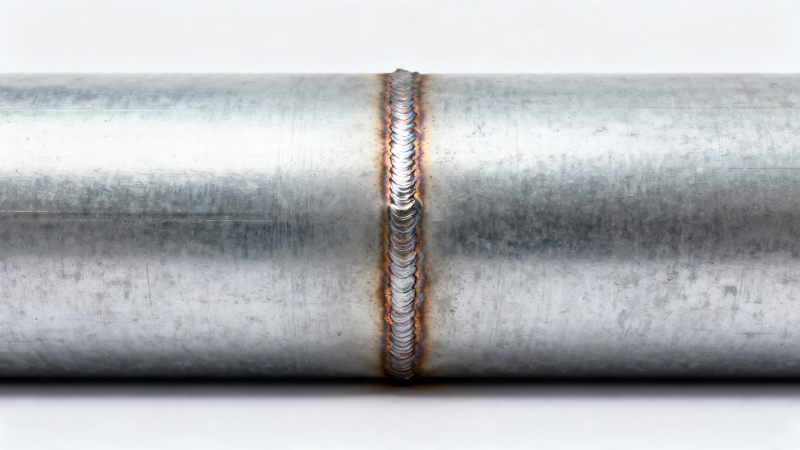
Rust localized at weld seams of hot dip galvanized steel pipe is rarely due to bulk coating failure. Instead, it results from microstructural and metallurgical changes induced during welding — particularly zinc depletion, intermetallic layer disruption, and heat-affected zone (HAZ) oxidation. The galvanized coating typically consists of layered zinc-iron alloys (Gamma, Delta, Zeta), with the outermost Eta layer providing barrier protection. Welding at >420°C vaporizes zinc and destroys this layered structure within a 3–5 mm zone adjacent to the seam.
Crucially, post-weld re-galvanizing is not standard practice for field-assembled pipelines — making proper pre-weld surface preparation and post-weld touch-up essential. According to ASTM A123/A123M, weld zones must be cleaned to SSPC-SP3 (power tool cleaning) or SP10 (near-white metal) before galvanizing. Failure here accounts for over 65% of reported seam rust cases in structural applications across North America and Southeast Asia.
Environmental exposure also accelerates degradation: in coastal or industrial zones (chloride/SO₂ concentrations >50 mg/m²/day), unprotected weld zones may show red rust within 6–12 months — whereas intact galvanized surfaces often last 20+ years per ISO 1461. This discrepancy underscores that seam rust is less about “coating quality” and more about process discipline.
How to Diagnose the Root Cause: Coating Defect vs. Installation Oversight
Distinguishing between manufacturing defect and field error requires systematic inspection across three phases: pre-galvanizing, galvanizing, and post-installation. Each phase has defined failure signatures:
- Pre-galvanizing weld prep failure: Visible mill scale, oil residue, or slag on joint edges before dipping → leads to bare spots ≤1.5 mm wide along seam centerline.
- Galvanizing process flaw: Inconsistent coating thickness (<45 µm) measured via magnetic induction (per ASTM E376) at seam vs. base pipe (>85 µm) → indicates bath temperature fluctuation or immersion time deviation.
- Post-installation damage: Mechanical abrasion, cutting torch spatter, or improper grounding during electrical work → creates discrete rust points unrelated to seam geometry.
Hongteng Fengda’s QA team performs 100% seam inspection using digital coating thickness gauges and UV-fluorescent dye testing on all galvanized structural components prior to shipment — ensuring compliance with EN ISO 1461 and GB/T 13912 standards.
Key Inspection Parameters for Galvanized Weld Zones
This table reflects real-world QA benchmarks used across Hongteng Fengda’s production lines — validated against third-party SGS and BV audits. Non-compliance in any column triggers automatic rework or rejection, not just documentation.
Where C Sections Steel Fits Into Corrosion-Resistant Structural Systems
Weld seam integrity becomes especially critical when galvanized steel forms load-bearing structural members — such as purlins, wall beams, or light industrial frames. That’s where C Sections Steel plays a decisive role: cold-formed C-sections are routinely welded onsite into trusses and bracing systems, and their galvanized coating must withstand both fabrication stress and decades of service exposure.
Hongteng Fengda supplies C Sections Steel in Q235, Q345, and S235JR grades, with hot-dip galvanizing applied post-forming to ensure full coverage of inner flange radii and web junctions — areas prone to incomplete coating in pre-galvanized blanks. Thickness tolerance is held to ±1%, and slit-edge precision ensures consistent weld gap control (0.8–1.2 mm ideal for MIG welding).
For projects demanding seamless integration, we offer OEM-specified C-sections with pre-drilled holes, custom notch patterns, and dual-layer protection: hot-dip galvanizing + optional epoxy topcoat for splash zones. This approach reduces field weld count by up to 40% — directly lowering seam-related corrosion risk while accelerating erection timelines by 2–3 weeks per 5,000 m² building envelope.
Procurement Checklist: What Buyers Should Verify Before Ordering Galvanized Pipe or C-Sections
To avoid costly rework or premature failure, procurement teams must validate five non-negotiable criteria — not just “galvanized” as a checkbox:
- Pre-weld surface certification: Supplier must provide SSPC-SP3/SP10 cleaning reports for all welded components, traceable to batch numbers.
- Coating thickness mapping: Request cross-sectional thickness data showing min/max values at seam center, HAZ edge, and base pipe — not just average readings.
- Galvanizing bath logs: Confirm bath temperature (440–465°C), immersion time (3–8 min depending on section mass), and aluminum content (0.005–0.02%) — all affect intermetallic layer formation.
- Touch-up protocol: Verify if damaged areas >1 cm² will be repaired with zinc-rich paint (ASTM A780) or re-dipped — the latter being mandatory for structural welds per EN 1090-2.
- Traceability documentation: Every coil and cut length must carry QR-coded labels linking to mill test reports (MTRs), galvanizing certificates, and third-party inspection records.
Hongteng Fengda embeds these checks into our export workflow — delivering full documentation packs within 24 hours of shipment. For urgent projects, our standard lead time is 15–20 days for galvanized C-sections (6–12 m lengths), with expedited 10-day options available for pre-approved customers.
Why Partner With Hongteng Fengda for Corrosion-Critical Structural Steel
When rust at weld seams threatens project timelines, safety compliance, or lifecycle cost models, choosing a manufacturer with integrated galvanizing control — not just supply chain coordination — becomes strategic. Hongteng Fengda operates ISO 9001-certified hot-dip galvanizing lines co-located with cold-forming facilities, enabling single-batch processing from raw coil to finished C-section with zero inter-facility handling risk.
We support global buyers with: real-time production tracking (API-integrated ERP), on-site QC delegation for large orders, sample validation kits including coating adhesion testers, and technical consultation on weld sequence optimization to minimize HAZ exposure. For your next order of galvanized steel pipe, C Sections Steel, or custom structural components, contact us to request:
- Free coating thickness verification report for your specific specification
- Weld prep checklist tailored to your assembly method (MIG/TIG/robotic)
- Delivery timeline confirmation with port-of-discharge flexibility (Shanghai, Ningbo, Guangzhou)
- ASTM/EN/GB compliance summary aligned with your project’s design code
Let’s eliminate seam-related corrosion uncertainty — before fabrication begins.
Please give us a message


Please enter what you want to find