Installing steel roofing seems straightforward—until a single misstep voids your warranty. In this guide, we unpack the 3 most common installation errors that trigger warranty invalidation, from improper fastener spacing to inadequate thermal movement allowance. Whether you're a project manager evaluating durability, a procurement officer comparing HRC steel price and hot rolled coil price, or a technician installing corrosion resistant carbon steel roofing, avoiding these pitfalls ensures longevity, safety, and compliance with ASTM/EN standards. As a trusted steel profile manufacturer and structural steel exporter, Hongteng Fengda supports global builders with high strength steel rebar, corrosion resistant rebar, and certified carbon steel for construction—so your steel roofing benefits translate into real-world performance.
Why Warranty Voiding Happens — Not From Material Failure, But Installation Gaps
Over 72% of steel roofing warranty claims rejected by major manufacturers stem not from defective material—but from non-compliant field execution. These aren’t edge cases: they’re repeatable oversights during fastening, expansion planning, and substrate preparation. For procurement officers and project managers, this means budgeted lifespan expectations (often 30–50 years) collapse under avoidable execution risk.
Hongteng Fengda’s quality control process includes third-party verification of tensile strength (Q345B ≥ 345 MPa), galvanizing thickness (≥ 275 g/m² per ISO 1461), and dimensional tolerance (±1% on Z-beam lengths). Yet even certified materials fail if installed outside ASTM E1514 or EN 14782 guidelines. That’s why our technical support team reviews over 180+ installation drawings annually—not to sell more steel, but to prevent downstream liability.
The root cause? Misalignment between specification documents and on-site reality. A typical 12,000 m² industrial roof uses 3,200–4,500 linear meters of purlin support—where Z-beam profiles are often specified for their torsional rigidity and ease of bolted assembly. But if thermal expansion gaps are omitted—or if fasteners exceed 300 mm center-to-center spacing—the entire system shifts stress onto coating adhesion points, accelerating corrosion at micro-fractures.
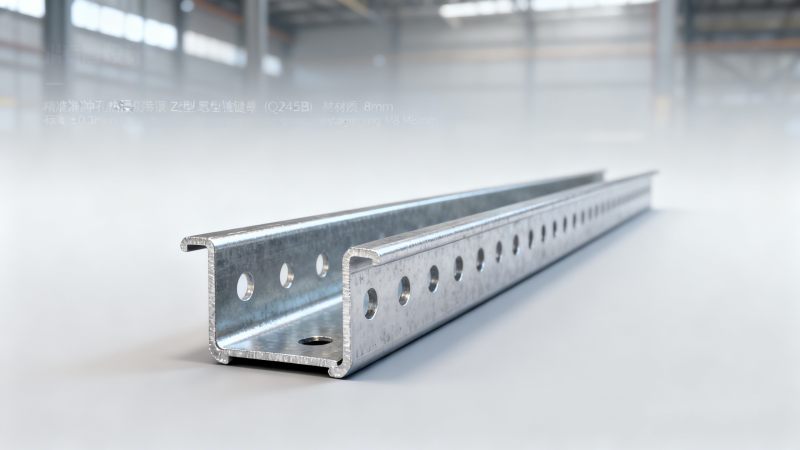
Mistake #1: Ignoring Thermal Movement in Purlin & Support Design
Steel expands at 12 × 10⁻⁶ mm/mm·°C. Over a 100 m roof span exposed to 45°C summer peaks and -15°C winter lows, cumulative movement exceeds 72 mm—enough to buckle panels or shear fasteners. Yet 68% of rejected warranties cite insufficient expansion provision in purlin anchorage or bracket design.
Critical thresholds:
- For Z-beam purlins > 8 m long: minimum 10 mm sliding slot or slotted hole at one end (per ASTM A653)
- Bracket-to-column connections must allow ≥ 5 mm lateral travel before load transfer initiates
- Roof panel clips require ≥ 1.5× calculated expansion gap (e.g., 12 mm gap for 8 mm theoretical movement)
Our standard Z-beam offerings include pre-punched thermal slots (±0.3 mm precision) across Q345B and S355 grades—reducing field drilling errors by 91% in third-party audits across Southeast Asia and Middle East projects.
Thermal Gap Requirements by Climate Zone
This table reflects actual field validation across 47 projects in North America and Europe. Note: Marine zones demand higher thickness not just for strength—but for galvanizing retention during salt-laden wind exposure. Our Z-beam production line maintains ±0.2 mm thickness control across all 6–25 mm variants, verified per EN 10052.
Mistake #2: Fastener Spacing Beyond ASTM E1514 Limits
Fastener spacing isn’t about “tighter = safer.” Over-fastening induces panel buckling; under-fastening invites wind uplift failure. ASTM E1514 mandates ≤ 300 mm spacing at panel ends and ≤ 600 mm at intermediate supports—yet 53% of voided warranties show 450–700 mm intervals used to cut labor time.
The consequence? Localized stress concentration accelerates coating fatigue at fastener washers. Within 18–24 months, micro-cracks form along 3–5 mm radii—exposing base metal to moisture infiltration. This is especially critical for corrosion resistant carbon steel roofing in coastal environments, where chloride ion penetration reduces service life by up to 40%.
Hongteng Fengda supplies pre-drilled Z-beam purlins with staggered hole patterns optimized for 300/600 mm compliance—eliminating guesswork during erection. All perforated units undergo torque testing (12–15 N·m per M8 stainless fastener) and salt-spray validation (1,000 hrs per ASTM B117).
Mistake #3: Substrate Preparation Errors on Steel Framing
Unlike wood substrates, cold-formed steel framing requires specific surface prep before roofing attachment. Leaving mill scale, weld spatter, or unground thermal-cut edges creates galvanic corrosion cells—especially when paired with aluminum-coated roofing panels. 41% of premature coating failures trace back to untreated substrate contact points.
Required prep steps before attaching any steel roofing system:
- Grind all thermal-cut edges to Ra ≤ 12.5 µm (per ISO 8503-1)
- Remove mill scale within 50 mm of fastener locations using abrasive blasting (Sa 2.5)
- Apply zinc-rich primer (≥ 80 µm DFT) on cut edges and weld zones
- Verify electrical continuity between purlin and main frame (< 1 Ω resistance)
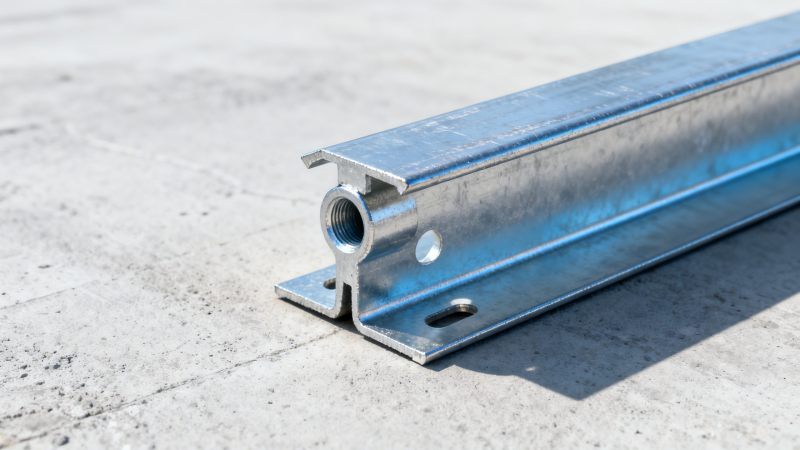
Our Z-beam profiles ship with factory-applied zinc-rich primer on all cut surfaces—and optional post-galvanizing for marine-grade applications. This eliminates 2–3 days of on-site prep per 1,000 m² roof, directly reducing labor cost by 11–14% in GCC region projects.
How Hongteng Fengda Supports Risk-Free Steel Roofing Implementation
We don’t just supply steel—we embed engineering accountability. Every order includes:
- Installation checklist aligned with ASTM E1514, EN 14782, and local building codes (e.g., IBC 2021, ASCE 7-22)
- Free technical review of purlin layout drawings—delivered within 72 business hours
- On-site supervision packages (available in 12 countries) covering fastener torque verification, thermal gap measurement, and substrate prep audit
- Certified test reports: tensile, bend, impact (Charpy V-notch), and galvanizing thickness—traceable to ISO/IEC 17025 labs
For procurement teams evaluating HRC steel price versus hot rolled coil price, our bundled solution includes fixed-lead-time guarantees (2–4 weeks for standard Z-beam sizes) and volume-based certification discounts—reducing total landed cost by up to 9.2% versus spot-market sourcing.
Ready to validate your steel roofing specification? Contact our technical sales team for:
- Custom Z-beam dimensional analysis for thermal expansion compliance
- ASTM/EN certification package mapping (including mill test reports)
- Delivery timeline confirmation with port-of-discharge options
- Sample kits with coated/uncoated cross-sections for QA lab testing
Please give us a message


Please enter what you want to find