Galvanized pipe for water supply is widely used in construction and utility projects, but is the zinc coating alone enough to guarantee long-term safety, corrosion resistance, and cost efficiency? For buyers comparing galvanized steel price, steel pipe supplier options, and galvanized steel for construction, understanding the real limits and benefits of galvanized pipe is essential before making technical or procurement decisions.
When Is Galvanized Pipe for Water Supply a Practical Choice?
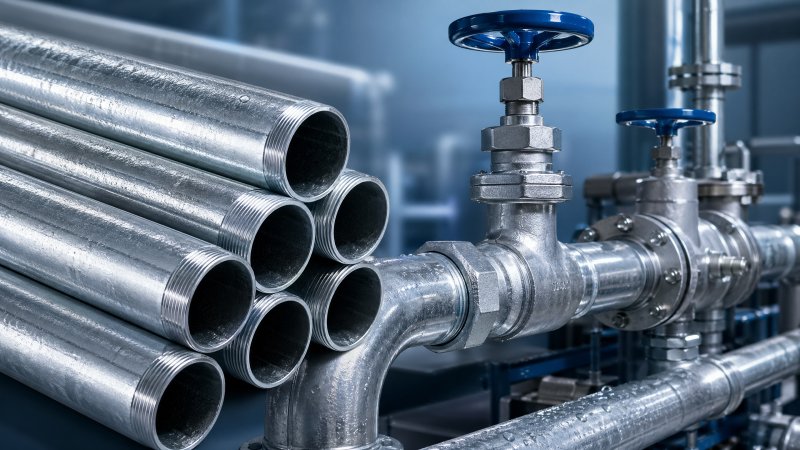
Galvanized pipe remains a familiar option in water supply networks, temporary utility lines, agricultural systems, and some building service applications. The zinc coating protects the carbon steel base by creating a barrier layer and offering sacrificial protection when the surface is scratched. In many projects, this makes galvanized steel pipe a cost-conscious solution for medium-duty use, especially where budgets are tight and installation schedules fall within 2–4 weeks.
However, the key question is not whether galvanized pipe has value, but whether the zinc layer alone is enough for the real service environment. Water chemistry, flow velocity, installation quality, outdoor exposure, storage conditions, and maintenance frequency all influence actual performance. In practice, the same galvanized pipe can perform acceptably in one system and show scaling, white rust, or internal corrosion in another within a much shorter cycle.
For technical evaluators, procurement teams, and project managers, the decision should start with service conditions rather than price only. If the pipeline handles non-aggressive water, moderate pressure, and straightforward routing, galvanized pipe may be suitable. If the project involves strict hygiene expectations, frequent wet-dry cycling, or long-term hidden installation beyond 10–15 years, a deeper comparison is necessary before selecting galvanized steel for construction or water supply.
This is especially important for global buyers sourcing from a steel pipe supplier in China or other export markets. Material grade, coating process, end-use requirement, and compliance documents should be reviewed together. A lower galvanized steel price may reduce upfront spend, but lifecycle cost often depends on corrosion behavior, replacement frequency, and quality consistency across each batch.
What the zinc coating can and cannot do
The zinc layer helps delay base metal corrosion, especially on the external surface in normal atmospheric environments. It can also reduce handling damage risk during transport and site installation. In many standard industrial and construction applications, this coating improves practical durability compared with uncoated carbon steel.
But zinc is not a universal shield. Internal water conditions can slowly consume the coating, especially when water contains dissolved oxygen, high mineral content, unusual pH, or deposits that trap moisture. Once the zinc protection is reduced, the steel substrate becomes more vulnerable. That is why “galvanized” should never be treated as a standalone guarantee of permanent corrosion resistance.
Three early screening questions
- Will the pipe carry potable water, process water, or general utility water, and are local code requirements different for each use?
- Is the expected service period closer to a temporary 1–3 year installation or a permanent 10+ year building network?
- Will the pipe operate indoors, outdoors, buried, or in areas with repeated condensation and maintenance access limitations?
Is the Zinc Layer Alone Enough for Long-Term Corrosion Resistance?
In short, not always. Galvanized pipe for water supply performs best when the environment is controlled and the design expectation is realistic. Zinc thickness matters, but coating thickness alone does not solve all corrosion problems. Internal deposits, poor threading protection, weld area damage, stagnant sections, and incompatible fittings can all shorten the working life of the system.
For water supply service, corrosion often starts at vulnerable points rather than across the full pipe body. Typical risk zones include threaded ends, cut edges, joints, bends, supports, and areas where water stagnates for long periods. This means project quality control should not focus only on material receipt inspection. It should also include 4 key stages: specification review, incoming inspection, installation supervision, and post-installation pressure or leakage checks.
Another overlooked issue is mismatch between expected life and actual operating conditions. A galvanized steel pipe used in a low-demand agricultural water line may meet expectations. The same product in a concealed building system with variable temperature, intermittent use, and strict hygiene concerns may face higher risk. Buyers should therefore evaluate not just galvanized steel price, but also whether the system allows inspection, replacement, and maintenance every few years if required.
The table below helps distinguish where zinc coating is usually adequate and where extra caution is required. These are practical screening guidelines rather than universal design rules, but they are useful for procurement comparison and early technical discussions.
The practical takeaway is clear: zinc coating improves corrosion resistance, but it should be considered one protection measure inside a larger system decision. For long-life or compliance-sensitive installations, coating quality, pipe base material, joining method, environment, and maintenance plan should all be evaluated together.
Common conditions that accelerate performance decline
- Frequent wet-dry cycles that promote white rust on newly galvanized surfaces during storage or service.
- Cutting, threading, or welding without suitable treatment of exposed areas after fabrication.
- Long sections of low-flow or stagnant water that allow deposits to form internally over time.
- Mixed-material systems where galvanic interaction or connection detail is poorly controlled.
How Does Galvanized Pipe Compare with Other Water Supply Material Options?
For many buyers, the real issue is not whether galvanized pipe works, but whether it is the best fit compared with black steel plus coating, stainless steel, ductile iron, or non-metal alternatives accepted in the local market. Each option balances capital cost, corrosion profile, fabrication convenience, and expected maintenance burden differently. This is where technical teams and financial approvers need the same comparison framework.
Galvanized steel pipe often remains attractive because it is familiar, mechanically robust, and widely available through established steel pipe supplier channels. It also integrates well in mixed construction packages where structural steel, supports, brackets, and pipe components are sourced together. For projects with moderate service demands, that supply chain simplicity can reduce purchasing friction and shorten coordination time by 7–15 days.
Still, buyers should not assume the lowest initial material price will deliver the lowest total cost. In some applications, alternatives may justify their higher purchase cost through longer service intervals, simpler maintenance, or better compliance alignment. A structured comparison helps avoid late design changes, return claims, and installation disputes.
The following table summarizes common decision factors used by project engineers, distributors, and procurement managers when reviewing galvanized steel for construction and water-related applications.
This comparison shows why galvanized pipe still holds a clear position in the steel sector. It is not obsolete, but it should be chosen for the right use case. A reliable supplier will help buyers compare not only price per ton or per meter, but also specification fit, fabrication method, end protection, export packing, and delivery predictability.
A useful mid-project material reference
In many construction and fabrication projects, buyers also source support components, shafts, pins, railings, frames, or machined steel parts alongside pipe materials. In such cases, a versatile carbon steel product can simplify sourcing coordination. For example, Q235 Carbon Steel Round Bar can be used in decoration, construction, handrail, railing, staircase, door, window, balcony, fence, furniture, and even water supplying support scenarios, with diameter ranges from 5–2500 mm and common lengths such as 2 m, 5 m, 6 m, and 12 m.
For buyers who need matching steel materials under ASTM, EN, JIS, or GB-oriented procurement systems, this kind of round bar offers practical flexibility. Surface options such as passivation, oiling, lacquer sealing, phosphating, galvanized finish, PVC, black or color painting, and anti-rust oil can help align fabrication and transport requirements. It is especially relevant when one supplier is expected to support both structural steel and related fabricated component sourcing within the same 2–3 batch schedule.
What Should Buyers Check Before Ordering from a Steel Pipe Supplier?
A smart procurement process for galvanized pipe for water supply usually combines technical review and commercial review in parallel. Waiting until the purchase order stage often leads to confusion over coating method, pipe ends, thread standards, testing scope, or export package details. A better approach is to define 5 key checkpoints before quotation comparison becomes final.
First, confirm the applicable standard and grade. International buyers often work across ASTM, EN, JIS, and GB references, and the exact project requirement must be aligned with destination market expectations. Second, clarify whether the pipe is for direct water conveyance, structural support near water systems, or general utility routing. These categories may look similar in a quotation sheet but carry different technical implications.
Third, verify dimensions, wall thickness, and end finishing. Fourth, confirm coating process details, inspection records, and packing conditions, especially if sea freight transit may last several weeks. Fifth, ask the supplier to define realistic lead time windows, such as 20–35 days for standard production or longer when mixed specifications, custom cutting, or OEM marking is involved.
For B2B buyers, quality control personnel and project leaders, these checks reduce sourcing risk more effectively than price negotiation alone. A stable manufacturer with modern facilities and export experience can support documentation consistency, repeat orders, and specification tracking across multiple shipments.
A 5-point procurement checklist
- Check whether the base steel grade and production standard match project drawings, bid documents, or customer specifications.
- Review coating type, visible finish condition, and whether cut ends or threaded ends need additional handling.
- Confirm packaging method for container shipment, moisture prevention, and handling during loading and unloading.
- Ask for inspection scope, such as dimensional checks, surface checks, and standard mill documentation where applicable.
- Align delivery schedule with project milestones, allowing buffer time for customs, inland transport, and site acceptance.
Why supplier capability matters beyond the pipe itself
Large and medium-scale projects often need more than one steel category. Structural members, channels, angles, beams, cold formed profiles, and custom components may all be linked to the same installation package. Working with a manufacturer and exporter that already serves North America, Europe, the Middle East, and Southeast Asia can simplify communication across standards, packing expectations, and lead-time planning.
Hongteng Fengda’s strength in structural steel manufacturing and customized supply is particularly relevant here. Buyers looking at galvanized steel for construction usually also need dependable production capacity, controlled quality, and a partner that understands OEM requirements, not just spot trading. That reduces coordination gaps between engineering, purchasing, and on-site execution teams.
How to Balance Cost, Compliance, and Service Life in Real Projects
The best procurement decisions in the steel industry rarely come from unit price alone. They come from matching material performance to project life, compliance expectations, and replacement cost. For galvanized pipe for water supply, that means asking whether the selected pipe will remain economical after installation labor, downtime exposure, inspection needs, and possible future replacement are considered.
For example, an accessible external line may tolerate periodic maintenance and therefore justify a lower initial material cost. A concealed commercial building network may not. In the second case, a cheaper pipe that requires premature intervention can become the more expensive choice once demolition, labor, shutdown, and reputation risk are included. Financial approvers and project owners should therefore compare initial procurement cost against expected maintenance intervals over 3, 5, or 10 years.
Compliance also matters. Depending on the destination market, buyers may need material documentation aligned with ASTM, EN, JIS, or GB references, plus traceable inspection records and specification clarity for import or project acceptance. A professional exporter should be able to support standard-based production communication without overstating claims or creating document inconsistency.
If your organization is comparing multiple steel pipe supplier offers, use a total-evaluation model rather than a single-price ranking. The table below is a practical internal review tool for procurement, quality, finance, and engineering teams.
This kind of evaluation helps teams avoid the common mistake of overestimating what the zinc layer can do. Galvanized pipe can be a very reasonable option, but only when its cost profile is judged against the actual service environment and the supplier’s ability to deliver consistent, compliant steel products.
FAQ and Next Step: How to Make a Safer Water Supply Material Decision
Many buyers, engineers, and end users ask the same practical questions before placing orders. The answers below can help narrow the decision path and reduce uncertainty during supplier comparison, budgeting, and technical review.
Is galvanized pipe always suitable for potable water supply?
Not always. Suitability depends on local code requirements, water chemistry, service life expectations, and the installation environment. For some projects, it may still be used in certain water-related systems. For others, especially where hidden piping or strict hygiene requirements apply, alternative materials may be reviewed more carefully before final approval.
What should I ask a steel pipe supplier before requesting a final quote?
At minimum, ask about standard and grade, dimension range, wall thickness, coating method, end treatment, inspection scope, packing type, and lead time. If your project includes multiple steel categories, also ask whether the supplier can coordinate beams, channels, angles, cold formed sections, or custom components within the same shipment plan.
How long is the usual delivery cycle for export steel products?
For standard specifications, production often falls within a common 20–35 day window, though exact timing depends on quantity, finish, testing, and shipping arrangements. Mixed orders, OEM marking, or custom fabrication can extend the schedule, so procurement teams should confirm production and logistics milestones early.
Why do some galvanized pipe projects fail earlier than expected?
Early issues usually come from condition mismatch rather than from one single defect. Common causes include aggressive water conditions, poor storage before installation, untreated cut or threaded areas, inadequate maintenance access, and selecting galvanized pipe where a longer-life or more corrosion-resistant solution was needed.
Why choose us for steel sourcing and project support?
If you are evaluating galvanized steel price, comparing steel pipe supplier capabilities, or planning a broader galvanized steel for construction package, Hongteng Fengda can support more than a simple quotation. As a structural steel manufacturer and exporter from China, we provide angle steel, channel steel, steel beams, cold formed profiles, and customized structural steel components with production aligned to common international standards such as ASTM, EN, JIS, and GB.
You can contact us to discuss 6 practical topics: material selection for water-related applications, dimension and grade confirmation, coating and surface finish options, delivery cycle planning, OEM or customized fabrication, and export packing or document requirements. This helps procurement teams, engineers, distributors, and project managers reduce sourcing risk before placing orders.
If you already have drawings, a bill of materials, or target standards, send them for a focused review. We can help you compare specification routes, identify whether galvanized pipe is the right fit for the intended water supply scenario, and build a coordinated steel sourcing plan that supports quality, lead time, and cost control together.
Please give us a message


Please enter what you want to find