Incorrect l angle steel dimensions can lead to costly fit issues, delays, and safety risks in construction and fabrication. For buyers, engineers, and project teams comparing steel plate for construction, steel rebar for construction, or I beam vs H beam strength, understanding angle steel tolerances is essential. This guide explains the most common dimension problems and how to avoid sourcing mistakes with reliable structural steel suppliers.
In real projects, fit issues rarely come from one mistake alone. They usually result from a chain of small dimension mismatches: leg length that is slightly off, thickness variation that affects welding, out-of-squareness that changes connection geometry, or length tolerances that disrupt hole alignment. For fabricators, these errors can mean rework within 24 to 72 hours. For procurement teams, they can trigger claims, schedule pressure, and higher total installed cost.
This article is written for technical evaluators, purchasing teams, quality inspectors, project managers, distributors, and decision-makers who need practical guidance rather than generic theory. The focus is on common L angle steel dimension problems, how they affect assembly in construction and manufacturing, and what controls should be established before production, inspection, and shipment.
Why L Angle Steel Dimensions Matter More Than Many Buyers Expect
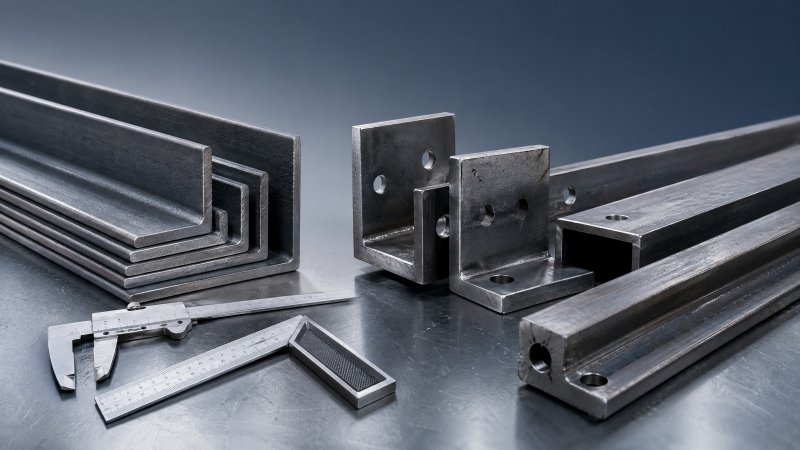
L angle steel is often considered a simple structural product, but its dimensional accuracy has a direct impact on fit-up quality. In bolted frames, a 2 mm to 4 mm deviation in leg length can shift hole positions enough to create field modification work. In welded assemblies, thickness variation can change heat input, weld profile, and corner alignment. When this happens across 50, 100, or 500 pieces, the cost is no longer minor.
The most sensitive applications include support brackets, frames, towers, skids, racks, transmission structures, stair components, and equipment bases. In these uses, angle steel is not only load-bearing but also serves as a reference edge for downstream fabrication. That means a dimensional error at the steel supply stage often travels through cutting, drilling, galvanizing, painting, and final installation.
A common misunderstanding is that nominal size alone is enough for sourcing. In practice, buyers should evaluate at least 5 dimension-related items: leg length, thickness, length, angle squareness, and straightness. If one of these is not controlled according to the intended fabrication method, the material may still pass a basic purchase description while failing actual installation requirements.
Another issue is cross-standard purchasing. Structural steel products may be supplied to ASTM, EN, JIS, or GB requirements, and the tolerance expectations are not always interpreted the same way by all suppliers and buyers. For multinational projects, the dimensional inspection standard should be confirmed before the contract is released, not after the first shipment arrives.
Typical project consequences of poor dimensional control
- Connection misfit that forces slotting, re-drilling, or site trimming.
- Welding distortion risk when actual thickness differs from the expected value by more than the planned procedure allows.
- Stacking and packing inefficiency when lengths vary beyond practical handling limits.
- Higher rejection rates during incoming QC, especially in repeat lots over 20 to 30 tons.
- Schedule slippage of 3 to 10 days when replacement material must be produced and exported.
For buyers sourcing from overseas, dimensional consistency is often more important than simply obtaining the lowest ex-works price. A lower unit price can quickly be offset by fabrication downtime, extra labor, and delayed handover. That is why experienced structural steel importers look beyond nominal size and ask for tolerance confirmation, inspection records, and sample measurement methods.
The L Angle Steel Dimensions That Most Commonly Cause Fit Issues
Not every dimensional deviation creates the same level of risk. Some are mostly cosmetic, while others directly affect assembly. In structural and fabrication work, 4 categories usually account for most fit complaints: unequal leg accuracy, thickness inconsistency, angle deviation from 90 degrees, and overall straightness or twist. Understanding how each problem appears in the workshop can help buyers define more useful inspection criteria.
Leg length problems are especially common in applications where one leg supports bolted plates and the other leg aligns with a frame edge. Even a small mismatch can cause visible offset or contact gaps. Thickness issues become more critical when the angle is used in welded brackets or formed sub-assemblies. A difference of 0.5 mm to 1.0 mm may not look serious on paper, but it can alter fit-up and weld prep considerably.
Out-of-squareness is another major source of installation trouble. If the included angle is not close enough to 90 degrees, the member may rock, leave uneven gaps, or force connected parts out of position. Straightness and twist are often underestimated until long members reach the jobsite. A 6 m angle with excessive camber or twist can be difficult to clamp, drill, or align during assembly.
The table below summarizes the dimension problems that most often lead to fit issues in steel fabrication and construction purchasing.
The key point is that dimensional risk is cumulative. A member may still be usable if only one feature is near the tolerance limit. But if leg length, thickness, and squareness are all at opposite ends of the range, fit issues become much more likely. This is why quality control should evaluate the whole geometry, not isolated dimensions.
Where buyers usually make the wrong assumption
Assuming standard material works for all fabrication methods
Standard angle steel can be suitable for general construction, but projects involving robotic welding, modular assemblies, repetitive hole patterns, or export packaging often need tighter process control. The procurement specification should reflect the intended use, especially when dimensional repeatability matters more than simple compliance with a nominal grade.
How to Evaluate Tolerances Before You Place an Order
The most effective way to prevent fit issues is to define dimensional expectations before production starts. That means the buyer and supplier should align on 3 levels: product standard, inspection method, and acceptance rule. If only the nominal size is listed on the purchase order, disputes become difficult to resolve because each side may interpret “acceptable” differently.
A practical pre-order review should include drawings or at least a usage description, required standard such as ASTM, EN, JIS, or GB, the member length range, whether the product will be welded or bolted, and whether hole alignment is critical. For projects above 20 tons or repeat monthly orders, it is also wise to request first-batch measurement records before full shipment approval.
Inspection planning should not focus only on final random checks. Good suppliers combine process control with final verification. For example, measuring after rolling, after cutting, and before packing gives a stronger quality picture than a single end-stage check. This reduces the chance that dimensional drift goes unnoticed across a large batch.
The checklist below can be used by procurement teams, quality managers, and technical reviewers when comparing structural steel suppliers.
For related envelope materials in industrial projects, buyers also compare corrosion resistance and forming performance. In the midstream of multi-material procurement, products such as DX52D Galvalume Steel Coil may be specified for cladding, formed panels, or cold-formed support parts. This grade uses low-carbon steel, with yield strength not exceeding 260 MPa, tensile strength of 300 to 360 MPa, and elongation after fracture of at least 28%, which supports cold forming without fracturing.
Its dimensional range typically covers widths of 500 to 1500 mm, thicknesses of 0.12 mm to 4 mm, and lengths from 100 mm to 12000 mm, with common quality systems such as ISO 9001, SGS, and BV referenced in trade discussions. For buyers balancing structure and enclosure materials in one sourcing cycle, it is useful to compare not only steel strength but also long-term corrosion performance, coating efficiency, and forming suitability across all steel items in the package.
A 4-step ordering method that reduces dimensional disputes
- Define nominal size and application, including whether the angle is for bolting, welding, or support framing.
- State the dimensional standard and any project-specific tolerance priorities in writing.
- Request sample measurements, batch photos, or first-article confirmation for critical jobs.
- Link shipment release to inspection records, especially for export orders with 2 to 6 week lead times.
This approach is especially important when sourcing from multiple countries or when a distributor is supplying to fabricators with different workshop capabilities. The clearer the dimensional requirement, the easier it is to control total project risk.
How Reliable Structural Steel Suppliers Prevent Fit Problems
The best prevention starts at the manufacturing and export level. Reliable structural steel suppliers do more than ship material that matches a label. They control process stability, understand downstream fabrication needs, and communicate dimensional limitations before problems appear. For global projects, this is often the difference between smooth installation and expensive correction work.
A capable supplier should be able to support both standard specifications and customized solutions. In practice, this means discussing not only size and grade but also cut length, bundle identification, traceability, inspection reporting, packing for container loading, and shipment coordination. For large projects, production consistency over several batches can matter more than a single good lot.
Hongteng Fengda, as a structural steel manufacturer and exporter from China, focuses on angle steel, channel steel, steel beams, cold formed steel profiles, and customized structural steel components for global construction and industrial applications. With modern manufacturing facilities and strict quality control, the company supports buyers who need alignment with ASTM, EN, JIS, and GB requirements while also managing lead time, batch stability, and export coordination.
For project teams in North America, Europe, the Middle East, and Southeast Asia, supplier selection should consider at least 6 decision points: production capacity, dimensional consistency, standard compliance, communication speed, packaging method, and problem-solving response. These factors directly affect sourcing risk and downstream installation efficiency.
What to ask a supplier before approving production
- Which dimensional standard will be used for inspection and documentation?
- Can the supplier provide measurement records for leg length, thickness, length, and squareness?
- How are long members checked for twist and straightness over 3 m, 6 m, or 12 m lengths?
- What is the usual production and export lead time for the required tonnage?
- How are nonconforming pieces segregated, reported, and replaced if needed?
Why this matters for commercial and financial reviewers
From a commercial standpoint, fit issues are not just technical defects. They increase labor hours, delay invoicing milestones, and create claim exposure between contractor, fabricator, and supplier. Financial approvers should therefore evaluate dimensional reliability as part of total cost, not as a secondary quality topic. A supplier that helps avoid rework can protect margin even if the unit price is not the lowest in the bid list.
FAQ: Common Questions About Angle Steel Fit and Sourcing
Many buyers ask similar questions when angle steel is linked to fabrication accuracy, schedule risk, or export purchasing. The answers below address common concerns with practical B2B decision logic.
How much dimensional deviation is enough to cause a fit problem?
It depends on the application. In simple non-critical supports, a small variation may be manageable. In pre-drilled or modular assemblies, even 2 mm to 3 mm of combined deviation can create misalignment. The risk increases when several dimensions drift at the same time, such as leg length plus out-of-squareness plus cut length error.
Should buyers inspect every piece or use sampling?
For routine commercial lots, sampling is common and efficient. For high-risk applications, first-article inspection plus batch sampling is usually a better balance. Full inspection may be justified for custom fabricated parts, but for raw angle steel it is more practical to focus on critical dimensions, lot consistency, and pre-shipment controls.
What is the most overlooked dimension in angle steel purchasing?
Straightness and twist are frequently overlooked, especially for long lengths above 6 m. Buyers may focus on leg size and thickness while missing the handling and assembly problems caused by geometry along the full member length. This is why long-product inspection should include more than point measurements.
How can distributors and resellers reduce complaint rates?
They should separate standard stock sales from application-sensitive orders. If the end use involves welding jigs, bolted templates, or export fabrication, the distributor should confirm tolerances with the manufacturer before shipment. Clear technical communication at the quotation stage can prevent many downstream disputes.
Fit issues caused by incorrect L angle steel dimensions are preventable when buyers treat dimensional control as a project requirement rather than a routine line item. The most common risks come from leg length error, thickness inconsistency, out-of-squareness, and poor straightness across long members. Clear standards, measurable inspection points, and supplier process control are the most effective safeguards.
For global contractors, fabricators, distributors, and industrial buyers, working with an experienced structural steel manufacturer can reduce sourcing risk, improve installation efficiency, and support more predictable delivery performance. If you need angle steel, channel steel, beams, cold formed profiles, or customized structural steel components for export projects, contact Hongteng Fengda to discuss specifications, inspection expectations, and a sourcing plan built around real fit requirements. Get a customized solution and product details for your next project.
Please give us a message


Please enter what you want to find