Steel sheet price can change significantly depending on thickness, coating, surface finish, and application requirements. For buyers comparing steel plate for construction, high strength steel plate, or galvanized steel for construction, understanding these cost factors is essential for accurate budgeting and sourcing. This guide explains how specifications influence pricing and helps procurement, engineering, and project teams make smarter purchasing decisions.
In the steel industry, price variation is rarely random. A difference of 0.5 mm in thickness, a change from hot rolled to cold rolled, or the addition of zinc coating can alter both the manufacturing route and the total landed cost. For contractors, distributors, OEM buyers, and project managers, these variables directly affect bid accuracy, stock planning, and quality compliance.
For global buyers sourcing from China, evaluating steel sheet price also means looking beyond the base material. Mill capability, tolerance control, applicable standards such as ASTM, EN, JIS, and GB, packaging method, and export lead time all influence the final quotation. Suppliers such as Hongteng Fengda support this process by aligning technical specifications with commercial feasibility for construction and industrial use.
How Thickness Changes Steel Sheet Price
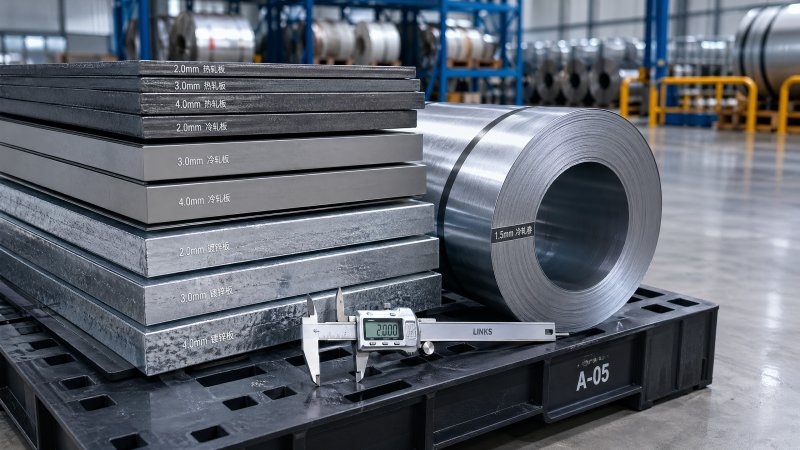
Thickness is one of the most direct cost drivers in steel sheet pricing because it changes raw material consumption, processing load, and handling requirements. In simple terms, a sheet with a thickness of 6 mm uses roughly three times more steel than a 2 mm sheet of the same width and length. That immediately raises the material portion of the quotation, which is often the largest cost component.
However, price does not always increase in a perfectly linear way. Very thin sheet, such as 0.5 mm to 1.2 mm, may require tighter thickness tolerance, better surface control, and more advanced rolling equipment. In many buying situations, this means thin precision sheet can carry a higher price per ton than medium-thickness sheet, even though the total weight per sheet is lower.
For construction and structural fabrication, common steel sheet and plate ranges include 1.5 mm to 20 mm for general use, while heavy plate may go well beyond that for equipment bases, industrial platforms, or reinforced assemblies. As thickness rises, additional costs can come from edge trimming, levelness correction, flame cutting, and transport planning, especially for sheets exceeding 8 mm or lengths above 6,000 mm.
Why thicker material is not just more expensive by weight
A thicker steel sheet can require different production scheduling, lower output speed, and heavier lifting equipment. It may also affect downstream fabrication. For example, sheets in the 10 mm to 16 mm range often need different bending capacity, cutting speed, and welding preparation than sheets below 4 mm. These operational differences matter to both the mill and the buyer.
Buyers should also pay attention to tolerance standards. A tolerance of ±0.1 mm on thin cold rolled sheet is far more demanding than a broader tolerance on thicker hot rolled material. When the end use involves enclosure manufacturing, machinery covers, or precision punching, tolerance requirements can increase the unit price even when the nominal thickness remains unchanged.
The table below shows how thickness typically influences price structure in practical sourcing discussions.
The key takeaway is that thickness affects both tonnage and manufacturability. When requesting quotations, buyers should specify nominal thickness, tolerance, width, length, and intended use together. This reduces pricing gaps and helps avoid comparing offers that appear similar but are based on different manufacturing assumptions.
How Finish and Coating Influence Cost
Surface finish is another major reason steel sheet price varies. A basic hot rolled black surface is generally more economical than a pickled, cold rolled, polished, or galvanized finish. That is because each finish adds extra production stages, quality checks, or material consumption. In many projects, the finish is not cosmetic alone; it also affects corrosion resistance, paint adhesion, and service life.
Galvanized steel for construction usually costs more than uncoated carbon steel because of zinc usage and coating process control. Common zinc coating classes can differ significantly, and even a moderate increase in coating weight can push the final sheet price upward. For roofing, framing, HVAC, and outdoor support systems, this added cost is often justified by lower maintenance frequency and longer replacement cycles.
Cold rolled sheet also tends to carry a premium over hot rolled sheet. The reason is not only smoother surface quality, but also tighter thickness control and additional rolling passes. In applications such as cabinets, appliance components, ducts, and light industrial parts, buyers often choose cold rolled material because dimensional consistency reduces fabrication error rates during punching, bending, or forming.
Common finish types and where the cost comes from
A practical way to evaluate finish-related cost is to connect the finish to the operating environment. If the steel sheet will be installed indoors in a dry area, a basic finish may be sufficient. If it will face humidity, salt, chemicals, or repeated cleaning, the added expense of coating or a specialty finish can be cost-effective over a 5-year to 15-year service period.
- Hot rolled: lower initial cost, suitable for structural and less appearance-sensitive uses.
- Cold rolled: better surface and tolerance, often selected for fabrication accuracy.
- Pickled and oiled: cleaner surface than black steel, useful before painting or forming.
- Galvanized: added corrosion protection for outdoor or humid environments.
- Polished or bright finishes: higher cost where appearance or cleanliness matters.
The following table compares typical finish choices from a sourcing perspective.
For procurement teams, the finish should be selected according to environment, fabrication route, and total lifecycle cost. Paying more for a suitable finish can reduce repainting, reject rates, and site rework, especially in infrastructure, industrial buildings, and export projects with long service expectations.
Specification, Standards, and Processing Add Hidden Cost Layers
Beyond thickness and finish, steel sheet price is also shaped by specification details that are easy to overlook during early sourcing. Grade, mechanical performance, flatness, width tolerance, length tolerance, and edge condition can all change the cost basis. A high strength steel plate, for example, may cost more than standard structural steel because alloy design, rolling control, and testing requirements are more demanding.
International standards matter as well. When a buyer requests compliance with ASTM, EN, JIS, or GB, the supplier must align material chemistry, mechanical properties, and inspection records accordingly. This may involve additional mill certification, impact testing, or traceability documents. In export transactions, documentation quality can affect customs clearance, project approval, and onsite acceptance just as much as the steel itself.
Processing services add another layer. Cut-to-length, slitting, drilling, bending, beveling, and pre-fabrication save labor for the buyer, but they also increase unit cost. In many cases, however, paying for processing at the source reduces total project cost by lowering waste, shortening site work, and improving installation speed. This is especially relevant for repetitive construction packages or OEM production runs above 20 tons.
Inserted product example for corrosion-critical applications
In some projects, buyers compare carbon steel sheet options with stainless solutions for sections exposed to chemicals, moisture, or heat. One reference product is 316 Stainless steel pipe, which is widely used in petroleum, foodstuff, chemical industry, construction, electric power, nuclear, energy, machinery, biotechnology, paper making, shipbuilding, and boiler fields. It offers significant improvements in corrosion resistance, high-temperature stability, and mechanical properties compared with base 304 stainless steel tubing.
Typical size options include wall thickness from 1 mm to 150 mm, outer diameter from 6 mm to 2500 mm, and length options such as 4000 mm, 5800 mm, 6000 mm, and 12000 mm, or customized lengths. Surface conditions can include polishing, annealing, pickling, and bright finish, while common standards include ASTM A213, ASTM A312, ASTM A269, EN10216, JIS G3459, and GB13296. For buyers evaluating full-system material compatibility, this kind of product comparison helps determine whether a mixed-material solution or a corrosion-resistant upgrade is justified.
Four specification items that often change a quote
- Mechanical grade requirement: higher yield strength or specialized properties can increase production complexity.
- Tolerance requirement: tighter thickness or width tolerance usually means more precise control and lower yield loss allowance.
- Inspection level: third-party inspection, MTC documentation, or batch traceability can add administrative and testing cost.
- Custom processing: drilling, cutting, and profiling can reduce field labor but increase ex-works price.
The main lesson is that a “lower price” is not always a lower total cost. Procurement and technical teams should compare material standard, tolerance, testing, and processing scope line by line before making a commercial decision.
How Buyers Can Compare Quotes More Accurately
Many purchasing problems start when quotations are compared on price alone. A better approach is to compare offers across at least 6 checkpoints: grade, thickness tolerance, finish or coating, dimensions, standard, and delivery terms. Without this, two steel sheet prices may look close on paper while representing very different quality levels or service scope.
For project purchasing, it is useful to separate cost into three layers: material cost, processing cost, and logistics cost. Material cost covers base steel and alloy or coating content. Processing cost includes cutting, slitting, packing, and inspection. Logistics cost includes inland transport, port handling, ocean freight, and destination-related charges. In some export orders, logistics may account for 10% to 25% of the landed cost depending on shipment size and route.
Lead time is another practical factor. Standard structural steel products may move within 2 to 4 weeks depending on stock and rolling schedule, while customized sizes or processed components may require 4 to 8 weeks. If a lower-priced quote has an unreliable lead time, the real cost can rise quickly through site delays, idle labor, or missed contractual milestones.
Procurement checklist for steel sheet and plate
The table below helps technical buyers, finance approvers, and project managers assess quotations in a more structured way.
A disciplined comparison process improves purchasing quality. It also helps distributors and resellers avoid margin loss caused by under-specified quotations. For large-volume orders, asking the supplier to confirm packing method, bundle weight, and inspection sequence before production can reduce downstream disputes significantly.
Practical Sourcing Advice for Construction and Industrial Projects
The best steel sheet buying decision balances price, performance, and execution reliability. In construction, that often means selecting a specification that is sufficient for the environment and fabrication method, but not unnecessarily upgraded. Over-specification can inflate cost, while under-specification can create corrosion, weldability, or structural fit-up problems later in the project.
A supplier with structural steel manufacturing experience can often add value before the order is placed. Hongteng Fengda, as a structural steel manufacturer and exporter from China, supports global buyers with standard and OEM solutions across angle steel, channel steel, steel beams, cold formed steel profiles, and customized structural steel components. This matters when a project requires coordination between sheet, plate, and structural sections under one procurement plan.
For many buyers, the most efficient process is to prepare a clear RFQ package with drawings, required standard, tolerance, finish, quantity, destination port, and target delivery window. Even a short list of 5 to 8 technical points can improve quote consistency. That saves time for purchasing, engineering review, and final approval.
Common mistakes to avoid
- Choosing solely by lowest unit price without checking coating weight, tolerance, or standard.
- Ignoring cutting loss and ordering sheet sizes that increase scrap during fabrication.
- Failing to confirm whether inspection documents are included before shipment.
- Underestimating lead time for custom dimensions, especially during peak project seasons.
FAQ: Questions buyers often ask
How much can thickness change steel sheet price? In practical sourcing, moving from 2 mm to 3 mm changes weight by about 50% for the same sheet size, so the base material cost rises accordingly. Final price may move more or less depending on grade, finish, and order volume.
Is galvanized steel always the better choice? Not always. It is often preferred for outdoor construction and humid environments, but for indoor dry applications, uncoated or painted steel may provide a better cost balance.
What order information should be included in an RFQ? At minimum, include grade, thickness, width, length, finish, standard, quantity, packing requirement, and delivery term. If cutting or fabrication is needed, attach drawings and tolerance notes.
Understanding why steel sheet price varies by thickness and finish helps every stakeholder make better decisions, from operators and quality teams to procurement managers and company leadership. When specifications are matched to real project conditions, buyers can control cost without sacrificing performance or delivery reliability. If you are evaluating steel sheet, steel plate for construction, high strength steel plate, or galvanized steel for construction, contact Hongteng Fengda to discuss your requirements, request a tailored quotation, or learn more about suitable structural steel solutions for your market.
Please give us a message


Please enter what you want to find