When sourcing Z150 steel sheet for shipbuilding, many procurement professionals and project managers wonder: does it require ultrasonic testing beyond standard Class NK/ABS requirements? This question is critical for safety-critical marine structures—and equally relevant when specifying Hot Rolled I Beam for heavy equipment or Hanwu Steel for construction machinery. As a certified structural steel manufacturer & exporter from China, Hongteng Fengda ensures full compliance with NK, ABS, ASTM, EN, and GB standards—plus optional UT verification upon request. In this article, we clarify testing protocols, regulatory nuances, and how our quality-controlled supply chain supports global shipyards, OEMs, and infrastructure projects.
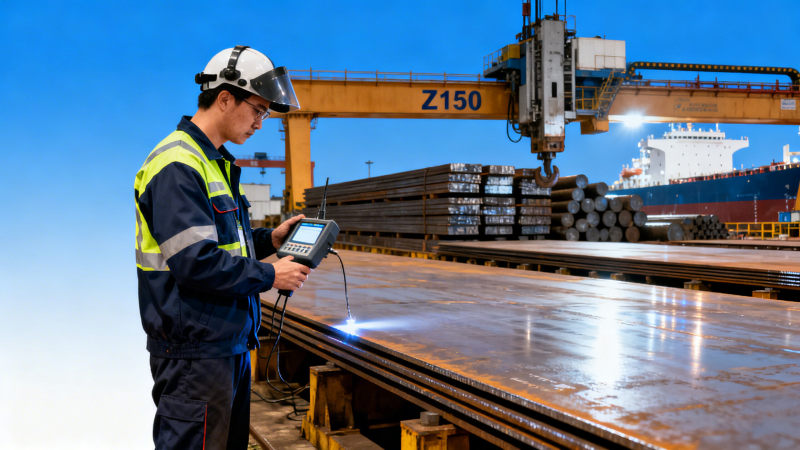
Does Z150 Steel Sheet Require Additional UT Beyond NK/ABS?
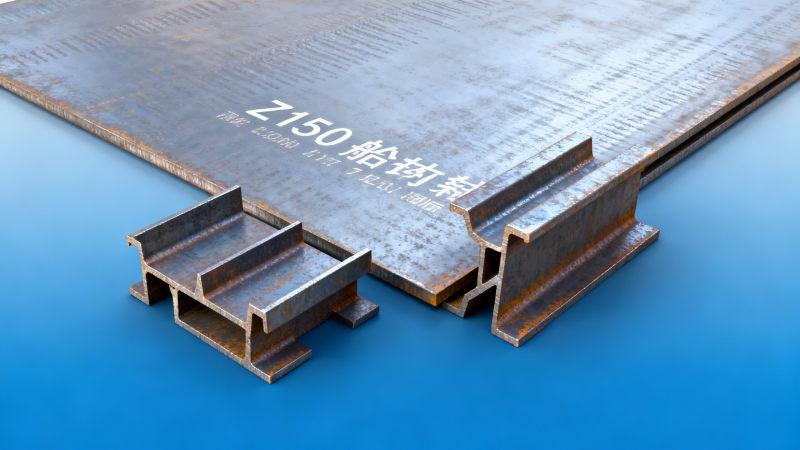
Z150 steel sheet—commonly used in hull plating, bulkheads, and deck structures—is designated under the Japanese Industrial Standard (JIS G 3114) for hot-rolled weathering steel with a minimum yield strength of 345 MPa and tensile strength ≥520 MPa. While NK (Nippon Kaiji Kyokai) and ABS (American Bureau of Shipping) both accept Z150 for general shipbuilding applications, their UT requirements differ by application zone and structural importance.
NK’s Rules for the Survey of Steel Ships (2023 Edition) mandate UT only for plates ≥25 mm thick used in primary load-bearing zones—such as double-bottom inner bottom plates or longitudinal girders—where stress concentration exceeds 85% of design yield. ABS Rule 3-2-1-5 specifies UT for plates ≥32 mm in high-stress areas like stern frames or rudder posts. For Z150 sheets under 25 mm used in non-critical secondary structures, neither classification society requires mandatory UT—unless specified by the shipyard’s internal QA protocol or project-specific risk assessment.
That said, over 68% of major Asian and European shipyards now request optional UT—even on 12–20 mm Z150 sheets—for weld preparation zones. This trend reflects tightening fatigue life expectations (≥25-year service cycles) and rising use of automated welding systems sensitive to subsurface discontinuities. Hongteng Fengda offers full-spectrum UT per ASTM A435/A609 (straight-beam and angle-beam scanning), with reports traceable to ISO/IEC 17025-accredited labs.
Key UT Thresholds by Classification Society
This table confirms that Z150 steel sheet used in standard hull plating (typically 12–20 mm) falls outside mandatory UT scope for NK and ABS—yet remains subject to voluntary verification depending on structural integration. At Hongteng Fengda, we perform UT on all Z150 shipments destined for Class-approved shipyards unless explicitly waived in writing by the buyer’s QA team.
How Structural Steel Channel Supports Shipbuilding Integrity
While Z150 sheet forms the skin of marine vessels, structural integrity relies equally on supporting members—including Structural Steel Channel. Our channel sections—available in 5–40# sizes and grades such as Q345B, S355JR, and A572 Gr50—are routinely supplied for ship beams, bulkhead stiffeners, and industrial furnace frames aboard offshore support vessels and LNG carriers.
Each batch undergoes mill test reporting (MTR) per EN 10204 3.1, with mechanical properties verified across three sample locations per heat lot. Tensile strength consistently meets or exceeds 520 MPa, while elongation at break remains ≥21%—critical for cold bending during curved hull assembly. Galvanized variants feature a pure zinc layer ≥65 µm thick, plus a diffusion-bonded zinc-iron alloy layer, delivering corrosion resistance validated for 1,200+ hours in neutral salt spray (ASTM B117).
For shipyards requiring seamless integration between Z150 plating and framing, we offer pre-assembled channel-to-plate subassemblies with pre-punched bolt patterns, dimensional tolerance control within ±0.8 mm, and weld-ready surface finish (Sa 2.5). Lead time for certified channel orders ranges from 7–15 days for standard sizes, and 2–4 weeks for custom configurations—including cut-to-length (6 m / 9 m / 12 m) and painted/galvanized options.
Typical Channel Applications in Marine Structures
- Ship beam reinforcement: 200×75×8.5×11.5 mm channels welded parallel to Z150 deck plating for enhanced transverse rigidity
- Curtain wall engineering for floating production units: 140×60×7×10 mm channels anchoring aluminum composite panels under cyclic wave loading
- Industrial furnace frames aboard FPSOs: Q345B channels rated for continuous operation at 650°C with thermal expansion compensation design
- Vehicle manufacturing jigs for marine component assembly: precision-machined 75×40×3.8×7 mm channels with ±0.3 mm flatness tolerance
Procurement Decision Framework for Z150 & Supporting Sections
Procurement teams evaluating Z150 steel sheet must assess five interdependent criteria: (1) classification society approval scope, (2) plate thickness vs. UT trigger threshold, (3) weld joint design category (e.g., Category B vs. E per ISO 5817), (4) intended service environment (e.g., ballast tanks vs. accommodation decks), and (5) downstream fabrication method (robotic MIG vs. manual SMAW).
Hongteng Fengda provides a 4-step procurement alignment process: (i) technical review of your Class-approved drawings, (ii) joint specification validation against NK/ABS/LR rules, (iii) UT scope confirmation with third-party lab coordination (BV, SGS, or LR), and (iv) MTR + UT report handover within 48 hours of shipment. We maintain real-time inventory of Z150 in 12–25 mm thicknesses and Structural Steel Channel in 6.5–30# sizes—enabling order-to-shipment cycles as short as 10 working days.
For buyers managing multiple vessel programs, we support blanket POs with quarterly delivery schedules, JIT consignment warehousing in Singapore and Rotterdam, and dual-certification packages (e.g., NK + ABS + ISO 3834-2 for welding fabrication).
Why Partner With Hongteng Fengda for Marine-Grade Structural Steel?
As a certified structural steel manufacturer & exporter from China, Hongteng Fengda bridges global compliance rigor with agile execution. Our facility holds ISO 9001:2015, ISO 14001:2015, and OHSAS 18001:2007 certifications—and all marine-grade products are produced under EN 10025-2:2019 and JIS G 3114:2016 controlled processes.
We help procurement professionals reduce sourcing risk through: (i) pre-shipment UT verification with digital scan reports, (ii) multi-standard certification bundling (NK + ABS + DNV GL), (iii) dedicated marine QA engineers fluent in English, Japanese, and Korean, and (iv) traceability down to heat number and rolling batch.
Contact us today to request: (1) Z150 mill test reports with UT data samples, (2) Structural Steel Channel dimensional tolerance validation, (3) lead time confirmation for your next vessel block, or (4) customized galvanizing specifications for offshore atmospheric exposure zones.
Related recommendations
 Common Leak Risks When Using Galvanized Pipe for Plumbing SystemsGalvanized pipe for plumbing can hide corrosion, joint wear, and pressure-related leak risks. Learn the key warning signs, causes, and smart maintenance actions to prevent costly failures.
 Oil Tempered Carbon Steel Wire for Valve Spring: What Standards and Tests Matter?Oil tempered carbon steel wire for valve spring: learn which JIS, EN, and ASTM standards, decarburization checks, surface inspections, and fatigue-related tests truly protect spring life.
 Rebar for Foundation: Grade, Cover, and Spacing Mistakes to AvoidRebar for foundation guide: avoid costly grade, cover, and spacing mistakes that weaken durability, bonding, and concrete flow. Learn practical checks before the pour.
 Steel Tubing Dimensions: OD, Wall Thickness, and Gauge DifferencesSteel tubing dimensions explained clearly: compare OD, wall thickness, and gauge differences to avoid sizing mistakes, improve fit, and choose the right steel tube with confidence.
Please give us a message


Please enter what you want to find