Before shipment, API 5L Steel Pipe must pass strict testing to ensure strength, dimensional accuracy, and compliance with project standards. For buyers comparing ASTM A106 pipe, 304 pipe, or sourcing from a reliable China Steel Supplier, understanding these inspection requirements helps reduce quality risks, control costs, and support safer construction and industrial applications.
In cross-border steel procurement, shipment inspection is not a formality. It is a risk-control stage that affects installation safety, welding performance, corrosion behavior, and the total cost of ownership over 5, 10, or even 20 years of service. For project managers, QC teams, technical reviewers, and purchasing departments, knowing what should be checked before dispatch helps prevent disputes, delays, and replacement losses after the cargo reaches site.
API 5L pipe is widely used for oil, gas, water, structural support, and industrial transmission systems. Depending on project grade, size range, and service condition, pre-shipment testing may include chemical analysis, tensile testing, flattening, hydrostatic testing, non-destructive examination, coating inspection, marking verification, and documentation review. The exact mix depends on the purchase specification, applicable PSL level, and any supplementary customer requirement.
For global buyers working with a structural steel manufacturer and exporter from China, a disciplined pre-shipment inspection process also supports smoother customs clearance, easier third-party acceptance, and better traceability. Hongteng Fengda serves construction, industrial, and manufacturing customers with stable production capacity and strict quality control, which makes documentation consistency and inspection discipline as important as the steel itself.
Why pre-shipment testing matters for API 5L steel pipe
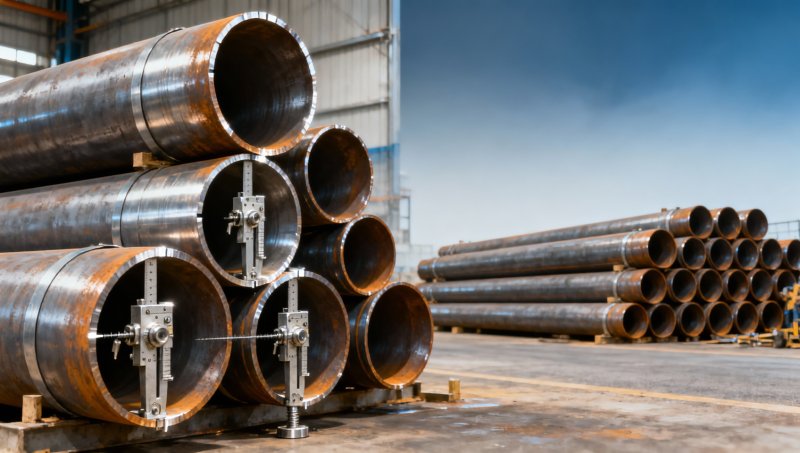
API 5L steel pipe often enters projects where failure is expensive and dangerous. Even a dimensional deviation of more than a few millimeters can create fit-up problems at site, while inadequate strength or hidden weld defects may affect pressure integrity. Pre-shipment testing reduces these risks before pipes leave the factory, when corrective action is still practical and far less costly than field replacement.
From a procurement perspective, testing protects more than material quality. It protects delivery schedules, installation labor, and downstream processing. If a shipment of 200 to 500 tons arrives with incorrect wall thickness, wrong heat number traceability, or non-compliant end bevels, the result can be a delay of 2 to 6 weeks, additional freight, and contract penalties. Pre-shipment control is therefore both a technical and commercial requirement.
For technical evaluators, the inspection plan should align with the intended service environment. Pipes used in standard fluid transmission may require routine mechanical and hydrostatic verification, while products for sour service, low-temperature use, or stricter project specifications may require additional impact or NDT controls. This is why buyers should review standards, grade, and project clauses before production is completed.
A reliable China steel supplier will not only perform tests, but also provide traceable records. Mill test certificates, inspection reports, dimensional logs, coating check sheets, and packing lists should match the physical markings on each bundle or pipe piece. When these records are complete, distributors, EPC contractors, and owners can verify compliance faster and reduce acceptance disputes.
Key risks avoided by proper inspection
- Out-of-tolerance outside diameter, wall thickness, or length causing field assembly issues.
- Mechanical properties below requirement, including tensile strength or yield strength deviations.
- Surface defects such as laminations, seams, dents, gouges, excessive rust, or coating damage.
- Incorrect marking, mixed heats, or incomplete traceability that complicate project acceptance.
- Poor end preparation, especially bevel angle or squareness problems affecting welding quality.
Core API 5L steel pipe tests required before shipment
Although test plans vary by order, several inspection items appear repeatedly in API 5L pipe supply. The first group is dimensional verification. Inspectors typically check outside diameter, wall thickness, length, straightness, end squareness, and bevel condition. Depending on the size and manufacturing process, measurements are often taken at multiple positions along the pipe body and at both ends to capture variation rather than relying on a single point.
The second group is mechanical and chemical compliance. Chemical composition must match the ordered grade, while tensile testing confirms yield strength, tensile strength, and elongation. Where specified, flattening, bend, or impact testing may also be used. These tests matter because API 5L is not selected by appearance alone; it is selected by verified performance under installation and service conditions.
The third group involves pressure integrity and defect detection. Hydrostatic testing is a common pre-shipment requirement unless the order clearly permits alternative control. In addition, non-destructive testing such as ultrasonic testing or electromagnetic inspection may be applied, especially for line pipe where internal or longitudinal defects must be identified before delivery. NDT does not replace dimensional checks; it complements them.
The fourth group covers surface condition, coating status, marking, and packing. Pipes may meet chemistry and strength requirements but still cause project issues if anti-corrosion coating is scratched, bundle labels are unclear, or end caps are missing. For export shipments traveling 20 to 45 days by sea, packing quality has direct influence on delivered condition.
Typical pre-shipment inspection checklist
The table below summarizes the most common test and verification items buyers request before shipment. The exact sequence can be adjusted to match mill procedure, third-party witness requirements, and project specification.
For most buyers, the most effective approach is to combine 4 layers of control: raw material traceability, in-process verification, final dimensional review, and shipping release inspection. This layered method is more dependable than relying on the mill certificate alone.
Common acceptance points buyers should confirm
- Check whether the order is API 5L PSL1 or PSL2, because documentation and testing expectations can differ.
- Confirm whether hydrostatic testing is mandatory or whether specific NDT methods are acceptable.
- Verify if third-party inspection is required at 10%, random lot level, or 100% witnessed final release.
- Review whether coating, varnish, end caps, or export packing form part of the technical scope.
Dimensional, surface, and coating checks that buyers often overlook
Many shipment disputes happen not because the steel grade is wrong, but because practical details were not checked carefully. Dimensional tolerance is one example. A wall thickness tolerance issue of even a small percentage can change pressure capacity, weld preparation, and project acceptance. Length consistency also matters when pipes are cut for spool fabrication or structural alignment in large batches.
Surface quality is another area where buyers should be precise. Minor handling marks may be acceptable, but deep gouges, rolled-in scale, lamination indications, and damaged ends can affect weldability or corrosion performance. On export orders, visual inspection should be done before packing and again after bundle preparation, because damage can occur during handling by forklift or crane.
Where corrosion protection is required, coating inspection becomes critical. In some projects, black pipe with varnish is sufficient. In others, galvanized or painted steel is preferred to improve resistance in outdoor, humid, or industrial environments. For related applications, buyers also compare line pipe with products such as Galvanized Pipe, especially where low-pressure fluid service and long service life are priorities over higher-grade pipeline specification.
A practical point is that galvanized products should be evaluated differently from bare API 5L line pipe. Zinc layer continuity, surface cleanliness, coating adhesion, and transport protection all influence field performance. For example, a galvanized steel solution in DX52D material may be supplied in lengths from 1 m to 12 m, with common compliance references including ASTM, EN, JIS, and GB. In construction, agriculture, light industry, and general low-pressure fluid systems, such corrosion-resistant pipe can help extend service life and reduce maintenance frequency.
Inspection focus for dimensional and surface quality
The following comparison table shows where buyers should concentrate attention during final release, especially when the shipment includes multiple sizes, mixed lengths, or coating requirements.
The main takeaway is simple: dimensional checks verify whether the pipe can be installed, while surface and coating checks verify whether it can survive service and transport. Both should be documented with photos, measurement records, and lot references before containers are sealed.
How to build an effective pre-shipment inspection plan with your supplier
A strong inspection plan starts before production, not at the loading bay. Buyers should define standards, tolerances, test frequency, witness points, and document requirements when placing the order. If these points are left open, disagreements can appear late in the process when schedule pressure is highest. A clear purchase order and technical attachment reduce this risk considerably.
For many projects, a 5-step inspection workflow works well. Step 1 is specification review, including grade, size, PSL level, and special requirements. Step 2 is raw material and process confirmation. Step 3 is in-process monitoring. Step 4 is final testing and dimensional release. Step 5 is packing, marking, and document verification before dispatch. This sequence improves transparency for both the mill and the customer.
When working with a Chinese steel exporter, communication speed is also part of quality control. Buyers should ask how quickly test reports can be issued, whether third-party agencies can be coordinated within 3 to 7 days, and how non-conformities will be handled. A supplier with stable production and experienced export handling can often shorten response time and reduce shipment risk without compromising inspection discipline.
Hongteng Fengda supports global buyers in construction, industrial, and manufacturing projects by combining standard-compliant production with customized solutions. That matters when customers need mixed structural steel supply, OEM processing, or coordinated export packing. In practical sourcing, consistency across angle steel, beams, cold formed profiles, and pipe-related steel items can simplify vendor management and reduce total procurement complexity.
Recommended pre-shipment workflow
- Issue a technical specification that states standard, grade, size range, tolerance, coating requirement, and acceptance criteria.
- Confirm sampling quantity, test method, and whether witness inspection is required by the buyer or third party.
- Request a final inspection pack including MTC, dimensional report, NDT record if applicable, packing list, and marking photos.
- Approve packing details such as bundle weight, end caps, waterproof protection, and container loading sequence.
- Keep a claim procedure in writing, including timing, evidence format, and replacement or settlement rules.
Documents that should match the physical shipment
At minimum, the heat number on the mill certificate should match the pipe marking or bundle tag. The quantity on the packing list should match the actual count, and the size schedule should correspond with both order and shipping documents. Even small inconsistencies can create customs questions or receiving delays at destination.
For higher-value orders, buyers may also ask for loading photos, seal number records, and a final release note signed after inspection. These extra controls add little cost compared with the expense of resolving a claim after a 30-day ocean transit.
Common buyer questions, mistakes, and practical selection advice
One common mistake is treating all pipes as interchangeable. API 5L line pipe, ASTM A106 pipe, stainless 304 pipe, and galvanized utility pipe serve different technical and commercial purposes. Buyers should compare them based on pressure class, corrosion environment, fabrication method, lifecycle cost, and project approval requirements rather than unit price alone.
Another mistake is focusing only on the mill test certificate. The certificate is important, but it does not replace actual final inspection. Pipes can be damaged after testing, mixed during packing, or marked incorrectly. That is why visual release, quantity verification, and transport protection checks remain necessary even when the mill paperwork looks complete.
Buyers should also understand where corrosion-resistant alternatives make sense. For general low-pressure fluid transport, outdoor structures, agricultural installations, and industrial support frames, galvanized options may offer better value than higher-specification line pipe. In those cases, coating durability, length range, and fabrication convenience may matter more than advanced line-pipe mechanical requirements.
The best sourcing decision usually balances 4 dimensions: technical compliance, supply stability, documentation clarity, and logistics reliability. A supplier that can provide international standard compliance, reasonable lead times of around 2 to 6 weeks depending on quantity and processing, and responsive technical support will often create lower total cost than a lower-priced source with inconsistent execution.
FAQ: What buyers often ask before releasing an API 5L shipment
How many inspection points are usually needed for a shipment?
A practical minimum is 4 points: dimensional verification, mechanical or chemical compliance confirmation, surface review, and document matching. For critical projects, buyers often expand to 6 or more points by adding hydrostatic review, NDT records, packing inspection, and loading supervision.
Is third-party inspection always necessary?
Not always. For repeat orders from a proven supplier, internal QC plus complete documentation may be sufficient. However, third-party inspection is often useful for first orders, owner-controlled projects, high-value exports, or cases where contract payment depends on witnessed release.
What should procurement teams emphasize in the contract?
They should define standard, grade, size, quantity tolerance, test scope, certificate type, packing method, and claim process. If coating or galvanizing is involved, the contract should also state surface expectation, repair rules if any, and acceptance basis after transport.
How can distributors reduce rejection risk on mixed product orders?
Use lot separation, clear bundle tags, photo-based pre-shipment review, and a final quantity reconciliation sheet. Mixed orders that include structural steel profiles and pipe products benefit from uniform traceability rules across all items, especially when delivery is split among several containers.
Pre-shipment testing of API 5L steel pipe is not just a technical checkpoint; it is a practical safeguard for quality, schedule, compliance, and cost control. Buyers who verify dimensions, mechanical properties, hydrostatic or NDT status, surface condition, coating integrity, traceability, and export packing are far more likely to receive material that performs as expected in the field.
For importers, contractors, distributors, and project owners looking for a dependable structural steel manufacturer and exporter from China, disciplined inspection and clear documentation are essential parts of supplier value. If you need support with steel sourcing, customized specifications, or export-ready quality control, contact Hongteng Fengda to get a tailored solution, review product details, and discuss the right testing plan before shipment.
Please give us a message


Please enter what you want to find