430 stainless steel is a practical ferritic grade known for good corrosion resistance, heat resistance, and cost efficiency. It works best in applications where appearance, moderate durability, and budget matter more than high-formability or extreme corrosion performance. This guide explains where 430 stainless steel performs well, its key advantages, and how to judge whether it fits your project requirements.
What is 430 stainless steel and why do buyers consider it?
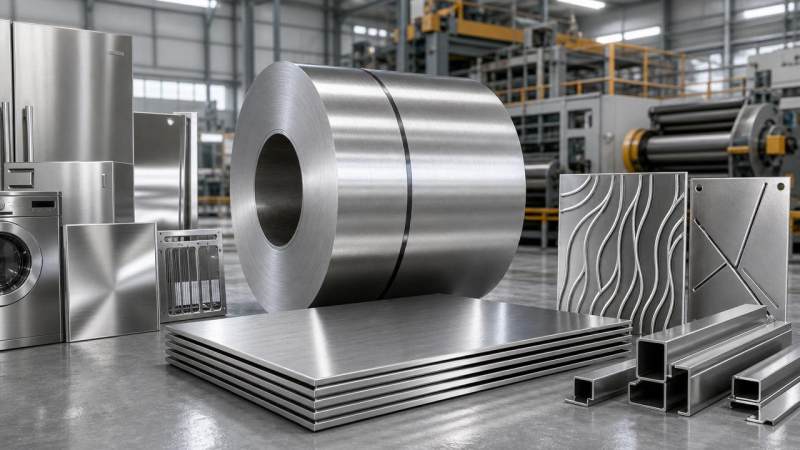
For many steel buyers, the first question is not whether a material is popular, but whether it matches the real service environment. 430 stainless steel is a chromium-based ferritic stainless steel, usually selected when a project needs a clean metallic appearance, reasonable corrosion resistance, and lower cost than austenitic grades such as 304.
It contains no significant nickel addition, which is one reason it is often more price-stable and budget-friendly. That cost advantage matters in high-volume appliance parts, decorative trim, indoor panels, and light industrial components where exposure is moderate and aggressive chemicals are not expected.
Information-stage buyers often compare 430 stainless steel with carbon steel, galvanized steel, and 304 stainless steel. The right answer depends on corrosion level, forming method, surface expectations, and total project cost, not just raw material price per ton.
- Choose it when moderate corrosion resistance is enough.
- Use it where magnetic properties are acceptable or preferred.
- Avoid treating it like a direct substitute for high-chloride or marine applications.
Where does 430 stainless steel work best in real applications?
The best use cases for 430 stainless steel are environments that are dry, lightly humid, intermittently heated, or mainly decorative. In these conditions, buyers can balance service life and cost without paying for corrosion performance they do not actually need.
Common examples include kitchen appliance panels, dishwasher trims, oven liners, refrigerator components, elevator decoration, indoor architectural sheets, automotive trim, and some exhaust parts. In these applications, heat resistance and appearance can matter as much as corrosion resistance.
Structural projects may also involve mixed material solutions. For example, visible stainless elements can be paired with carbon or structural steel support members to optimize cost. In industrial building systems, components such as C-beam are widely used for purlins, wall beams, lightweight roof trusses, brackets, and light manufacturing structures, with materials including Q195, Q235, Q345, A36, SS400, and S235JR. This kind of combination is often more economical than making every part from stainless steel.
For global buyers handling construction or manufacturing procurement, this distinction is important. Hongteng Fengda supports such sourcing decisions by supplying structural steel products and customized solutions under common international standards including ASTM, EN, JIS, and GB, helping buyers match each material to its job instead of overspending on a single-grade approach.
The table below shows where 430 stainless steel tends to perform well and where caution is needed.
This application view helps avoid a common mistake: choosing 430 stainless steel simply because it is stainless. Stainless does not mean suitable for every exposure level. Matching the grade to the actual environment is the key procurement decision.
How does 430 stainless steel compare with 304 and galvanized steel?
Most buyers do not evaluate 430 stainless steel in isolation. They compare it against 304 stainless steel when corrosion risk is a concern, and against galvanized structural steel when cost and structural use are more important than stainless appearance.
430 stainless steel usually costs less than 304 because it has little or no nickel. However, 304 offers better corrosion resistance, especially in humid, food-processing, or mildly chemical environments. Galvanized steel may be even cheaper for structural members, but it does not deliver the same surface finish or stainless performance for exposed decorative uses.
To make comparison easier, the following table focuses on procurement-relevant differences rather than textbook definitions.
The right choice depends on function. If the component is visible and indoors, 430 stainless steel can be a practical middle path. If the component is load-bearing and hidden, galvanized structural steel may be the smarter solution. If corrosion risk is high, 304 often justifies the added cost.
What technical factors should you check before specifying 430 stainless steel?
Buyers often focus on grade name first, but successful sourcing depends on detail. Surface finish, thickness, fabrication method, exposure condition, and standard compliance all affect whether 430 stainless steel will perform as expected.
Key checks before purchase
- Confirm the service environment, especially humidity, chlorides, cleaning chemicals, and temperature cycles.
- Review forming requirements. Deep drawing and severe forming may favor other grades.
- Ask for the relevant standard and tolerance range if your project follows ASTM, EN, JIS, or GB.
- Check whether welded areas need special attention, because ferritic grades can behave differently from austenitic ones during fabrication.
- Match finish quality to end use. Decorative visible parts need more finish control than hidden internal components.
For projects combining stainless and structural members, the whole assembly should be reviewed rather than each material independently. A roofing or light-frame system may require galvanized or coated structural sections with controlled tolerances, lengths, punching, and welding services. For example, a perforated C-shaped profile with galvanized coating, 1 mm to 12 mm thickness, lengths such as 6 m, 9 m, and 12 m, and processing services like bending, punching, cutting, and welding may be more suitable for the support frame than stainless sheet.
This integrated selection method is where experienced exporters add value. Hongteng Fengda works with global buyers who need not only steel supply, but also practical judgment on profile type, processing route, OEM requirements, and lead-time coordination across different steel categories.
How can buyers reduce sourcing risk and control cost?
A low purchase price does not always create a low total cost. If 430 stainless steel is chosen for an environment beyond its capability, replacement, rework, and customer complaints can erase the initial savings. On the other hand, using 304 everywhere can inflate budgets without adding practical value.
A simple decision path
- Define whether the part is decorative, structural, or both.
- Measure exposure risk: indoor dry, humid indoor, outdoor urban, coastal, or chemical contact.
- Check fabrication demands such as deep drawing, welding, punching, or polishing.
- Compare at least two realistic alternatives, not only by price, but by service life and maintenance.
- Verify supplier capability for standards, processing, packaging, and delivery schedule.
For international buyers, risk reduction also depends on supply consistency. A supplier should be able to support standard specifications, OEM processing, and stable lead times. This is especially important when a project includes both stainless items and structural steel sections that must arrive in sync for fabrication or site installation.
The table below can help information-stage buyers decide whether 430 stainless steel is the right commercial choice.
This framework keeps the decision practical. It also helps procurement teams explain internally why one part uses 430 stainless steel while another uses galvanized or hot-rolled structural steel.
Common misconceptions and buyer questions
Is 430 stainless steel good enough for outdoor use?
Sometimes, but only in relatively mild outdoor conditions. For inland urban exposure with limited contaminants, it may be acceptable depending on finish and maintenance. For coastal or high-chloride zones, buyers should be cautious and often move to a more corrosion-resistant grade.
Can 430 stainless steel replace 304 to save money?
It can in selected indoor, decorative, or heat-related applications. It should not be treated as a universal drop-in replacement. The savings are real only when the environment and fabrication needs stay within the grade’s practical limits.
Is magnetic behavior a problem?
Not necessarily. 430 stainless steel is magnetic because it is ferritic. In some applications, that is neutral. In others, it is useful. Buyers should only treat magnetism as a problem if the end use specifically requires non-magnetic behavior.
What should import buyers confirm with suppliers?
Ask about standard compliance, thickness tolerance, surface finish, processing capability, packaging method, and lead time. If the project includes structural steel components as well, confirm whether the supplier can coordinate different product categories and provide customized fabrication support.
Why work with a supplier that understands both stainless use and structural steel systems?
Many projects do not need one material. They need the right material mix. A buyer may need stainless sheet for visible panels, structural sections for frames, and custom-processed steel components for installation efficiency. When these items are sourced separately without coordination, cost, quality variation, and schedule risk usually increase.
Hongteng Fengda serves global construction, industrial, and manufacturing projects with structural steel products, cold formed profiles, steel beams, angle steel, channel steel, and customized steel components. That breadth helps buyers evaluate where 430 stainless steel makes sense and where another steel solution is commercially smarter.
With modern manufacturing facilities, quality control, and experience supporting customers in North America, Europe, the Middle East, and Southeast Asia, the company can assist with standard-based supply, OEM requirements, and dependable delivery planning. For research-stage buyers, this is not just a sourcing benefit. It is a decision-making advantage.
Contact us for material selection, specification review, and delivery planning
If you are evaluating 430 stainless steel for appliance parts, decorative panels, light industrial components, or mixed-material building systems, the next step is to confirm fit before placing an order. A practical review can prevent grade mismatch, unnecessary cost, and avoidable lead-time issues.
- Request help comparing 430 stainless steel with 304, galvanized steel, or structural profiles for your specific application.
- Confirm dimensions, processing needs, tolerances, and applicable standards before quotation.
- Discuss custom solutions, sample support, packaging expectations, and estimated delivery cycles for export projects.
- Share your drawings or use environment if you need guidance on whether to use stainless, galvanized, or combined steel solutions.
A clear material decision starts with the right questions. If you want support on parameter confirmation, product selection, certification alignment, custom fabrication, or quotation planning, Hongteng Fengda can help you build a more reliable and cost-conscious steel sourcing plan.
Please give us a message


Please enter what you want to find