For buyers balancing cost, specifications, and supply reliability, Steel Channel OEM solutions often offer a smarter path than off-the-shelf options. From custom dimensions to project-specific performance requirements, the right manufacturing partner can help reduce sourcing risks, improve efficiency, and support consistent quality. For global construction and industrial projects, understanding when OEM makes more sense is key to better long-term procurement decisions.
For enterprise decision-makers, the question is rarely whether steel channels are needed. The real issue is whether standard inventory can truly meet structural loads, fabrication methods, site constraints, and delivery schedules without creating hidden cost.
In many projects, a minor mismatch in section size, hole position, coating, or steel grade can lead to 2 to 3 extra processing steps, longer installation time, and higher scrap rates. That is where Steel Channel OEM solutions become commercially and operationally relevant.
Why OEM Steel Channel Supply Becomes the Better Option
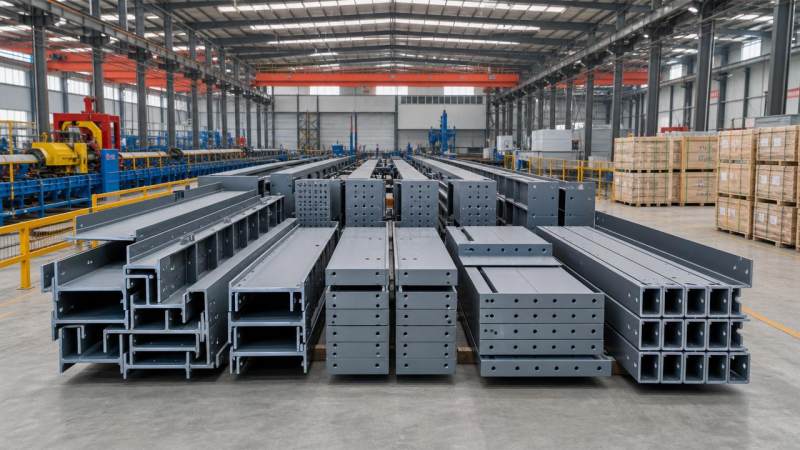
Standard channel steel works well for routine demand, but not every procurement case is routine. Global construction, industrial structure, equipment support, and manufacturing projects often require tighter tolerances, special lengths, punched holes, welded assemblies, or mixed-standard compliance.
When buyers source from a structural steel manufacturer with OEM capability, they can align the product with project drawings before shipment. This reduces secondary processing, shortens on-site preparation, and improves installation consistency across batches of 50, 500, or 5,000 pieces.
Common signs that standard stock is no longer enough
- Required lengths fall outside typical 6 m or 12 m supply formats
- Hole punching, cutting, beveling, or welding must be completed before site delivery
- Projects must comply with ASTM, EN, JIS, or GB at the same time
- Tolerance control tighter than general market supply, such as around ±1%
- Repeat procurement is planned over 3 to 12 months and consistency matters more than spot price
The procurement logic behind Steel Channel OEM solutions
OEM supply is not only about customization. It is also about process integration. A qualified supplier can combine material selection, rolling or forming, cutting, punching, welding, inspection, packing, and export coordination into one chain. That can remove 1 to 4 separate outsourcing points from the buyer’s workflow.
For decision-makers managing budget and schedule risk, this matters because total landed cost depends on more than the steel price per ton. It also includes fabrication labor, stock loss, transport efficiency, claim risk, and schedule delays.
Where OEM typically creates measurable value
In channel steel procurement, value usually appears in 4 areas: lower rework, better material utilization, more predictable lead times, and simpler quality accountability. If one supplier handles both manufacturing and customization, problem tracing becomes faster and technical communication becomes clearer.
The comparison below helps clarify when standard buying remains practical and when Steel Channel OEM solutions are more suitable.
The key takeaway is simple: if the project requires adaptation in more than 2 technical dimensions, OEM often becomes more efficient than buying standard material and modifying it later.
How to Evaluate an OEM Partner for Structural Steel Projects
Choosing the right manufacturer is as important as choosing the right steel channel specification. Buyers should evaluate not only price, but also production capability, export experience, standard compliance, and communication accuracy during pre-order review.
A structural steel supplier serving North America, Europe, the Middle East, and Southeast Asia should be able to work with multiple standards such as ASTM, EN, JIS, and GB. That is especially important when engineering teams, contractors, and local inspectors use different reference systems.
Four practical checks before placing an OEM order
- Confirm material grades, dimensional range, and tolerance in writing
- Review manufacturing steps, including cutting, punching, bending, or welding
- Check inspection items such as dimensions, surface condition, and quantity control
- Verify packaging, marking, and export lead time, especially for multi-container shipments
Questions buyers should ask in the RFQ stage
A strong RFQ should define 6 core points: steel grade, section size, processing requirement, quantity, drawing version, and delivery term. If any of these items are unclear, comparison between suppliers becomes unreliable and claim risk rises after production starts.
It also helps to ask whether the supplier can provide mixed structural steel items in one procurement plan. For many buyers, channel steel is not sourced alone. It may be ordered together with angle steel, beams, cold formed profiles, or fabricated parts.
Why integrated supply matters
An integrated manufacturer can help reduce coordination time between separate vendors. This is useful when industrial structures require multiple sections with similar surface treatment, identical grade control, and synchronized shipping windows within 2 to 4 weeks.
The table below outlines a practical decision framework that enterprise buyers can use during supplier screening.
In B2B steel sourcing, the lowest quote does not always produce the lowest final cost. A supplier with stable capacity and consistent technical review can be the safer option when project penalties or downtime carry higher financial impact.
Where Related Structural Steel Components Support OEM Channel Projects
Many projects that require customized channels also need beams or complementary structural members. In industrial structure applications, coordinated sourcing across multiple section types can improve compatibility in fabrication, welding sequence, and on-site assembly.
For example, buyers combining channel sections with I-beam products may simplify procurement when both items need matched grade control and similar tolerance expectations. This is common in workshop frames, equipment platforms, and support structures.
A useful reference when beam sections are also required
For industrial structure use, beam products are available in non-alloy grades such as Q195-Q235, Q345, SS355JR, SS400, A36, ST37-2, St37, S235J0, S235J2, and St52. Typical technical ranges include thickness from 4.5 mm to 15.8 mm, length from 6 m to 12 m per piece, and tolerance around ±1%.
Other common parameters include flange width from 100 mm to 400 mm, web width from 100 mm to 900 mm, flange thickness from 6 mm to 28 mm, and web thickness from 6 mm to 28 mm. Compliance may cover JIS, ASTM, DIN, GB, and EN, depending on project needs.
These beam sections are often chosen because they are economical section steel products rolled on a four-roller universal mill, while still supporting processing steps like bending, welding, decoiling, punching, and cutting when the application requires additional fabrication.
Why this matters for OEM decision-making
If your project includes both channels and beams, supplier coordination becomes more complex. Working with a manufacturer that can support multiple structural steel categories helps reduce document handling, quality variation, and split shipments across 2 or more factories.
Typical Risks, Lead Times, and Implementation Advice
Steel Channel OEM solutions deliver clear advantages, but only when the order is planned properly. The most common failures happen before production, not during production. Incomplete drawings, unclear tolerances, and late revision changes are responsible for many avoidable delays.
Three risk points that buyers should control early
- Drawing revision mismatch between purchasing, engineering, and factory teams
- Unclear acceptance criteria for dimensions, hole spacing, or surface treatment
- Shipping plans that ignore bundling, container loading sequence, or site unloading needs
A realistic OEM project timeline
For many customized structural steel orders, the workflow follows 5 stages: technical confirmation, quotation and revision, production scheduling, manufacturing and inspection, then packing and shipment. Depending on complexity and order volume, this can take roughly 2 to 6 weeks before ocean transit.
Simple cut-to-length orders may move faster, while welded assemblies or multi-item export projects usually require longer preparation. Buyers should leave buffer time of at least 5 to 7 days for document confirmation and final packing review.
Practical implementation advice for decision-makers
Start with a trial order or one project package when working with a new supplier. Review not only product quality, but also drawing feedback speed, packing discipline, and response time to technical questions. These are strong indicators of long-term supply reliability.
For companies sourcing from China, a manufacturer with modern facilities, strict quality control, and export experience across several regions can offer better consistency than ad hoc trading-only arrangements. Stable production capacity is especially valuable when repeat shipments are planned over multiple quarters.
FAQ for enterprise buyers
Is OEM only suitable for very large orders?
Not always. Large volumes make customization easier to justify, but even medium-size orders can benefit when post-processing cost, installation efficiency, or compliance needs are significant.
Does OEM automatically mean longer lead time?
Not necessarily. OEM adds engineering review, but it can also remove downstream fabrication time. In many cases, total project time is reduced because fewer steps are needed after arrival.
What documentation should be prepared first?
Prepare drawings, grade requirements, dimensional tolerances, quantity breakdown, surface expectations, and delivery terms. These 6 items are the foundation of accurate pricing and production planning.
When standard sections no longer fit the project as designed, Steel Channel OEM solutions give buyers greater control over specification, processing, and delivery coordination. They are especially valuable in industrial and construction projects where small dimensional errors can create larger downstream cost.
Hongteng Fengda supports global buyers with structural steel manufacturing, export experience, standard-compliant production, and customized solutions across channel steel, angle steel, beams, cold formed profiles, and fabricated components. If you are evaluating a new sourcing plan, now is a good time to discuss technical details early and reduce procurement risk before production begins.
Contact us today to get a tailored solution, review your drawings, or learn more about dependable OEM structural steel supply for your next project.
Please give us a message


Please enter what you want to find