Choosing a reliable Steel Rod supplier today means looking beyond steel bar cost or the latest rebar price list. Buyers need stable quality, compliant production, clear steel tube specifications, and dependable delivery from a trusted channel steel supplier. For global projects, the right partner helps control sourcing risks, manage steel rebar price per ton, and ensure consistent performance across demanding construction and industrial applications.
What does a reliable steel rod supplier really deliver beyond price?
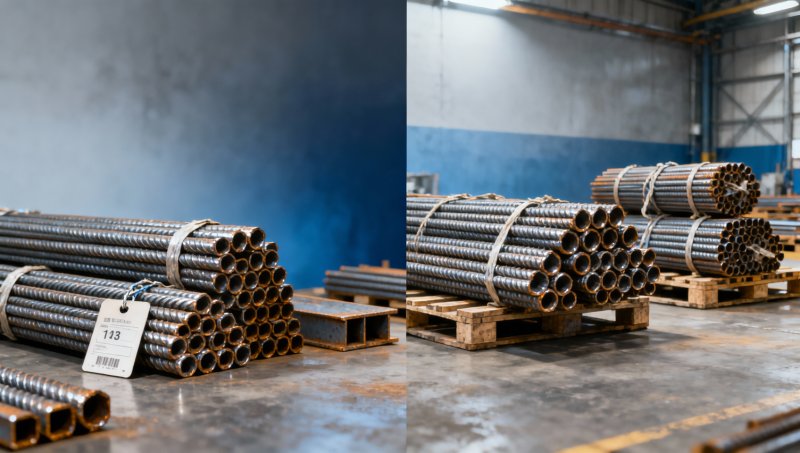
In steel procurement, price is always visible first, but reliability shows up later in production stability, inspection records, packaging, and on-time shipment. For project managers, procurement teams, and technical evaluators, a dependable steel rod supplier reduces the risk of rework, delay claims, and inconsistent batch performance. This matters even more when sourcing from overseas, where one shipment can affect 2–4 weeks of downstream planning.
A reliable supplier is not defined by one product only. In many real projects, steel rods are purchased together with angle steel, channel steel, beams, or cold formed profiles. That is why buyers often prefer a structural steel manufacturer with broader processing capability, because it simplifies supplier management, document review, and logistics coordination across 3 key stages: quotation, production, and delivery.
For importers and distributors, reliability also means consistency across orders. A supplier may offer a competitive steel rebar price per ton today, but if chemistry control, dimensional tolerance, or loading discipline changes from batch to batch, the apparent savings disappear quickly. Quality control teams usually focus on heat traceability, visual condition, and specification matching before goods ever reach the jobsite or warehouse.
Hongteng Fengda supports this wider procurement logic as a structural steel manufacturer and exporter from China. With experience in angle steel, channel steel, steel beams, cold formed steel profiles, and customized structural steel components, the company helps buyers manage both standard specifications and OEM needs under one supply relationship. For many international customers, this directly improves sourcing efficiency and lowers coordination cost.
The 5 signals buyers use to judge supplier reliability
- Stable specification control, including diameter range, tolerance understanding, coating consistency, and packaging discipline across repeated orders.
- Documented compliance with common international standards such as ASTM, EN, JIS, or GB where applicable to the supplied steel products.
- Clear communication during the 4 basic service steps: inquiry review, technical confirmation, production scheduling, and shipping coordination.
- Production capacity that supports both small trial orders and regular volume supply without major lead time fluctuations.
- Responsive after-sales handling for packing issues, quantity checks, quality questions, or replacement discussions when needed.
These signals matter to different stakeholders in different ways. Operators care about formability and ease of use. Procurement teams care about delivered cost and lead time. Finance reviewers care about risk concentration and claim exposure. Quality and safety personnel care about compliance records and physical consistency. A supplier that satisfies all four groups is usually far more valuable than one competing only on headline price.
Which evaluation criteria matter most when comparing steel rod suppliers?
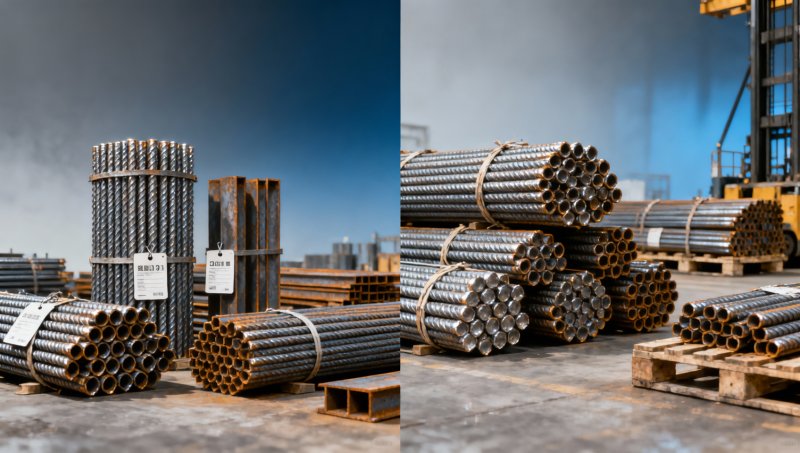
When buyers compare suppliers, the strongest decisions come from structured evaluation rather than general impressions. In the steel industry, at least 6 dimensions should be checked: material suitability, dimensional consistency, applicable standards, delivery reliability, packaging, and communication speed. If the procurement process ignores even 1 of these, hidden costs often appear after cargo arrival instead of before order confirmation.
Technical teams may start with mechanical properties and process suitability. Commercial teams often start with quotation terms, payment conditions, and freight assumptions. A good decision framework brings both sides together. That is especially important for cross-border sourcing, where a low ex-works offer can become less competitive once documentation, inland transport, export packing, and schedule risk are included.
The table below shows a practical supplier assessment model used in many B2B steel purchases. It is useful for importers, manufacturers, contractors, distributors, and engineering teams that need a faster way to compare more than one quotation without reducing the decision to unit price alone.
This comparison model helps decision-makers focus on total sourcing performance. A supplier with stronger process control and clearer documentation may protect project cost better over 6–12 months than one with a slightly lower opening quote. In steel purchasing, the most expensive problem is often not unit price, but unstable execution.
How different stakeholders evaluate the same supplier
For technical and quality teams
They usually verify whether the material can meet the intended application, whether the finish is uniform, whether forming operations may damage the surface, and whether packing can prevent transport contamination. In repeated industrial or construction use, consistency across multiple coils or lots is often more important than one good sample.
For procurement and finance teams
They usually compare 3 cost layers: product price, logistics cost, and non-conformance risk. This is why stable lead times, clean export documents, and reduced dispute handling can justify a quote that is not the absolute lowest on paper. Predictability has measurable financial value.
For project leaders and business evaluators
They focus on whether the supplier can support broader project needs. If one partner can supply steel rods together with structural sections and custom components, order consolidation becomes easier. That can reduce vendor touchpoints from 4–5 suppliers to 1–2 core partners, improving schedule control and communication efficiency.
How product specifications and application fit reveal supplier capability
A reliable steel supplier does more than send a price sheet. It helps buyers match product specifications to real applications. In some projects, users need wire or rod products with flexibility, corrosion resistance, and controlled tensile strength rather than only structural load-bearing sections. This is where specification guidance becomes a sign of supplier professionalism.
For example, mid-project buyers may need a product suited to construction, wire mesh, packaging, handicrafts, breeding, barrier isolation, or daily industrial use. In such cases, Galvanized Stainless Steel Wire can be inserted into the procurement mix as a practical supporting material when corrosion resistance, ductility, and bright surface finish are required across varied use conditions.
Based on the available product data, this wire uses Low Carbon Steel such as Q195 or Q235, with a wire diameter range of 0.25 mm–5.0 mm, zinc coating thickness of 8–25 g/m2, and tensile strength of 350–550 Mpa. Packaging can range from 50–1,000 kg in coil, with plastic film inside and woven bag outside, or wire bobbin packing depending on handling and transport needs.
These details matter because they tell buyers whether the supplier understands more than generic steel pricing. A product with strong flexibility, good plasticity, good corrosion resistance, and the ability to withstand cold stamping, rolling, and bending without damaging the coating serves many operational environments better than an unspecified low-price alternative.
Specification checkpoints buyers should request before ordering
Before confirming an order, buyers should ask for at least 5 checkpoints: material grade, diameter range, coating range, tensile range, and packaging method. If the product will be used in humid, outdoor, or frequently handled conditions, surface condition and corrosion expectations should also be discussed in advance. This reduces ambiguity during approval and receiving inspection.
The table below summarizes how a buyer can review key parameters in relation to application needs. This is particularly helpful when comparing offers from multiple suppliers or evaluating whether a lower quotation reflects a real saving or a reduced specification.
A supplier able to explain these parameters clearly is typically more dependable than one that only repeats a steel bar cost figure. Reliable steel sourcing depends on fitness for use, not on a price list alone. This is one reason diversified manufacturers often offer stronger value to industrial buyers and distributors.
How to reduce procurement risk in global steel sourcing
Global sourcing can be cost-effective, but it requires more discipline than domestic spot buying. Lead times may involve production scheduling, export packing, inland transport, vessel booking, and customs documentation. Depending on destination and order mix, a practical planning window may be 2–6 weeks before cargo departure. That is why reliable suppliers are valued for execution visibility as much as for manufacturing capability.
Buyers can reduce risk by aligning technical review and commercial review early. If the quality team confirms standards after the purchase order is issued, delays become more likely. The better process is to close 4 items first: specification, inspection expectation, packing method, and shipping terms. This saves time for both procurement and operations.
Hongteng Fengda serves buyers across North America, Europe, the Middle East, and Southeast Asia. For these markets, stable production capacity and consistent quality are often more important than chasing the lowest short-term offer. When supply supports ASTM, EN, JIS, and GB related expectations where relevant, buyers gain a more practical base for technical review and internal approval.
Another risk control point is supplier breadth. If the same manufacturer can support structural steel sections, cold formed profiles, and customized components along with related steel products, project teams spend less time synchronizing multiple vendors. This helps reduce communication gaps, especially in projects with phased deliveries or engineering changes.
A practical 4-step buying workflow
- Confirm use scenario and required specification, including size range, material grade, coating need, and target standards.
- Review quotation structure in full, including product price, packing, document support, shipment assumptions, and lead time.
- Lock technical and quality checkpoints before production, especially for customized or repeated supply programs.
- Track production and shipping milestones so receiving teams can prepare warehouse space, inspection steps, and project release timing.
This workflow helps information researchers, engineers, procurement officers, and financial approvers work from the same decision logic. The result is not just smoother purchasing. It is better project predictability, fewer claims, and stronger cost control over repeated orders.
Common mistakes buyers make when choosing a steel rod supplier
One common mistake is treating all steel products as interchangeable if they look similar on a quotation sheet. In reality, application differences, coating range, packaging style, and process suitability can change downstream performance significantly. This matters in construction, manufacturing, fencing, wire mesh production, and general industrial use.
A second mistake is comparing only the latest rebar price list or steel rebar price per ton without checking what is included. Different suppliers may quote based on different packing assumptions, loading methods, documentation support, or tolerance understanding. A lower number can conceal higher total cost once delays or claims are considered.
A third mistake is ignoring communication speed and response quality during the inquiry stage. If a supplier cannot answer specification questions clearly within the first 24–72 hours, problems are more likely during production or shipment. Early communication usually reflects later execution discipline.
Finally, some buyers separate strategic and practical evaluation too much. Senior decision-makers may focus on cost and market access, while operators focus on use performance. The strongest supplier choices connect these views. Reliable steel sourcing should satisfy installation practicality, quality traceability, and commercial viability at the same time.
FAQ for buyers, distributors, and project teams
How should I compare a steel rod supplier if quotations are close?
Compare 5 items beyond unit price: applicable standards, inspection process, packaging method, lead time range, and response quality. If two offers are close, the one with clearer specification control and shipping coordination usually creates fewer downstream costs.
What lead time should buyers usually plan for?
For many export steel orders, a practical planning range is 2–6 weeks depending on product type, order volume, and vessel schedule. Customized structural components or mixed-product orders may require more coordination than standard stock-oriented items.
Why is documentation so important in steel procurement?
Documentation supports internal approval, customs clearance, receiving checks, and dispute handling. It also helps technical reviewers confirm whether the goods align with project or manufacturing expectations before installation or use begins.
Is a diversified structural steel manufacturer a better choice than a single-product trader?
In many B2B cases, yes. A diversified manufacturer can support broader specification discussion, integrated supply, and order coordination across several product categories. This is especially helpful when projects require angle steel, channel steel, beams, cold formed profiles, and customized parts together.
Why choose a structural steel partner with broader manufacturing and export capability?
A dependable supplier relationship should help you do more than place one order. It should improve sourcing confidence, shorten evaluation cycles, and support repeated procurement with fewer surprises. Hongteng Fengda provides that wider value through structural steel manufacturing and export experience, modern facilities, strict quality control, and support for both standard and OEM solutions.
For buyers comparing suppliers today, the practical question is simple: can the partner support your real project constraints? That may include parameter confirmation, specification matching, packaging selection, delivery planning, and compliance discussion under ASTM, EN, JIS, or GB related requirements. A supplier that can address these points clearly is easier to trust over the long term.
If you are evaluating steel rod supply, related structural steel products, or customized components for construction and industrial projects, you can discuss 6 concrete topics before ordering: material options, dimensional range, application suitability, delivery cycle, documentation needs, and sample or quotation support. That makes supplier selection faster and more accurate for engineering, procurement, quality, and finance teams alike.
Contact us to review your drawings, required specifications, target standards, packaging preferences, expected shipment schedule, or OEM request. Whether you need standard structural steel, mixed-product sourcing, or application-based product selection, a structured discussion can help reduce sourcing risk and move your project forward with greater control.
Please give us a message


Please enter what you want to find