Choosing the right steel wire rope manufacturer is more than comparing prices—it means verifying quality systems, testing standards, and supply reliability. For buyers seeking a dependable steel wire rope supplier, understanding the checks that matter can reduce safety risks, control procurement costs, and improve project performance. This guide outlines the key quality factors to review before making a confident sourcing decision.
What should you verify first when screening a steel wire rope manufacturer?
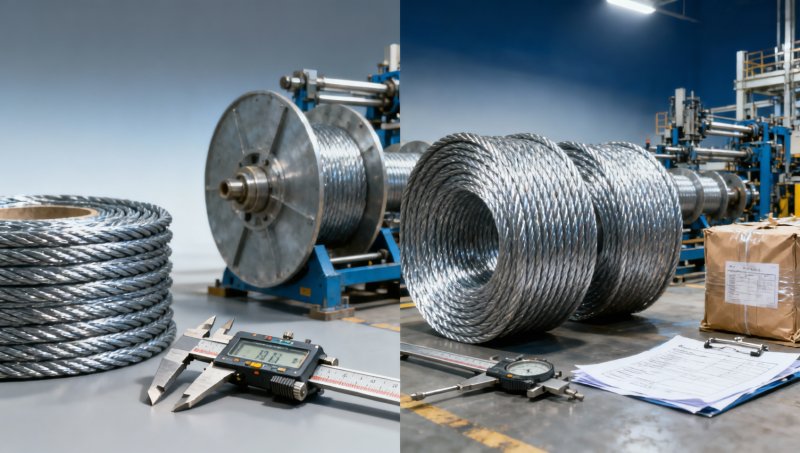
The first review should focus on whether the steel wire rope manufacturer can consistently control raw materials, production processes, and outgoing inspections. In steel procurement, the biggest risk is rarely the visible price gap alone. The larger risk is hidden inconsistency: variable tensile properties, uneven galvanizing, unstable lay performance, or incomplete traceability across batches delivered over 2–4 weeks or longer.
For procurement teams, technical evaluators, and project managers, a practical first filter includes 5 key checks: material source control, production capability, testing scope, standards compliance, and delivery stability. These factors affect not only initial purchase approval, but also installation safety, maintenance cycles, and long-term cost exposure in construction, lifting, industrial handling, and infrastructure applications.
A qualified supplier should be able to explain how wire rods are selected, how drawing and stranding are controlled, and how finished rope is inspected before shipment. If a manufacturer cannot clearly define its inspection points, acceptable tolerance ranges, or batch identification process, buyers should treat that as an early warning sign rather than a minor documentation issue.
For importers and distributors, this first-stage screening also needs a supply-side view. Ask whether the factory supports standard specifications, custom configurations, and repeated orders with stable performance. Companies sourcing from China often look for partners that combine manufacturing discipline with export experience. Hongteng Fengda, as a structural steel manufacturer and exporter, supports global buyers with controlled production, compliance-oriented quality management, and dependable lead-time communication across multiple steel product categories.
A practical 5-point pre-qualification checklist
- Confirm what raw material standards are used and whether material certificates can be matched to each production batch.
- Verify whether the factory performs in-house inspections at 3 stages: incoming material, in-process control, and final shipment release.
- Check which standards the supplier works with, such as ASTM, EN, JIS, or GB, and whether documentation can be aligned with project requirements.
- Review production and export responsiveness, especially for orders requiring 7–15 day document preparation or multi-batch shipment planning.
- Assess communication quality. A reliable manufacturer should answer technical and commercial questions with clear, consistent details rather than generic claims.
These first checks help buyers narrow down suppliers before deeper testing review. They are especially important for business evaluators and finance approvers who need to compare risk, not just unit price. A lower quote may appear attractive at approval stage, but batch rejections, delayed installation, or rope failure-related downtime can quickly erase any short-term savings.
Which quality checks actually matter for steel wire rope performance?
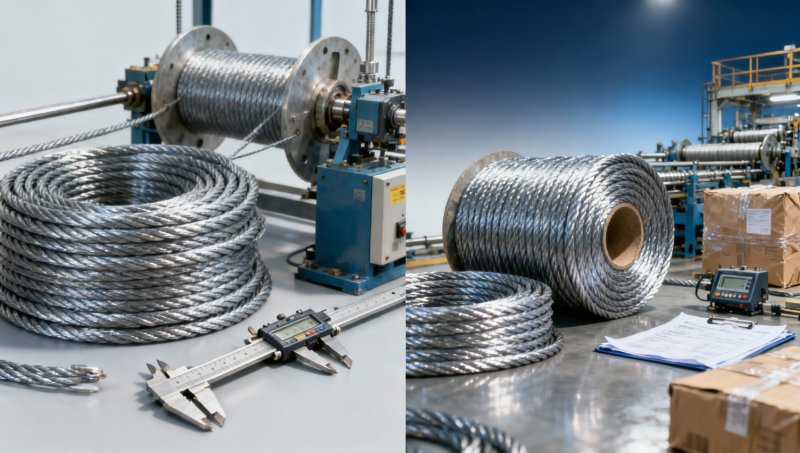
Not every inspection item carries the same purchasing value. The most useful checks are the ones directly linked to mechanical performance, service life, and field safety. For steel wire rope, buyers should focus on 6 core dimensions of quality: tensile capability, dimensional consistency, surface condition, lay uniformity, lubrication condition where applicable, and traceable batch identification.
Technical assessors often ask for strength values first, but strength alone is not enough. A rope with acceptable breaking load on paper may still perform poorly if wire diameter variation is excessive, if the strand arrangement is unstable, or if corrosion protection is inconsistent. Operators and maintenance teams usually see these problems later, during installation tensioning, repeated bending, or outdoor exposure.
Quality control staff should also look at the manufacturer’s inspection frequency. For example, are dimensions checked every batch, every coil, or at a fixed interval during production? Is final inspection based on random sampling only, or does it include recorded values for critical dimensions and visible defect review? Consistency in these routines matters more than broad, undefined claims of strict inspection.
In broader steel supply projects, the same logic applies to structural products beyond rope. Mid-project buyers often need coordinated supply across load-bearing materials. In such cases, related reinforcement products like HRB500 Rebar may be reviewed alongside wire rope and structural sections when the project involves high-load building structures, long-span bridges, or heavy-duty industrial plants. This helps unify compliance review, mill documentation, and shipment scheduling under one procurement framework.
Core inspection items buyers should request
The table below summarizes the inspection dimensions that usually provide the strongest decision value when comparing a steel wire rope manufacturer. It is especially useful for procurement teams building a supplier approval form or technical review sheet.
When these checks are documented clearly, purchasers can compare suppliers on measurable factors rather than impressions. This also helps quality managers prepare 3-stage acceptance criteria covering pre-shipment review, arrival inspection, and installation release. For complex tenders, such a checklist shortens internal approval time and reduces disputes between engineering, purchasing, and finance teams.
Why documentation quality is part of product quality
A steel wire rope supplier may offer acceptable samples but still create project risk if documents are incomplete. Buyers should expect at least 4 document categories where relevant: material certificates, inspection reports, packing details, and shipment traceability records. If one of these is missing, later claims handling becomes slower and responsibility becomes harder to define.
This is one reason experienced global buyers prefer exporters with organized compliance support. Hongteng Fengda serves customers across North America, Europe, the Middle East, and Southeast Asia with a practical understanding of standard-based steel supply, document coordination, and stable production planning. That experience helps buyers manage both technical verification and commercial execution more efficiently.
How do standards, certifications, and testing reports affect supplier selection?
Standards matter because they create a common language between manufacturer, buyer, inspector, and end user. In steel wire rope procurement, a supplier should be able to align product and documentation with the project’s required standard system, whether the buyer works mainly with ASTM, EN, JIS, or GB-related references. Without that alignment, technical approval may be delayed even if the product itself looks acceptable.
For purchasing departments and business reviewers, standards are also a contract management tool. They reduce ambiguity by defining expected dimensions, mechanical properties, marking, and test method references. In practice, this can save 1–2 rounds of clarification during supplier onboarding and reduce the chance of receiving goods that require re-inspection or commercial negotiation after arrival.
However, buyers should not rely only on standard names printed on quotations. The important question is whether the manufacturer can show corresponding test records, production control evidence, and batch-level traceability. A standards list without supporting documentation has limited value. Quality assurance depends on execution, not wording alone.
The same disciplined approach is relevant across steel categories. For example, the linked reinforcement product used in high-load structures supports standards such as AiSi, ASTM, bs, DIN, GB, and JIS, with common diameter ranges from 6MM to 50MM and lengths such as 1M, 4M, 6M, 8M, and 12M. This shows how standard-based supply planning can simplify procurement where multiple steel products must be reviewed under one engineering package.
What to compare in reports and compliance records
The following table helps procurement and QC teams compare testing and compliance depth between suppliers before issuing a purchase order.
A useful interpretation rule is simple: if two suppliers quote similar pricing, the one with clearer standards alignment and batch-linked reports usually creates lower lifecycle risk. This is particularly important in projects with phased deliveries over 3–6 months, where even small inconsistencies can create site delays, approval disputes, or rework costs.
Common compliance mistakes buyers should avoid
- Approving a manufacturer based only on a sample coil without confirming batch consistency for production orders.
- Treating a generic certificate as enough proof without checking whether it matches the actual shipment lot.
- Ignoring packing and marking details, even though poor packing can affect surface condition after long-distance transport.
- Using one acceptance standard internally while the supplier manufactures against another, creating avoidable disputes at delivery.
These issues are manageable when the supplier communicates early and documents carefully. That is why many B2B buyers prefer steel partners who understand both factory execution and export-side coordination, especially when projects involve mixed product categories, staged schedules, and strict approval chains.
How can buyers compare price, lead time, and long-term risk?
In steel wire rope sourcing, the lowest offer is not always the most economical one. Buyers should compare at least 4 cost layers: unit price, inspection depth, delivery reliability, and failure-related risk. A supplier with a slightly higher quoted rate may still produce lower total procurement cost if it reduces re-inspection, late shipment penalties, field handling problems, or unplanned replacement demand.
Lead time should be reviewed in two parts. The first is production time, which often falls into common planning windows such as 2–4 weeks depending on specification and quantity. The second is execution reliability: whether packing, documentation, booking, and shipment release are handled without repeated corrections. For project managers, this distinction matters because a nominally short lead time has little value if documents are delayed by 7–10 days.
Financial approvers and sourcing teams should also consider order size strategy. Small trial orders can validate product and communication quality, while medium and larger repeat orders reveal whether the supplier can maintain performance across multiple batches. Distributors and agents often use a 3-step model: sample review, pilot order, then scheduled procurement under agreed specifications and reporting requirements.
For steel buyers with broader structural needs, consolidation can improve efficiency. Working with a supplier experienced in structural sections, cold formed steel profiles, customized steel components, and related reinforcement materials can streamline purchasing communication and reduce supplier management complexity. That is one of the practical advantages of working with an export-oriented steel manufacturer rather than a narrow product trader.
A decision model for balanced supplier evaluation
- Define the application clearly, including load conditions, environment, installation method, and any required standard references.
- Request a comparable quotation package from each supplier covering price, specification details, test scope, documents, and delivery terms.
- Score each supplier against 5 dimensions: quality evidence, standards alignment, communication speed, lead-time stability, and total landed cost.
- Use a pilot order where possible before locking in quarterly or project-wide procurement volumes.
What different buyer roles should focus on
Operators and maintenance personnel should focus on handling behavior, visible consistency, and service suitability. Technical evaluators should prioritize standard conformity, mechanical data, and traceability. Procurement managers should compare quotation completeness, response quality, and lead-time credibility. Decision-makers and finance approvers should look at the supplier’s ability to lower sourcing risk across the full project cycle, not just on the first invoice.
When all of these perspectives are included, the selection process becomes much more reliable. It also reduces the common internal conflict where engineering wants higher assurance, purchasing wants lower price, and finance wants faster approval. A well-structured comparison framework lets all 3 sides work from the same evidence base.
FAQ: common questions buyers ask before choosing a steel wire rope supplier
How do I know whether a steel wire rope manufacturer is suitable for my application?
Start with 3 factors: application load condition, operating environment, and required documentation. A supplier suitable for a light-duty indoor use case may not be suitable for repeated outdoor industrial service. Confirm specification match, testing scope, and shipment traceability before making a volume commitment.
What is a reasonable lead time for export orders?
Common lead times often fall in the 2–4 week range for regular specifications, but actual planning depends on quantity, processing requirements, and shipping schedule. Buyers should ask for both production timing and document readiness timing, because shipment release can be affected if packing lists, marking details, or test reports are not prepared on time.
Should I choose one supplier for multiple steel products?
In many B2B projects, yes—if the supplier has genuine manufacturing and export capability. Combining structural sections, customized steel components, and selected reinforcement products under one supplier can simplify coordination, reduce communication gaps, and improve schedule visibility. The key is to verify that quality control is strong across each product category, not just one flagship item.
What are the most overlooked risks in steel wire rope procurement?
The most overlooked risks are inconsistent batch quality, unclear acceptance criteria, incomplete traceability, and poor shipping preparation. These problems may not appear during quotation review, but they can delay installation, increase inspection workload, and raise total cost after goods arrive. A supplier that communicates clearly and documents each batch properly usually reduces these risks significantly.
Why work with Hongteng Fengda for broader steel sourcing support?
For buyers comparing steel wire rope manufacturers, the best long-term result often comes from working with a steel partner that understands quality control, export execution, and project-based supply planning. Hongteng Fengda is a professional structural steel manufacturer and exporter from China, serving global construction, industrial, and manufacturing projects with stable production capacity, customized solutions, and standards-oriented quality management.
Our product scope includes angle steel, channel steel, steel beams, cold formed steel profiles, customized structural steel components, and related support for projects requiring coordinated steel sourcing. We work with common international standards such as ASTM, EN, JIS, and GB, helping overseas buyers reduce sourcing uncertainty and improve technical-commercial alignment from inquiry stage to shipment stage.
If you are evaluating a steel wire rope supplier or planning a multi-product steel purchase, you can contact us for concrete support on 6 practical points: specification confirmation, product selection, delivery schedule review, customized solutions, standards and certification alignment, and sample or quotation discussion. This is especially useful when your team needs to compare suppliers across quality, compliance, and lead-time risk rather than price alone.
Share your target application, required standards, expected quantity, delivery destination, and timeline. We can help you review technical requirements, organize a clearer sourcing framework, and support efficient communication for structural steel and related project materials. For procurement teams, engineers, distributors, and project decision-makers, that means faster evaluation and a more controlled purchasing outcome.
Please give us a message


Please enter what you want to find