Choosing a steel sheet manufacturer based only on catalog specs can expose technical evaluators to quality, compliance, and delivery risks later in the project. To make a sound decision, buyers should assess manufacturing capability, quality control systems, standards compliance, customization support, and export reliability. This article explains how to evaluate suppliers beyond datasheets and identify partners that can consistently meet real project requirements.
What should technical evaluators check first when reviewing a steel sheet manufacturer?
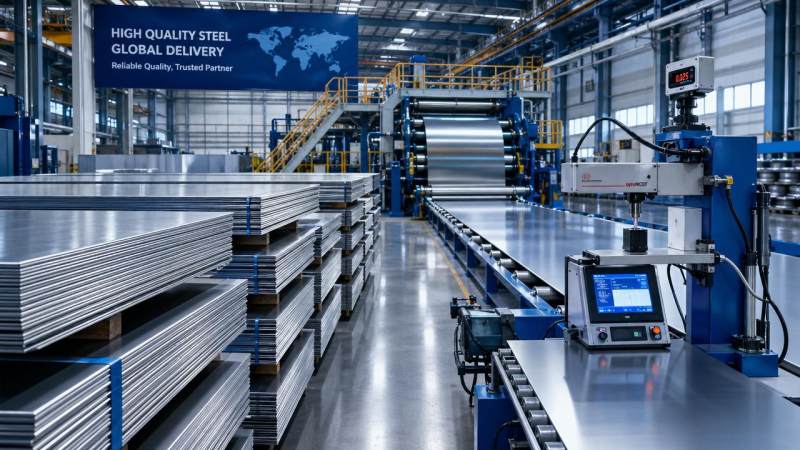
For a technical evaluator, the first task is to separate marketing claims from production reality. Many suppliers present similar material grades, tolerances, and standard references on paper, yet their actual process control can differ significantly. When assessing a steel sheet manufacturer, the question is not only whether the catalog looks complete, but whether the supplier can repeat the same output across batch 1, batch 10, and batch 100.
A reliable review usually starts with 5 core dimensions: raw material traceability, forming capability, dimensional consistency, inspection discipline, and delivery execution. If one of these areas is weak, the risk often appears later as rework, welding difficulty, coating failure, or installation mismatch. In project procurement, those downstream problems are usually far more expensive than the initial price gap.
In the steel industry, technical evaluators also need to understand the supplier’s product range beyond one item. A manufacturer that handles structural products such as angle steel, channel steel, steel beams, and cold formed steel profiles often has broader processing knowledge and better control over section geometry, thickness range, and standards conversion. That matters when your project includes both standard items and custom fabricated components.
For global buyers, especially those sourcing from China, the review should cover 3 stages: pre-production capability confirmation, in-process quality control, and pre-shipment verification. A steel sheet manufacturer that can explain these 3 stages clearly is generally easier to audit than one that only sends a quotation and a datasheet.
A practical first-screen checklist
- Confirm whether the supplier works with recognized standards such as ASTM, EN, JIS, and GB, and ask how equivalent grades are managed when buyers require cross-standard sourcing.
- Check whether the factory supports only standard stock items or also OEM and custom processing, because technical issues often arise in non-standard dimensions, hole patterns, edge treatment, or downstream fabrication.
- Ask for routine inspection points such as thickness checks, width checks, surface inspection, straightness control, and material identification during production and before packing.
- Review normal lead-time ranges such as 2–4 weeks for standard production and longer windows for custom fabrication, rather than relying on a single promised shipment date.
This first-screen approach helps technical teams reduce evaluation time while focusing on evidence-based supplier selection. It is especially useful when comparing several overseas sources that all appear acceptable at quotation stage.
Beyond datasheets: how to compare real manufacturing capability
Datasheets describe what a supplier says it can make. Manufacturing capability shows what it can consistently deliver. For a steel sheet manufacturer, that difference appears in equipment range, thickness handling, processing methods, and the ability to manage custom requirements without losing dimensional control. Technical evaluators should ask how products move from raw material intake to cutting, forming, inspection, packing, and export release.
Capability is also linked to process breadth. A supplier with experience in hot rolled, cold drawn, bending, and welding operations can usually support more project scenarios than a trader that depends entirely on outside processing. This matters when your project includes mixed structural requirements, replacement parts, or components that must match an existing assembly within a defined tolerance band.
Hongteng Fengda’s positioning as a structural steel manufacturer and exporter is relevant here because technical buyers rarely purchase in isolation. A project may begin with steel sheet manufacturer research, but later require angle steel, beams, channels, or cold formed profiles from the same source. Consolidating these needs can simplify technical communication, documentation control, and shipment coordination across North America, Europe, the Middle East, and Southeast Asia.
The table below helps evaluators compare a supplier that is catalog-driven with one that is process-driven. This is one of the fastest ways to identify hidden execution risk before placing a trial order or production order.
The comparison shows why technical evaluators should not treat all supplier quotations as technically equal. A steel sheet manufacturer with controlled processes usually reduces NCR risk, specification drift, and project delays even if the unit price is not the lowest on the first quote.
Questions that reveal actual capability
Ask how the supplier handles thickness variation across the requested range, what dimensional tolerances are routinely checked, and whether custom orders follow the same inspection workflow as stock items. If the answers remain generic after 2 or 3 rounds of discussion, that is usually a warning sign.
You should also ask whether the same factory can support related structural products for integrated sourcing. For example, in fabrication and framework projects, technical buyers often need more than sheet material alone. One useful reference product is Carbon Steel Angle, which is widely used in construction, bracing, corner reinforcement, shipbuilding, bridging, steel structure work, and automobile chassis applications.
From a capability perspective, this type of angle steel indicates whether the manufacturer can manage equal or unequal shapes, thicknesses from 0.8mm to 25mm, lengths from 1m to 12m, and processing routes such as hot rolled, cold drawn, bending, and welding. A supplier able to control these ranges often demonstrates stronger structural steel manufacturing depth than one limited to list-based trading.
Which quality and compliance signals matter most in steel procurement?
For technical evaluators, compliance is not just about whether a supplier mentions ASTM or EN in a brochure. The important issue is whether the product, inspection method, and documentation align with your project requirement. A steel sheet manufacturer should be able to explain what standard applies to base material, what applies to dimensional tolerance, and what applies to testing or certification records.
This becomes critical in cross-border procurement because buyers often compare offers using ASTM, EN, JIS, and GB references in the same sourcing cycle. The technical risk is not the use of different standards by itself. The risk comes from unclear equivalence, incomplete documentation, or failure to confirm critical points such as chemistry, mechanical properties, or dimensional tolerance before production starts.
A disciplined supplier usually works through 4 compliance checkpoints: specification review, material confirmation, in-process inspection, and final document verification. That structure is more useful than broad claims about quality because it shows how compliance is managed from order entry to shipment release.
The following table gives a practical framework for reviewing compliance signals when selecting a steel sheet manufacturer for construction, industrial, or manufacturing projects.
A structured compliance review helps evaluators make a decision based on project fit, not on assumptions. It also reduces the number of technical clarifications needed after PO release, which can save several days in a tight procurement schedule.
Common compliance mistakes to avoid
Assuming one standard reference solves everything
A product can meet one grade standard while still failing your project on tolerance, surface condition, or documentation format. Technical evaluators should review at least 3 layers: material grade, dimensional acceptance, and shipment records.
Ignoring custom requirement impact
Custom lengths, drilled features, welded assemblies, or mixed bundles can affect inspection methods and lead time. Any non-standard requirement should be confirmed before production, not after mill scheduling is complete.
Treating export experience as secondary
For overseas projects, export discipline is part of technical reliability. Improper marking, incomplete packing details, or weak shipment coordination can create the same project disruption as a dimensional defect.
How to assess customization, delivery reliability, and total sourcing risk
In B2B steel procurement, the final decision should not be based on base material only. Technical evaluators must also judge whether the steel sheet manufacturer can support drawing review, non-standard sizes, packing requirements, and destination-specific delivery planning. These factors influence total sourcing risk more than many buyers expect.
Customization capability is particularly important in construction and manufacturing projects where one mismatch can affect welding sequence, bracket alignment, or installation progress. A capable manufacturer should be able to review drawings, clarify critical dimensions, and identify risk points before production. That early review phase often saves 1–2 rounds of correction later.
Lead time should also be evaluated in layers. There is a difference between production lead time, surface treatment lead time, and export booking lead time. For example, a standard item may fit within a 2–4 week production window, while a custom structural order may require additional time for material preparation, fabrication, inspection, and packing coordination.
The checklist below is useful when comparing supplier risk in real procurement scenarios rather than in quotation-only reviews.
4-step technical sourcing review
- Define the specification package clearly, including grade, dimensions, tolerance expectations, required standards, and any fabrication or packing notes.
- Request capability confirmation from the supplier, not just a price. This should cover production route, inspection points, document availability, and normal lead-time range.
- Review sample documentation or previous shipment format for consistency. Even a simple document review can reveal whether the supplier manages export orders in a controlled way.
- Align release milestones such as drawing approval, production start, pre-shipment inspection, and dispatch notice so the buyer can monitor risk across 4 visible checkpoints.
Technical buyers who follow these 4 steps usually make more defensible supplier decisions, especially when price differences are narrow and schedule pressure is high. This method also helps internal teams explain why one steel sheet manufacturer presents lower overall project risk than another.
Why related product capability strengthens supplier evaluation
When a supplier supports broader structural categories, it often indicates stronger process control and engineering communication. For instance, equal and unequal angle sections used in framework, bracing, mechanical manufacture, bridging, and shipbuilding require disciplined handling of geometry, edge condition, length, and bundle identification. That kind of operational depth is relevant when assessing any structural steel partner.
In practical terms, a manufacturer that can supply angles in size ranges such as 25*3 up to 250*35, with standard references including GB, ASTM, JIS, DIN, and EN, is better positioned to support mixed project requirements. It shows familiarity with section variation, production planning, and cross-market specification handling.
FAQ: practical questions buyers ask about choosing a steel sheet manufacturer
How can I verify whether a steel sheet manufacturer is suitable for custom project work?
Check whether the supplier can review drawings, confirm processing routes, and identify tolerance-sensitive features before production. A suitable manufacturer should discuss at least 3 things clearly: manufacturability, inspection points, and lead-time impact. If the supplier only confirms “no problem” without technical detail, further verification is needed.
What is more important: low price or broader process control?
For technical evaluators, broader process control usually matters more because hidden quality or delivery failures can cost more than an initial unit-price saving. The better comparison is total sourcing cost, including rework risk, schedule delay, claim handling, and communication load across the order cycle.
Which standards should I expect a global structural steel supplier to work with?
That depends on your market and project specification, but ASTM, EN, JIS, and GB are commonly encountered in international steel sourcing. The key point is not how many standards appear in a catalog. It is whether the supplier can align the requested standard, documentation, and product execution consistently.
What is a reasonable lead-time discussion with an overseas manufacturer?
Ask for a breakdown rather than a single promise. Separate raw material preparation, production, inspection, packing, and shipment booking. In many cases, standard items may fit a 2–4 week manufacturing window, while custom steel products take longer depending on volume, processing complexity, and destination logistics.
Why work with Hongteng Fengda for structural steel sourcing?
For buyers who need more than a basic quotation, Hongteng Fengda offers practical value as a China-based structural steel manufacturer and exporter serving global construction, industrial, and manufacturing projects. The advantage is not limited to one product line. It comes from combining stable production capability, strict quality control, support for standard and OEM requirements, and familiarity with international standards such as ASTM, EN, JIS, and GB.
This matters for technical evaluators because supplier selection is really about risk control. A partner that understands structural applications, manages consistent output, and supports export execution can help reduce sourcing uncertainty across quality, compliance, and schedule. That is especially important when your project includes multiple steel categories, custom fabrication details, or tight delivery windows.
If you are currently comparing a steel sheet manufacturer for a new project, the most useful next step is a technical review rather than a generic sales inquiry. You can ask for parameter confirmation, related product selection, standards alignment, custom processing feasibility, sample support, lead-time discussion, and packing or export document coordination.
Contact Hongteng Fengda with your drawings, required standards, dimension list, and delivery target. A focused discussion around 4 items—specification confirmation, product selection, delivery schedule, and certification requirements—will help your team move from catalog comparison to a more reliable sourcing decision.
Please give us a message


Please enter what you want to find