For enterprise buyers, consistency matters as much as price when sourcing at scale. Leading steel coil manufacturers prove reliability across large orders through standardized production, strict quality control, traceable testing, and stable delivery performance. Understanding how these capabilities are verified helps decision-makers reduce procurement risk, protect project timelines, and choose supply partners with greater confidence.
What enterprise buyers are really trying to verify
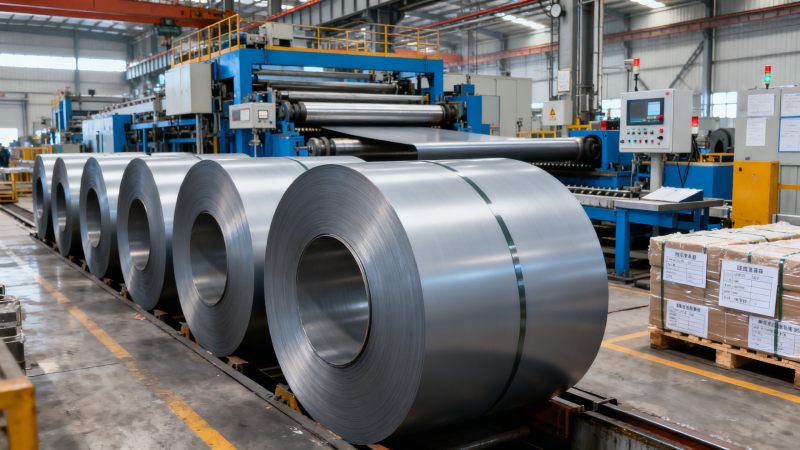
When decision-makers search for how steel coil manufacturers prove consistency across large orders, they are rarely looking for theory. They want evidence that a supplier can deliver the same quality repeatedly.
At scale, inconsistency creates expensive downstream problems. One shipment may run smoothly, while the next causes forming issues, coating variation, strength deviations, or delays that affect production planning and customer commitments.
That is why the real question is not whether a manufacturer claims quality control. It is whether the supplier can prove process stability, material traceability, and delivery discipline over multiple batches.
For procurement leaders, this is a risk management issue as much as a technical one. Consistent supply protects cost forecasts, reduces inspection burdens, and lowers the chance of rework, disputes, and project interruption.
Why consistency matters more in large steel coil orders
Small sample orders can look acceptable even when the supplier’s process is unstable. Large orders reveal whether the manufacturer can maintain the same thickness, mechanical properties, surface condition, and packaging standards over time.
In high-volume purchasing, even minor variation becomes significant. A small tolerance shift across hundreds of tons can affect line efficiency, scrap rates, welding quality, or structural performance in finished products.
Consistency also influences logistics and inventory planning. If goods arrive in mixed condition or outside agreed specifications, buyers may need emergency sorting, replacement sourcing, or schedule changes that increase total landed cost.
For global buyers, the stakes are even higher. Longer lead times, cross-border claims, and project-based deadlines mean supplier inconsistency can create commercial exposure well beyond the value of the steel itself.
How steel coil manufacturers prove production consistency
The first sign of a reliable manufacturer is standardized production. Consistency begins with controlled raw material sourcing, stable process parameters, calibrated equipment, and documented operating procedures across every production stage.
Strong steel coil manufacturers do not rely on operator experience alone. They build repeatability through process control systems that define rolling temperatures, coil dimensions, cooling conditions, slitting accuracy, and inspection checkpoints.
Buyers should ask whether the plant uses batch records and production logs for each order. These records show whether every coil was made under controlled conditions rather than variable shop-floor decisions.
Another important indicator is production capacity matching. A supplier that accepts orders beyond actual capability often causes inconsistency through rushed scheduling, subcontracting, or material substitution, all of which increase procurement risk.
Manufacturers serving international projects usually maintain procedures aligned with ASTM, EN, JIS, or GB requirements. That matters because standards-based production gives buyers a clearer framework for technical comparison and acceptance.
Quality control evidence buyers should request
Quality claims become meaningful only when supported by documents and data. Enterprise buyers should request inspection plans, mill test certificates, dimensional reports, and, where relevant, third-party verification records.
Material test certificates are especially important because they connect a delivered batch to measurable properties such as yield strength, tensile strength, chemical composition, coating data, or other agreed performance indicators.
Dimensional control is another practical proof point. In coil orders, tolerance consistency often affects downstream processing as much as base chemistry does, especially in stamping, roll forming, or automated fabrication environments.
Ask suppliers how often they test during production, not only after completion. In-process inspection is a stronger sign of control than end-of-line sorting, because it shows the manufacturer can prevent variation rather than simply detect it later.
For large orders, buyers should also confirm whether non-conforming material is isolated through documented procedures. A supplier with a clear corrective action system is usually more dependable than one that offers only verbal assurances.
Traceability is the backbone of large-order confidence
Traceability allows buyers to verify exactly what was produced, when it was produced, from which raw material lot, and under which process conditions. Without traceability, consistency cannot be proven with confidence.
Reliable manufacturers assign heat numbers, batch numbers, or coil identification marks that follow the product through manufacturing, storage, loading, and shipping. These links make audits and claims resolution much more efficient.
For enterprise procurement teams, traceability supports both quality management and internal compliance. It provides the evidence needed for supplier approval, project documentation, and customer reporting in regulated or high-value applications.
Traceability is also valuable when buyers source mixed steel products for larger structural programs. The same supplier discipline that governs coils often reflects broader manufacturing reliability across profiles, beams, and custom components.
Delivery consistency is part of product consistency
Many buyers focus on technical specifications first, but delivery performance is an equally important part of consistency. A technically acceptable order still creates problems if release schedules slip or packing quality is unreliable.
Leading suppliers prove delivery consistency through production planning discipline, inventory visibility, and realistic lead-time commitments. They do not simply quote aggressive dates to win the order and renegotiate later.
Buyers should review historical on-time shipment performance, especially for repeat international orders. Stable lead times often indicate stronger internal coordination between procurement, production, inspection, and export operations.
Packaging standards matter as well. Coils exposed to moisture, edge damage, or poor securing during transit may arrive with avoidable defects, turning a manufacturing success into a logistics failure.
For export buyers, dependable suppliers provide container planning, loading photos, packing lists, and shipping document accuracy. These details reduce customs delays, receiving errors, and post-arrival disputes.
How to evaluate a supplier beyond the sample order
A common mistake is choosing a supplier based mainly on a good sample or a single competitive quotation. Samples can confirm baseline capability, but they do not prove full-order stability across multiple production runs.
Instead, buyers should evaluate systems. Ask how the supplier controls variation between coils, manages raw material procurement, schedules large volumes, and handles quality deviations if they occur during production.
Factory audits are highly useful here. Even a remote audit can reveal whether the manufacturer has documented workflows, inspection equipment, warehouse discipline, and export coordination appropriate for large-scale supply.
Another useful method is phased ordering. Buyers can start with a commercial trial that includes several batches, not just one, allowing them to compare consistency in documentation, dimensions, appearance, and delivery execution.
Reference projects also matter. Suppliers with experience in North America, Europe, the Middle East, or Southeast Asia often understand the consistency expectations tied to international construction and industrial supply chains.
What a capable structural steel partner can demonstrate in practice
For many enterprise buyers, coil sourcing is connected to broader structural steel procurement. In that situation, consistency should be evaluated not only at product level but at supplier capability level.
A manufacturer with modern facilities, strict quality control, and export experience can often support more stable sourcing across multiple product categories, helping buyers reduce vendor complexity and communication gaps.
For example, buyers managing construction or industrial projects may combine coil-related needs with structural sections such as angles, channels, beams, or custom fabricated components under one coordinated supply relationship.
Within that context, products like Channel In Steel show how consistency standards extend beyond coils. Buyers typically look for controlled tolerances, traceable grades, corrosion options, and reliable compliance with ASTM, DIN, JIS, BS, or GB/T requirements.
Typical requirements may include thickness from 1.5mm to 25mm, height from 80mm to 160mm, lengths of 6 to 12 meters, and stable tolerance performance. In applications such as construction, wall beams, brackets, roof systems, and mechanical supports, these details directly affect fit-up and installation efficiency.
When a supplier can provide both standard and customized structural products with documented quality systems, it gives procurement teams stronger confidence in broader operational consistency, not just isolated product competence.
Questions procurement teams should ask before placing a large order
Before committing to volume, buyers should ask a focused set of questions designed to test evidence rather than marketing language. The answers often reveal more than pricing tables or product brochures.
First, what standards does the manufacturer produce to, and how are those standards verified for each batch? Second, what inspection records and certificates will be provided with shipment?
Third, how is traceability maintained from raw material through export packing? Fourth, what is the plant’s actual monthly capacity for similar orders, and how much of that capacity is currently committed?
Fifth, what is the procedure for handling non-conforming material or claims? Sixth, can the supplier provide examples of repeat orders where the same specifications were maintained successfully over time?
Finally, buyers should ask who owns communication during execution. Consistency is easier to maintain when account management, technical review, production updates, and shipping coordination are handled professionally and transparently.
The business value of choosing consistency over headline price
Lowest initial price does not always mean lowest procurement cost. In steel sourcing, inconsistency often creates hidden expenses that outweigh modest savings on unit price.
These costs may include extra inspection, production stoppages, claim handling, replacement freight, material sorting, schedule overruns, and damaged customer relationships. For enterprise buyers, those risks deserve direct attention.
By contrast, reliable steel coil manufacturers support smoother receiving, lower quality variance, more accurate planning, and better use of working capital. Consistency makes operations easier to predict and easier to scale.
It also strengthens long-term supplier relationships. When buyers trust a manufacturer’s process and documentation, they can move faster on repeat orders, framework agreements, and project-based procurement decisions.
For companies sourcing globally, that trust becomes a strategic advantage. It reduces sourcing friction, improves resilience, and helps procurement teams focus on growth rather than issue recovery.
Conclusion: proof matters more than promises
Large-order steel purchasing is ultimately about confidence backed by evidence. Buyers need more than statements about quality. They need standardized production, documented inspection, traceable batches, and reliable delivery performance.
The best steel coil manufacturers prove consistency through systems that can be audited, measured, and repeated. That proof helps enterprise decision-makers reduce risk, protect timelines, and make sourcing decisions with greater certainty.
When evaluating suppliers, focus on records, process discipline, standards compliance, and execution history. A partner that can demonstrate consistency across large orders will usually deliver stronger long-term value than one competing on price alone.
Please give us a message


Please enter what you want to find