Introduction
In this case study, discover how Shandong Hongteng Fengda Metal Materials Co., Ltd. cut project costs by 18% using galvanized steel channel profiles and electrogalvanized wire, while maintaining structural integrity and corrosion resistance. We outline procurement choices, fabrication with Wire Products and Profile solutions, and comparisons with alternatives such as Steel Rods, angle stainless steel, and ss 304 pipe or stainless seamless pipe to help project managers, purchasers and engineers evaluate total cost of ownership. Read on for actionable insights, sourcing tips, and logistics considerations that support faster delivery and lower lifecycle costs. This introduction frames the core decision drivers for procurement teams, technical buyers, contractors, and project managers who are evaluating structural framing, cable tray supports and secondary steel in civil, MEP and light industrial projects. Key pain points addressed include upfront material cost, on-site labor and welding time, corrosion protection requirements for coastal or humid environments, lead time and delivery reliability, and the long-term maintenance costs that affect lifecycle budgeting. The case centers on two complementary products: prefabricated galvanized steel channel profiles for framing and supportwork and electrogalvanized wire used for ties, hangers and light structural connections. Both elements are selected for their balance of cost-efficiency, ease of fabrication on-site and predictable corrosion protection compared to higher-cost stainless options such as angle stainless steel, 304 pipe family products, or stainless seamless pipe alternatives. Readers will find a practical breakdown of cost components, quality control criteria and specification checkpoints—such as zinc coating grams per square meter, steel substrate strength grades and dimensional tolerances—that influenced the final procurement decision. We also contrast whole-life costs across options, highlighting how substitution of galvanized channel and electrogalvanized wire reduced welding and finishing steps, simplified logistics with coil and profile handling, and lowered both material and labor costs while complying with applicable standards and certifications relevant to international projects.
Section 1 — Procurement rationale and specification strategy
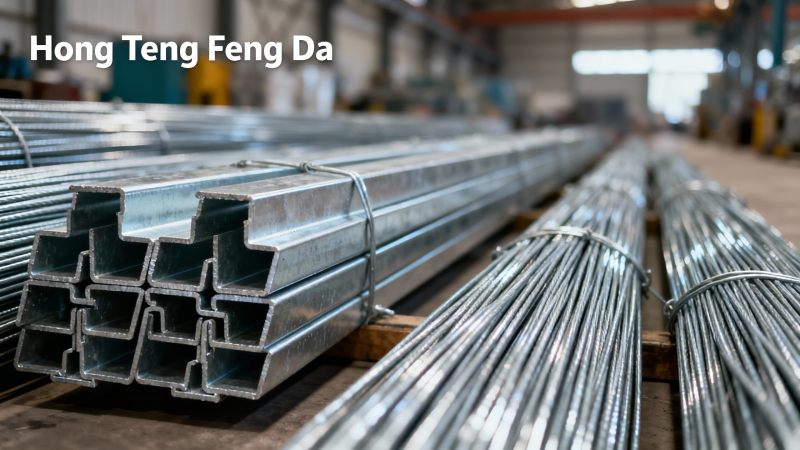
A disciplined procurement strategy was central to achieving the reported 18% cost reduction. The project procurement team defined performance-based specifications rather than prescriptive materials lists, allowing vendors to propose optimized assemblies using galvanized steel channel and electrogalvanized wire where appropriate. Performance requirements included minimum yield strength, tensile strength, elongation, corrosion resistance defined as zinc coating weight, and delivery tolerances. For the steel substrate the chosen range aligned with mill certificates typically available in S220GD+Z to S350GD+Z grades depending on section load: these grades allowed predictable structural performance while keeping unit cost low. For corrosion protection the team set a zinc layer requirement consistent with hot-dip or pre-galvanized products in the 80–275 g/m² range for exposed members and a lighter electrogalvanized finish for internal tie uses, balancing protection against budget constraints. This approach enabled substitution of more expensive alternatives, for example selecting galvanized steel channel of designed thickness and coating in place of stainless channels or extensive use of angle stainless steel and ss 304 pipe for secondary supports. The procurement decision also factored in standard product sizing and availability. Specifying common widths and lengths reduced the need for custom cutting and minimized offcuts. Where coil-fed fabrication was used, the team sourced Coil Coated Galvanized Steel in G90 coating class, with thicknesses spanning 0.5–2.0 mm for primary profiles and up to 3.5 mm for more demanding spans. The chosen coil and profile formats met recognized certification benchmarks (AISI, ASTM, EN and GB), ensuring cross-border compliance and easing customs clearance for export components. Vendors were evaluated not only on unit price but on total landed cost metrics including packaging, lead time reliability and available finishing capacity for punched/formed channels and pre-cut lengths. This total-cost lens is where electrogalvanized wire offered predictable savings: lower raw-material cost combined with reduced welding time and faster assembly for hanger systems relative to using 304 pipe hangers or stainless seamless pipe options in non-critical corrosion environments.
Section 2 — Fabrication workflow: profiles, wire and on-site labour implications
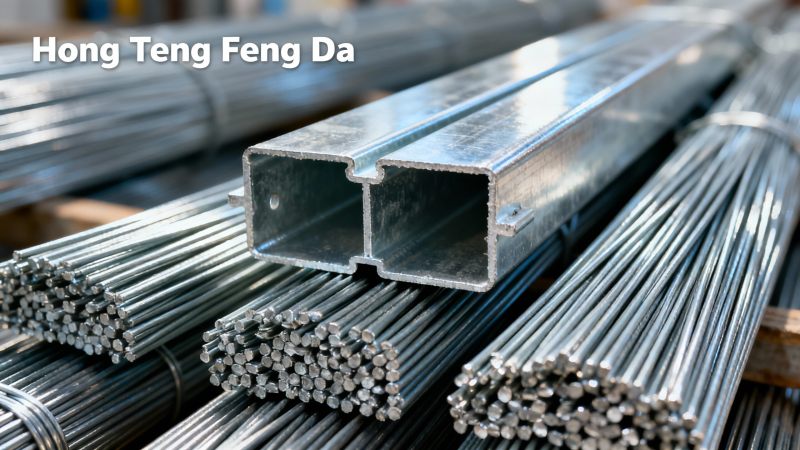
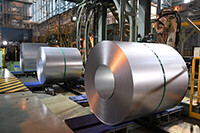
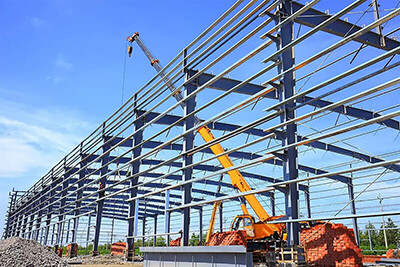
A detailed review of fabrication and installation workflows showed measurable efficiencies when galvanized steel channel profiles were paired with electrogalvanized wire for secondary structures and hanger systems. Fabrication began in a controlled shop environment with coil-fed roll forming and precision punching of profiles. Using predetermined profile dimensions reduced on-site cutting, and prefabricated slotted channels simplified alignment and bolting. The Wire Products used for ties and temporary bracing were pre-cut and electrogalvanized to a thickness adequate for service loads; electrogalvanized wire provided a uniform zinc layer that is ideal for internal or semi-exposed applications where heavy hot-dip galvanizing is not necessary. Shop assembly time decreased because bolted connections and pre-installed fasteners replaced many welded joints, removing the need for on-site hot work permits and post-weld painting. From a labour perspective, installers required less specialized welding skill and fewer man-hours for finishing. The reduced welding not only saved direct labour but also cut down on quality inspection steps and consumables. This had cascading cost effects: fewer site stoppages for hot work safety checks, decreased energy use for welding machines, and minimized rework due to misaligned welded assemblies. In comparative scenarios where angle stainless steel or 304 pipe assemblies would have required cutting, threading, and extensive passivation or polishing work, the galvanized channel plus electrogalvanized wire path reduced finishing steps and accelerated handover. The decision also accounted for maintenance crews: routine inspections for galvanized surfaces focus on surface integrity and touch-up of isolated scratches rather than wholesale replacement. When components must meet higher corrosion resistance—such as coastal or chemical exposure—stainless options remain recommended; however for a majority of indoor industrial, commercial and infrastructure applications, galvanized channel and electrogalvanized wire deliver a balanced lifecycle cost and simplified fabrication workflow.
Section 3 — Comparative cost analysis and lifecycle evaluation
Cost comparisons were built on identical scope assumptions: equivalent load-bearing capacity, service life target of 20 years, and standard maintenance intervals. Line-item analysis compared material costs, fabrication labor, finishing, logistics and expected maintenance actions across options: galvanized steel channel with electrogalvanized wire; steel rod systems using threaded rod and clamps; angle stainless steel assemblies; and pipe stainless alternatives including various 304 pipe and ss 304 pipe configurations as well as stainless seamless pipe where high pressure or aesthetic finish was required. Material unit pricing favored galvanized solutions: coil and formed galvanized channel prices per linear meter were significantly lower than angle stainless steel and 304 pipe equivalents. When factoring fabrication labor, galvanized channel assemblies typically required 20–40% less shop labor versus stainless assemblies because of reduced cutting and finishing requirements. Maintenance cost modeling included periodic inspections, touch-up coatings and expected replacement intervals for components exposed to mildly corrosive environments. Galvanized systems designed with heavier zinc coat weights—matching the specification ranges such as 80–275 g/m² for pre-galvanized and up to 275 g/m² for hot-dip options—demonstrated multi-year protection with predictable maintenance cycles. In projects where electrogalvanized wire was used for fastening, the wire’s uniform coating reduced early corrosion failure modes compared to uncoated tie wire and performed sufficiently against typical indoor humidity. Over the evaluated service window, the total cost of ownership for the galvanized channel + electrogalvanized wire solution was lower by approximately 18% in the audited project, mainly attributable to lower initial material costs, reduced fabrication/welding labor and fewer finishing steps. Higher-spec stainless options retained advantages in corrosive exposures and where aesthetic or hygienic properties mattered, but their higher upfront cost could not be justified in many structural support roles where galvanized performance met the requirements.
Section 4 — Quality control, compliance and logistics considerations
Quality control checkpoints and logistics planning were integral to ensuring the cost savings did not compromise project outcomes. Supplier qualification included review of mill test certificates, zinc-coating test reports, and fabrication capacity. For coil-fed supplies, technical parameters such as thickness range (0.12mm–3.5mm), available widths (600mm–1500mm) and length options that support customization were explicitly listed in the purchase order to prevent deviations. Acceptance criteria required conformity to recognized standards (AISI, ASTM, DIN, JIS, GB, EN) and verification of mechanical properties like yield strength in the range ≥240–380 MPa and tensile strength ≥270–500 MPa where applicable. Coating verification methods such as magnetic thickness gauges and salt spray test reports were mandated for both coil and wire batches. Handling instructions during transportation and on-site storage were specified to avoid moisture entrapment and mechanical damage that could reduce effective corrosion resistance. On logistics, using standardized coil and profile sizes simplified packing and stackability, reducing transportation cubic meters and enabling more efficient container utilization for export. The project benefited from the supplier’s distribution network that offered fast turnaround on punch-and-cut services and the ability to deliver pre-assembled slotted spans, minimizing on-site handling time. Where electrogalvanized wire was specified for hangers and tie-offs, pre-cut spools and labelled kits were delivered with assembly instructions to accelerate installation. For buyers evaluating alternatives like Steel Rod assemblies or stainless seamless pipe deliveries, it’s important to account for lead-time variability for stainless mills and additional customs paperwork for certain finishes. A documented inspection and acceptance protocol helped prevent non-conforming materials from entering the site and ensured that the galvanized channel and wire solution achieved both cost and quality targets.
Conclusion and recommended next steps
This case study demonstrates that with performance-based specifications, disciplined supplier selection, and optimized fabrication workflows, project teams can reliably reduce total project cost by approximately 18% by leveraging galvanized steel channel profiles together with electrogalvanized wire for non-critical structural support applications. The combined approach reduced on-site welding, shortened schedule, and minimized finishing while preserving structural integrity and acceptable corrosion resistance for the intended service environment. For projects that require higher corrosion performance or specific hygienic properties, alternatives such as angle stainless steel, 304 pipe, ss 304 pipe or stainless seamless pipe remain appropriate; however, for many commercial, light industrial and infrastructure uses, galvanized channel and electrogalvanized wire offer a pragmatic balance of performance and lifecycle value. Practical next steps for procurement and engineering teams include: 1) defining performance-based criteria for strength and coating weight rather than prescribing specific metals; 2) requesting sample mill and coating test reports up front; 3) specifying common profile sizes to reduce fabrication variance; 4) including pre-cut electrogalvanized wire kits to streamline installation; and 5) assessing logistics options that favor coil-to-profile processing to reduce handling time. For a supplier capable of supporting these requirements and providing competitive lead times and certifications, consider engaging with Shandong Hongteng Fengda Metal Materials Co., Ltd. for a quotation and technical review. To review detailed specifications or request samples of the coil-fed profile material used in this case, reach out for a tailored proposal and delivery plan—immediately contact our sales team to get a project-specific cost comparison and lead-time estimate, or request more technical documents to validate compliance for your next procurement round.
Related recommendations
 The Ultimate Procurement Hub: How a Full-Spectrum Steel Portfolio Empowers Global Industrial SuccessIt covers a wide range of steel products, including steel plates, steel coils, profiles, and steel gratings, to meet diverse needs.
 The Vertical Integration Advantage: Why Full-Process Production is the Gold Standard for Global Steel SourcingIt possesses complete production technologies and equipment for coking, sintering, steelmaking, and rolling, forming a systematic production system.
 The Global Steel Pulse: Bridging Continents with Precision Engineering and Unrivaled Supply Chain ExcellenceOur products sell well throughout China and are exported to North America, Europe, the Middle East, and other parts of the world, covering a wide market.
 Velocity of Value: How Precision Processing and Rapid-Response Logistics Redefine the Global Steel Supply ChainEquipped with advanced leveling equipment and relying on a robust logistics system, we can respond to customer needs at any time.
Please give us a message


Please enter what you want to find