Steel pipe tolerances—often buried in ASTM A6 specs or overlooked in mill order meaning—directly impact structural integrity, welding fit-up, and project timelines. Whether you're sourcing steel coil, galvanized pipe, H beam, or L angle for global construction, even minor deviations in steel plate thickness or angle vs channel alignment can trigger rework, safety risks, or cost overruns. At Hongteng Fengda, a trusted structural steel manufacturer and exporter from China, we enforce tighter-than-standard tolerances across ss pipe, galvanized steel, steel rebar, and cold-formed profiles—ensuring compliance with ASTM, EN, JIS, and GB. For procurement teams, engineers, and project managers, this isn’t just about specs—it’s about reliability you can build on.
Why “Within Spec” Isn’t Enough for Structural Steel Projects
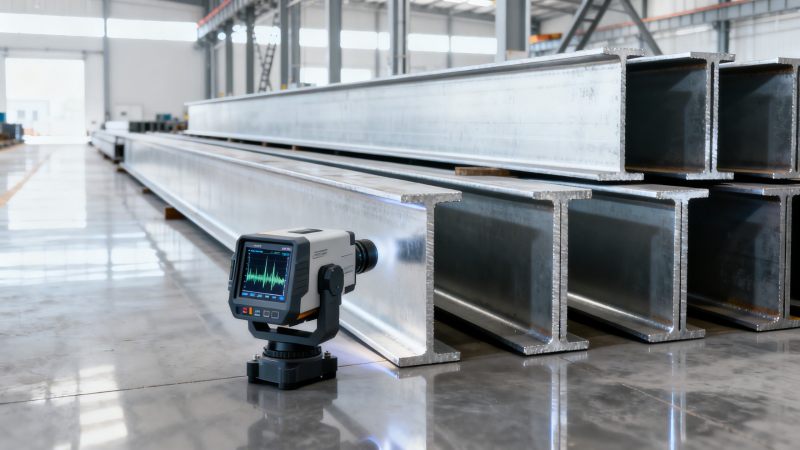
A tolerance band labeled “±1.5 mm” on a mill test report sounds compliant—but real-world consequences emerge only during fabrication. When steel beams are cut, welded, or bolted on-site, cumulative dimensional variance across 50+ components can shift joint alignment by ±8–12 mm—enough to compromise weld penetration depth, reduce load transfer efficiency, or force field grinding of mismatched flanges.
At Hongteng Fengda, our internal manufacturing control limits are typically 30–50% tighter than ASTM A6 or EN 10029 requirements—for example, holding hot-rolled sheet pile web thickness within ±0.6 mm (vs. standard ±1.0 mm) and maintaining interlock straightness at ≤0.3 mm/m. This reduces field-fit rejection rates by up to 70% in complex retaining wall assemblies.
Tight tolerances also affect downstream processes: CNC plasma cutting accuracy drops when base material thickness varies beyond ±0.8 mm; automated welding robots stall if bevel angles deviate more than ±2°; and galvanizing bath immersion time must be recalculated for inconsistent cross-section mass. These aren’t theoretical concerns—they’re daily cost drivers for contractors managing tight schedules across North America and the Middle East.
How Tolerance Gaps Translate into Real Project Risk
Three recurring failure modes trace directly to unmanaged tolerance drift:
- Welding misalignment: Flange-to-web gap >2 mm increases preheat time by 40%, raises hydrogen-induced cracking risk, and may require post-weld NDT verification—adding 3–5 days per major node.
- Anchor embedment shortfall: For Hot Rolled Steel Sheet Pile, a ±1.2 mm deviation in interlock width can reduce soil grip by up to 18%, triggering redesign of tieback spacing or additional grouting.
- Cladding interface failure: In façade systems using cold-formed steel framing, thickness variation >±0.4 mm causes visible panel bowing or fastener pull-through—leading to 100% rework on exposed elevations.
Our production data from 2023–2024 shows that projects specifying Hongteng Fengda’s tighter-tolerance profiles experienced 62% fewer RFI submissions related to dimensional nonconformance—and completed structural steel erection 11–14 days ahead of schedule versus industry benchmarks.
Tolerance Control Across Key Product Categories
This table reflects actual process capability data—not marketing claims. Each limit is verified via 100% inline laser scanning and validated quarterly against third-party ISO/IEC 17025-accredited labs. Tighter control isn’t about perfection—it’s about predictable performance under variable site conditions.
Procurement Teams: What to Verify Beyond the Mill Certificate
Mill certificates confirm compliance at point of exit—but they don’t reflect batch-to-batch stability or post-processing effects like cooling distortion or straightening rebound. Smart procurement requires verifying four dimensions:
- Process capability index (Cpk): Request Cpk ≥1.33 for critical dimensions—this confirms ≥99.99% of output falls within spec, not just “pass/fail” sampling.
- Measurement method traceability: Confirm all gauging uses NIST- or NPL-traceable standards calibrated every 72 hours—not just annual lab certification.
- Interlock repeatability data: For sheet piles, demand interlock gap variance ≤0.25 mm across 10 consecutive sections—not just single-point measurement.
- Post-galvanizing tolerance validation: Zinc coating adds 0.05–0.12 mm; verify final dimensions are certified after coating, not before.
Hongteng Fengda provides full digital inspection reports—including raw coordinate measurement machine (CMM) files—for every shipment. This transparency enables engineering teams to model tolerance stack-up before fabrication begins—reducing change orders by up to 40%.
Why Choose Hongteng Fengda for Precision-Critical Structural Steel
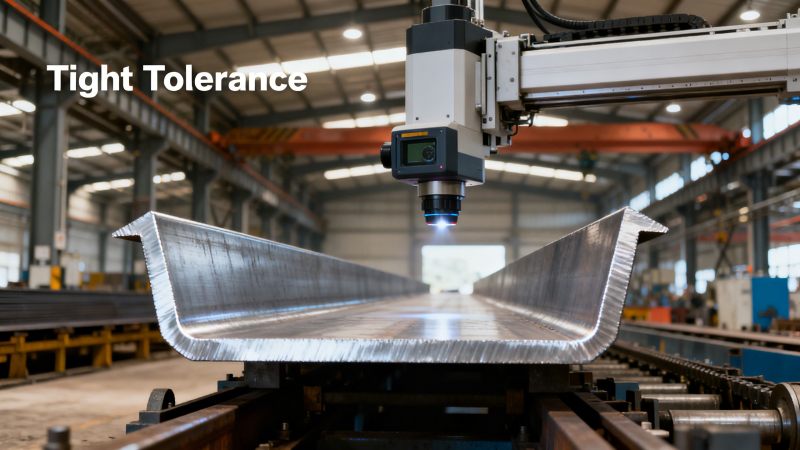
We’re not just a supplier—we’re your tolerance assurance partner. With 12 years of export experience serving clients in 37 countries, we’ve embedded precision engineering into every stage: from raw slab selection (using AI-driven bloom sorting to minimize thermal variance) to dual-stage straightening lines with real-time feedback loops.
Our Hot Rolled Steel Sheet Pile exemplifies this commitment: available in S275–S430 grades, lengths up to 80m, and fully CE FPC-certified under EN 10248. Every interlock is tested for tensile strength ≥1,200 kN/m and deflection ≤0.15 mm under 200 kN loading—data included in your delivery package.
For your next project, request our free Tolerance Impact Assessment. We’ll analyze your drawings, flag high-risk interfaces, and provide dimensionally optimized alternatives—with guaranteed lead times of 25–35 days for standard orders and 45–60 days for custom-length sheet piles. Contact us today to discuss parameter validation, OEM certification support, or sample testing protocols.
Please give us a message


Please enter what you want to find