Galvanized steel sheet for construction is widely chosen for its corrosion resistance, durability, and cost efficiency in demanding building environments. For buyers, engineers, and project managers comparing galvanized steel sheet specifications with broader structural steel solutions, understanding its performance advantages helps reduce maintenance costs, improve safety, and support long-term project value.
In practical construction procurement, the question is not only whether galvanized steel sheet is affordable at the time of purchase, but whether it can perform reliably over 10, 15, or even 30 years under rain, humidity, industrial pollution, and daily wear. For steel distributors, fabricators, contractors, and project owners, this material often becomes a strategic choice when lifecycle cost matters more than short-term price alone.
For global buyers sourcing from China, galvanized steel products are also evaluated alongside structural sections such as angle steel, channel steel, steel beams, and cold formed profiles. A capable manufacturing partner can help align coating performance, dimensional consistency, processing requirements, and international standards including ASTM, EN, JIS, and GB, reducing sourcing risk across multi-material projects.
What Makes Galvanized Steel Sheet Valuable in Construction
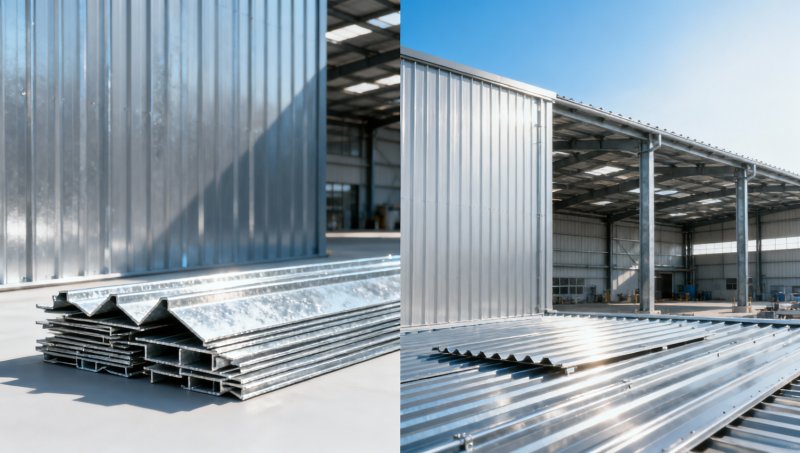
Galvanized steel sheet is carbon steel protected by a zinc coating, most commonly applied through hot-dip galvanizing or continuous galvanizing processes. In construction use, that zinc layer acts as a barrier against moisture and oxygen, while also providing sacrificial protection if the surface is scratched. This dual function is one of the main reasons galvanized steel sheet remains widely specified for roofing, wall systems, decking, ducts, purlins, enclosures, and secondary structural parts.
In many outdoor or semi-exposed environments, uncoated steel can begin oxidizing quickly if it is not painted, sealed, or otherwise protected. By contrast, galvanized steel sheet can significantly extend service life, especially in rural, urban, and moderately industrial conditions. In real project planning, that means fewer repainting cycles, fewer shutdowns for maintenance, and lower labor demand over a 5- to 20-year operating period.
Another advantage is processing flexibility. Galvanized sheet can be cut, bent, roll formed, and fabricated into panels, trays, guards, casings, and support components. This makes it attractive for contractors who need both corrosion resistance and efficient installation. On large projects with 3 to 5 construction phases, standardized galvanized parts can reduce site complexity and improve scheduling accuracy.
For technical evaluators, performance should be reviewed by exposure class, coating mass, sheet thickness, and fabrication method rather than by appearance alone. Glossy surface finish may look appealing, but the real value lies in coating integrity, edge condition, adhesion, and dimensional stability. Procurement teams that compare only initial unit price often overlook these factors and later face avoidable maintenance costs.
Core Performance Benefits
The benefits of galvanized steel sheet become clearer when linked to actual construction outcomes. Its practical value is not limited to corrosion control; it also influences project safety, cost planning, and operational continuity.
- Corrosion resistance helps protect steel in humid, rainy, or mildly polluted environments.
- Durability supports longer service intervals, often reducing maintenance frequency from annual inspection and repainting cycles to less intensive surface management.
- Fabrication efficiency makes it suitable for cut-to-length, folded, or profiled parts in factory production.
- Cost control improves when lower maintenance labor and replacement frequency are included in total ownership calculations.
For project managers, these points matter because construction materials are judged not only by installation speed, but by how predictably they perform after handover. A sheet product that remains stable through 2 to 3 seasonal cycles with limited intervention contributes directly to asset reliability.
How Galvanized Steel Sheet Compares With Other Construction Steel Options
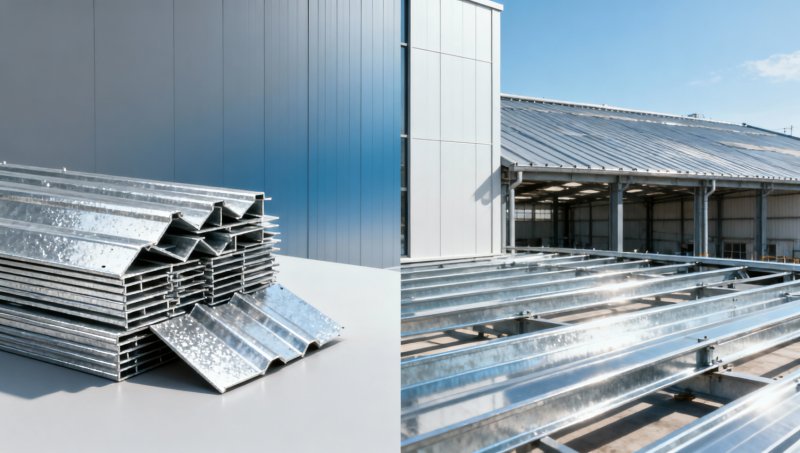
Construction teams rarely choose materials in isolation. Galvanized steel sheet is often evaluated against painted steel sheet, stainless steel, and untreated carbon steel, depending on budget, exposure level, and required lifespan. Each option has strengths, but galvanized sheet occupies an important middle ground: better corrosion resistance than bare steel and more economical procurement than stainless steel in many mainstream applications.
For example, painted sheet can offer attractive color and extra surface protection, but coating damage during transport or installation may require touch-up work. Stainless steel performs well in aggressive environments, especially near chloride exposure, yet it usually carries a much higher material cost. Untreated carbon steel remains suitable for protected indoor uses, but in external construction it often demands a more intensive maintenance plan.
This comparison matters for financial approvers and commercial evaluators. A project with a 12-month budget focus may prefer the cheapest initial option, while a facility owner with a 10-year operating horizon is more likely to prioritize lifecycle stability. The best procurement decision should therefore balance upfront material cost, expected maintenance frequency, and replacement risk.
The table below summarizes common selection differences in construction use. Values are indicative planning references rather than fixed design rules, since final suitability depends on project environment, coating specification, and fabrication details.
The key conclusion is that galvanized steel sheet is often the most practical choice for mainstream construction where moderate corrosion resistance, efficient fabrication, and controlled budget are all required at the same time. It is particularly effective when buyers need dependable performance without moving into the price level of specialty alloys.
When It Is the Right Choice
Galvanized steel sheet is usually a strong option when the project falls into one or more of the following categories:
- Outdoor building components exposed to rain, temperature swings, and periodic condensation.
- Industrial or commercial facilities that require stable service life with manageable maintenance.
- Projects with 2–4 week fabrication windows that need materials suitable for forming and batch production.
- Procurement programs balancing technical reliability with controlled capital expenditure.
If the environment includes continuous salt spray, heavy chemical exposure, or constant standing moisture, technical teams should verify whether heavier galvanizing, additional coatings, or an alternative material is needed. Early evaluation avoids expensive changes after fabrication begins.
Key Selection Criteria: Coating, Thickness, Standards, and Fabrication
Selecting the right galvanized steel sheet for construction starts with matching the product to the environment and the intended structural role. Buyers should not treat all galvanized sheet as identical. Coating weight, base steel grade, thickness tolerance, sheet flatness, and fabrication requirements can all influence long-term performance and installation efficiency.
A common mistake is specifying only the sheet thickness while ignoring coating level. In practice, both dimensions matter. A thinner sheet with suitable coating may outperform a thicker but poorly protected alternative in some exposure conditions. Technical review should also include bend radius, weldability, punching requirements, and whether parts will be used indoors, semi-exposed, or fully exposed outdoors.
International buyers typically look for compliance with ASTM, EN, JIS, or GB standards depending on market destination and engineering documentation. For exporters and distributors, consistency across batch production is just as important as nominal compliance. Quality control should therefore cover coating uniformity, dimensions, packaging protection, and traceable inspection records before shipment.
The following table outlines practical selection points that engineers, procurement officers, and quality teams can use during technical comparison and supplier evaluation.
A well-selected galvanized steel sheet can shorten fabrication adjustment time by reducing mismatch and surface damage. On projects with repeated part geometry, even a dimensional deviation of a few millimeters can create installation inefficiency across dozens or hundreds of units. That is why technical and quality teams should review both mill data and practical processing conditions.
A Broader Structural Steel Perspective
In many building and infrastructure projects, galvanized steel sheet is used together with structural steel sections rather than as a standalone material decision. Roofing systems, enclosures, ancillary supports, brackets, and formed components often connect directly to angle steel, channel steel, beams, or custom profiles supplied within the same procurement program.
That is where an experienced structural steel manufacturer can add value. Hongteng Fengda supplies standard and customized steel products for global construction and industrial projects, helping buyers coordinate specifications across multiple product categories while maintaining stable production capacity and dependable lead times. This reduces communication gaps between structural design, processing, and export delivery.
Related Product Integration in Mid-Project Sourcing
Some buyers that begin with galvanized steel sheet procurement later need matching corrosion-resistant bar or profile products for connected assemblies. In these cases, a product such as Galvanized Round Steel may be relevant for electric power towers, communication towers, highway protection, street light poles, marine components, and building steel structure components. Typical technical references include DC01 material, tensile strength of 570–820 MPa, and diameter ranges from 16–250 mm or customized lengths.
For engineering and machining teams, such galvanized round products can support applications involving studs, screws, nuts, pipe joints, spring seats, automatic lathe processing, and metal stamping parts. Common specification notes include ISO h8 tolerance for diameters below 10.00 mm, ISO h9 for diameters above 10.00 mm, and out-of-roundness control at half of diameter tolerance. This type of compatibility is useful when projects require both sheet-based components and galvanized bar-based accessories under coordinated quality management.
Procurement, Quality Control, and Delivery Risk Management
For purchasing teams, the right galvanized steel sheet is not determined only by technical specification. Delivery reliability, packaging quality, export readiness, and communication speed can directly affect project schedules. A sheet order delayed by 7 to 10 days may stop downstream forming, assembly, and site installation, especially when procurement follows a just-in-time model.
Global buyers should therefore evaluate suppliers across at least 4 dimensions: manufacturing capability, inspection control, documentation support, and shipment coordination. A supplier that can provide stable production for repeated batches is often more valuable than one offering a lower initial quotation but inconsistent lead time or incomplete technical records.
Quality control should include incoming raw material review, in-process dimensional checks, coating inspection, and pre-shipment verification. For distributors and project owners, visible surface condition is important, but so are hidden factors such as packaging moisture protection, bundle labeling, and traceability during loading. These points become critical when goods travel to North America, Europe, the Middle East, or Southeast Asia by sea freight over several weeks.
The checklist below helps procurement and QA teams align decision criteria before placing volume orders or annual framework contracts.
Supplier Evaluation Checklist
- Confirm whether the supplier can produce to ASTM, EN, JIS, or GB requirements specified by the project.
- Review coating consistency, dimensional tolerances, and whether third-party inspection is accepted when required.
- Ask for standard lead time ranges, such as 2–4 weeks for production plus shipping schedule planning.
- Check export packaging details to minimize edge damage, moisture exposure, and handling deformation.
- Verify the supplier’s ability to support customized sizes, OEM parts, or mixed structural steel orders.
For finance and commercial management, it is useful to compare procurement proposals using weighted factors rather than price alone. This approach reduces the risk of hidden costs that appear only after shipment or during installation.
The practical lesson is simple: in construction steel procurement, one weak link can affect the whole chain. Reliable manufacturing and export execution are often worth more than a small quotation difference when project deadlines and installation continuity are at stake.
Common Questions, Misunderstandings, and Best Practices
Even experienced buyers sometimes misjudge galvanized steel sheet because they focus on surface appearance or nominal thickness and ignore the service environment. In reality, successful material selection depends on matching the sheet to the expected exposure, fabrication method, and maintenance strategy. Clarifying common questions early can prevent avoidable specification errors.
Another misunderstanding is that galvanized steel automatically suits every aggressive environment. While it performs well in many building applications, severe marine exposure, standing water, or strong chemical contact may demand heavier protection systems or different materials. Project teams should review environmental conditions over the full expected service life, not only during construction.
Below are practical answers to frequent decision-stage questions raised by engineers, purchasers, distributors, and end users.
How long can galvanized steel sheet last in construction?
Service life depends on coating specification and exposure conditions. In moderate environments, galvanized steel sheet can provide many years of useful service with relatively low maintenance. In more corrosive conditions, performance may decline faster, so buyers should assess location-specific factors such as humidity, pollutants, and chloride exposure rather than relying on one general lifespan number.
Is thicker sheet always better?
Not always. Thickness supports mechanical performance, but corrosion resistance also depends heavily on zinc coating and how the part is fabricated and installed. A balanced specification usually considers 3 aspects together: structural demand, environmental exposure, and processing method. Over-specifying thickness without checking coating or tolerance can increase cost without solving the real risk.
What should be inspected upon delivery?
At minimum, receiving teams should check 6 items: quantity, dimensions, coating condition, edge damage, packaging integrity, and identification records. If the material will be used for visible architectural parts or precision-formed components, additional flatness and surface consistency checks are also recommended before fabrication begins.
What are the best practices for project success?
- Define application environment clearly before requesting a quotation or technical offer.
- Align coating, thickness, and fabrication needs in one specification sheet to avoid mismatch.
- Choose suppliers with stable production, export experience, and multi-product structural steel capability.
- Inspect goods promptly after arrival and store them in dry, protected conditions before use.
- Plan maintenance intervals based on actual exposure rather than assuming zero follow-up work.
For buyers seeking long-term value, galvanized steel sheet remains one of the most efficient construction materials when it is correctly specified and sourced from a dependable manufacturer. It combines practical corrosion protection, processing flexibility, and budget control in a way that suits a wide range of building and infrastructure applications.
If you are comparing galvanized steel sheet with other structural steel products, planning a new project package, or evaluating customized steel supply from China, Hongteng Fengda can support your decision with reliable production, international standard compliance, and tailored solutions for global construction needs. Contact us today to discuss specifications, request a customized solution, or learn more about the right steel products for your project.
Please give us a message


Please enter what you want to find