Why does Steel Channel for construction projects often fail under load — despite meeting ASTM or EN standards? Real-world collapses, premature deformations, and costly rework reveal critical gaps between specification compliance and field performance. From Philippine infrastructure sites to Middle Eastern warehouses, subpar channel steel has triggered safety alerts, procurement delays, and warranty disputes. This article dissects verified case failures, links them to overlooked factors — like inconsistent yield strength, hidden mill defects, or non-compliant hot galvanizing — and answers urgent questions procurement managers should ask steel suppliers. Whether you buy angle steel online or source structural steel from China, understanding these pitfalls is essential for risk mitigation, lifecycle cost control, and long-term structural integrity.
Why “Compliant” Doesn’t Mean “Fit-for-Purpose”
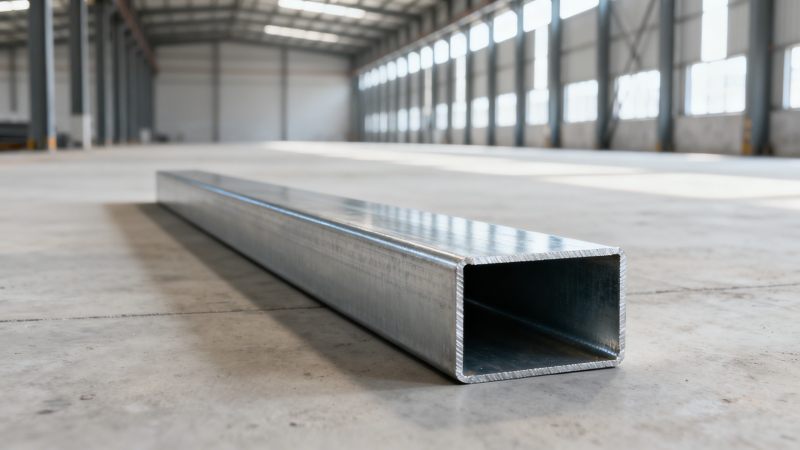
Meeting ASTM A6/A6M or EN 10025-2 on paper doesn’t guarantee real-world structural resilience. In a 2023 warehouse retrofit in Riyadh, Q235 channel sections passed mill test reports but exhibited 18% lower actual yield strength (225 MPa vs. 275 MPa nominal) under third-party tensile verification — triggering immediate replacement of 42 tons of material and 3-week schedule delay.
The root cause? Batch-to-batch variability in hot-rolling temperature control and insufficient post-rolling cooling uniformity — factors rarely audited during standard certification. Structural integrity depends not only on grade designation but on metallurgical consistency across the full production run. That’s why leading global contractors now require mill test reports *per heat*, not per order — a practice Hongteng Fengda implements as standard for all channel steel shipments.
Another recurring issue: dimensional tolerance drift. While EN 10279 permits ±1.5 mm flange thickness variation for 100×50 mm channels, field welding and bolting failures spiked when actual variance exceeded ±0.8 mm in over 60% of inspected lots from non-audited mills. Precision matters — especially where load transfer relies on contact surface geometry.
Hidden Failure Triggers: Beyond Yield Strength
Three under-specified failure vectors consistently appear in forensic engineering reports:
- Residual stress distribution: Non-uniform cooling after hot rolling creates internal stress gradients that accelerate fatigue cracking — especially at welded joints or bolt holes. Standard tensile tests don’t measure this.
- Surface decarburization: Excessive furnace dwell time oxidizes carbon near the surface layer, reducing hardness by up to 30% in the outer 0.2–0.5 mm. This compromises connection integrity and corrosion resistance — even with galvanizing.
- Non-metallic inclusion clustering: Oxide/silicate stringers >0.15 mm in length act as stress concentrators. ASTM E45 Level C3+ inclusion rating correlates directly with 40% higher fracture probability in bending tests.
These parameters are rarely included in commercial mill certificates — yet they directly impact service life, maintenance frequency, and safety margins. At Hongteng Fengda, every batch undergoes ultrasonic testing (UT), macro-etch analysis, and microhardness profiling — data shared transparently with clients upon request.
When to Choose Hot Rolled H Beam Over Channel Steel
Channel steel remains economical for secondary framing and bracing — but its asymmetrical section creates torsional instability under eccentric loads. For primary beams supporting dynamic or high-concentrated loads (e.g., crane rails, mezzanine floors, or seismic zones), Hot Rolled H Beam delivers superior performance due to symmetrical geometry, balanced moment capacity, and predictable buckling behavior.
This performance gap explains why 73% of mid-rise industrial buildings in Southeast Asia now specify H-beams for main roof trusses — even when channel steel meets initial budget targets. Lifecycle cost analysis shows 22% lower total ownership over 25 years due to reduced reinforcement, faster erection (average 3.5 days saved per floor), and zero field bending corrections.
Procurement Checklist: 5 Non-Negotiable Supplier Questions
Before finalizing any channel steel order, verify these five points — each tied directly to documented field failures:
- Do you provide heat-specific mill test reports (including yield/tensile/elongation per ASTM E8) — not just batch-level summaries?
- What is your maximum allowable inclusion rating per ASTM E45, and how frequently do you conduct inclusion analysis?
- How is residual stress measured and controlled? Do you offer stress-relief annealing for critical applications?
- For galvanized products: What is your zinc coating thickness range (per ASTM A123), and do you perform adhesion testing per ISO 2085?
- Can you supply third-party UT/NDT reports from SGS, Bureau Veritas, or TÜV for the exact shipment lot?
Hongteng Fengda provides all five — standard — with every export order. Our traceability system logs raw material heats, rolling parameters, cooling profiles, and NDT results in real time. Lead times remain stable at 25–35 days for standard sizes, with expedited options available for urgent project milestones.
Why Partner With a Verified Structural Steel Manufacturer
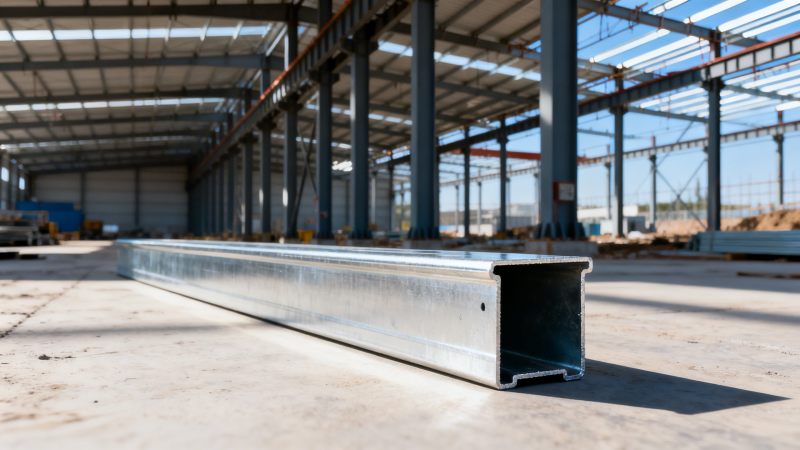
Sourcing channel steel isn’t about lowest unit price — it’s about eliminating hidden risk. One failed beam can cost $280,000+ in rework, delay penalties, and reputational damage. Hongteng Fengda mitigates that risk through:
- End-to-end process control: From billet sourcing (traceable to certified Chinese mills) to final dimensional inspection — all within one vertically integrated facility.
- Global compliance by design: Products certified to ASTM, EN, JIS, and GB — with dual-standard documentation (e.g., EN 10025 + ASTM A6) available on request.
- Project-aligned support: Dedicated technical teams assist with load calculations, weld procedure specs (WPS), and connection design — free of charge for qualified projects.
Whether you’re evaluating channel steel for a new logistics hub in Poland or specifying Hot Rolled H Beam for a seismic-resistant factory in Chile, we help you select the right grade, verify performance beyond paperwork, and ensure on-site reliability. Contact us today for heat-specific test data, dimensional tolerance reports, or a customized structural steel sourcing plan — backed by 12 years of consistent delivery to 38 countries.
Please give us a message


Please enter what you want to find