For business decision-makers facing tight schedules and rising project risks, prefabricated structural steel offers a practical way to reduce on-site delays and improve construction efficiency. By shifting more fabrication work to controlled factory environments, companies can shorten installation time, enhance quality consistency, and keep complex projects moving with greater cost and delivery confidence.
In steel-intensive construction, delays rarely come from one single cause. They usually result from 4 to 6 connected issues: labor shortages, weather disruption, late material coordination, dimensional errors, rework, and inconsistent site sequencing. For developers, EPC contractors, and industrial project owners, these issues can quickly turn a 2-week delay into a 6-week cost problem.
That is why prefabricated structural steel has become a practical procurement and project-delivery strategy rather than only a fabrication method. When steel beams, channels, angle steel, cold formed profiles, and customized structural components arrive pre-cut, pre-drilled, and prepared for installation, site teams can focus on assembly instead of correction. This article explains why the model works, where it creates the most value, and how buyers can select a reliable manufacturing partner.
How Prefabrication Reduces the Most Common Sources of Site Delay
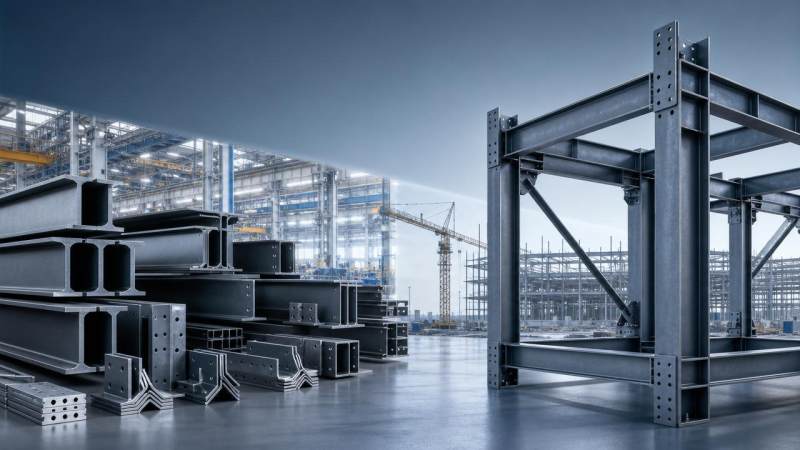
On a conventional project, structural steel work often depends on several on-site activities happening in the right order. Measurements must be accurate, equipment must be available, weather must cooperate, and labor must be synchronized. If even 1 of these factors breaks down, installation slows immediately. Prefabricated structural steel reduces this exposure by transferring a large share of fabrication tasks to a controlled plant environment.
Factory Processing Creates More Predictable Lead Times
In a manufacturing facility, cutting, punching, welding, trial fitting, and surface preparation follow planned sequences. This improves schedule predictability because production runs are managed by machines, drawings, inspections, and workflow control rather than changing site conditions. For many structural packages, factory processing can reduce on-site fabrication steps by 30% to 60%, depending on complexity and connection design.
This matters in projects with fixed milestones such as industrial workshops, logistics facilities, bridges, and multistory frames. If the steel package reaches site in installation-ready condition, crane time, crew deployment, and subcontractor sequencing become easier to manage within a 7-day, 14-day, or 30-day installation window.
Less Rework Means Faster Site Progress
Rework is one of the most underestimated delay drivers in steel construction. A hole mismatch of just a few millimeters can interrupt an entire erection sequence. When components are prefabricated under strict quality control, dimensional tolerance is easier to maintain and each batch can be checked before shipment. This is especially important where the project requires compliance with ASTM, EN, JIS, or GB standards.
For business buyers, the financial impact is clear. A single day of equipment idle time, lifting delay, or labor standby can affect multiple trades at once. By reducing fit-up problems before shipment, prefabricated structural steel helps protect not only the steel installation schedule but also downstream activities such as cladding, MEP coordination, flooring, and finishing.
Typical Delay Factors: Traditional Site Work vs Prefabrication
The comparison below shows how project risk shifts when more processing is completed before delivery. The exact impact depends on design maturity, logistics planning, and site readiness, but the trend is consistent across many steel projects.
The key takeaway is not that site work disappears completely. Instead, the most delay-sensitive steps are shifted to a setting where quality, sequencing, and throughput can be managed more consistently. That is the operational advantage decision-makers are buying when they choose prefabricated structural steel.
Site Safety and Coordination Also Improve
A project with fewer on-site cutting, welding, and correction activities is usually easier to supervise. This can reduce congestion in active work zones and simplify coordination among steel erectors, concrete teams, and equipment operators. On fast-track projects, even a 10% to 15% improvement in task sequencing can make a difference when handover dates are fixed.
- Fewer hot-work operations in crowded site conditions
- Shorter crane occupancy for each installation sequence
- Lower risk of cumulative delay from small dimensional corrections
- Better planning for phased delivery and zone-by-zone erection
Why This Matters for Global Buyers Sourcing Steel from China
For international buyers, time risk is not limited to construction alone. It also includes procurement coordination, production stability, document accuracy, inspection consistency, and shipment timing. A capable Chinese structural steel manufacturer can help reduce these risks when it offers standard sections, customized fabrication, and dependable export support under one supply chain framework.
Hongteng Fengda operates as a structural steel manufacturer and exporter from China, supplying angle steel, channel steel, steel beams, cold formed steel profiles, and customized structural steel components for global construction and industrial use. For buyers in North America, Europe, the Middle East, and Southeast Asia, this matters because the supplier relationship affects more than unit price. It affects production continuity, compliance confidence, and delivery reliability over the full project cycle.
What Decision-Makers Should Evaluate Before Ordering
When purchasing prefabricated structural steel internationally, a buyer should evaluate at least 5 areas before confirming an order. These factors influence whether the supplier can truly help control delay risk rather than simply ship steel products.
- Manufacturing capability for cutting, punching, welding, and customized component fabrication
- Quality control procedures tied to drawings, tolerances, and material traceability
- Standard compliance such as ASTM, EN, JIS, or GB depending on the project market
- Export coordination, packing method, and shipment scheduling
- Communication speed for revisions, approvals, and production updates
A supplier with modern facilities and stable production capacity can often support both standard and OEM requirements more effectively. This is especially valuable when the structural package includes multiple steel categories, mixed section sizes, or phased deliveries over 2 or 3 shipment batches.
A Mid-Project Example: Matching Structural Packages with Supporting Steel Supply
Many projects do not purchase only one type of steel product. Alongside beams, channels, and fabricated components, buyers may also need reinforcing or supplementary steel for foundations, slabs, walls, culverts, or bridge-related work. In these cases, sourcing coordination becomes a practical way to reduce schedule friction.
For example, Wire rod can be relevant in civil engineering construction, houses, roads, railways, dams, beams, columns, and foundations where supporting steel demand overlaps with the main structure package. Common specifications include 6mm to 50mm sizes, lengths such as 5m to 14m, and grades including HRB335, HRB400, and HRB500. Material options may cover Q195, Q235, Q345, and other standard steel grades depending on project requirements.
From a procurement perspective, the advantage is not only product availability. It is schedule simplification. If one supplier can coordinate structural sections and selected supporting steel products with defined tolerance, processing services, and packing arrangements, project teams can reduce supplier interfaces and minimize document gaps between technical approval and shipment execution.
Key Procurement Checks for Supporting Steel Products
Where complementary materials are involved, buyers should compare technical and commercial points in a structured way. The table below highlights practical checks that often affect project timing.
This kind of comparison helps purchasing teams avoid a common mistake: buying based on price alone while overlooking the extra time needed for reprocessing, verification, or repacking. In a project environment, 3 to 5 days saved in coordination can be as valuable as a lower material cost.
Implementation Strategies That Make Prefabricated Structural Steel Work
Choosing prefabricated structural steel is only the first step. To achieve real schedule benefits, project teams must also manage design release, approval timing, packing logic, and installation sequencing. The most successful results usually come from early alignment between the buyer, fabricator, logistics team, and site manager.
Start with Drawing Clarity and Scope Definition
Factory fabrication depends on usable drawings. If dimensions, hole locations, section types, or connection details are unclear, production slows or revision risk increases. As a rule, buyers should confirm 3 items before fabrication starts: approved drawings, applicable standards, and final quantity breakdown by section or component.
For more complex steel packages, it is often practical to divide supply into 2 categories: standard sections and customized fabricated components. This reduces confusion in production planning and helps the supplier align material preparation with machine scheduling and packing sequence.
Plan Delivery by Installation Sequence
One major reason steel projects lose time is that material arrives in the wrong order. Even if total tonnage is correct, site progress slows if the first erection zone is missing critical members. Prefabricated structural steel should therefore be packed and shipped according to zone, elevation, or erection sequence whenever possible.
- Batch 1: base frame, primary columns, and early-stage beams
- Batch 2: secondary framing, bracing, and connection accessories
- Batch 3: remaining customized parts for later work fronts
This approach helps buyers reduce yard congestion and shortens search time during unloading and erection. On tight sites, that alone can improve handling efficiency by several hours per day.
Practical Risk-Control Checklist
Decision-makers often ask what should be monitored before shipment to make sure prefabrication delivers the expected schedule value. The following checklist is a useful starting point.
- Confirm material grades and standards for every section type
- Verify marking system for bundles, components, and erection zones
- Check whether dimensional inspection records are available before loading
- Align packing method with unloading equipment and storage conditions
- Review shipment lead time, document lead time, and customs requirements
- Set a response window of 24 to 48 hours for technical clarification during production
Choose a Supplier That Supports Long-Term Risk Reduction
For one-off projects, buyers often focus on immediate cost. But for repeated sourcing, the better metric is total delivery reliability across multiple orders. A dependable structural steel partner should offer consistent quality, stable production capacity, practical communication, and a clear understanding of export requirements.
Hongteng Fengda supports global construction, industrial, and manufacturing projects with standard specifications and customized solutions. For procurement leaders, this kind of supply model can reduce sourcing risk over the long term because it combines product breadth, controlled manufacturing, and reliable lead-time support in one relationship.
Common Buyer Questions Before Switching to Prefabricated Structural Steel
Is prefabricated structural steel only suitable for large projects?
No. Large industrial plants and logistics buildings benefit significantly, but medium-scale commercial, infrastructure, and manufacturing projects can also gain value. The main requirement is not project size alone. It is whether schedule control, repeatable quality, and installation efficiency are important enough to justify more factory processing.
Does prefabrication reduce flexibility during construction?
It reduces uncontrolled changes, which is usually positive. However, it does require earlier coordination. If the design is expected to change repeatedly after fabrication starts, delay risk can increase. That is why disciplined drawing approval and change control are essential before production release.
How can buyers balance cost and lead time?
A good approach is to compare total installed cost rather than ex-works price only. Buyers should consider labor savings, reduced rework, shorter crane time, fewer field operations, and lower schedule disruption. In many cases, a steel package that looks 3% to 8% higher in supply price may still create better project economics when installation risk is lower.
What should be included in a supplier inquiry?
A strong inquiry should include section list, material grade, applicable standard, drawings, processing requirements, surface treatment, shipment destination, expected lead time, and any inspection requirements. The more complete the inquiry package, the faster the supplier can provide an accurate production and delivery plan.
Prefabricated structural steel helps control site delays because it moves critical work from unpredictable field conditions into a controlled manufacturing process. That shift improves dimensional consistency, reduces rework, supports faster installation, and gives project owners more confidence in delivery planning. For global buyers, the value is even greater when the supplier also provides stable capacity, international standard compliance, and clear export coordination.
If your project depends on reliable steel supply, customized fabrication, and better schedule control, Hongteng Fengda can support your procurement planning with structural steel products tailored to real project requirements. Contact us today to discuss specifications, request a customized solution, or learn more about efficient steel supply options for your next project.
Please give us a message


Please enter what you want to find