Choosing the right 2 tube steel is more than a sizing decision—it directly affects load capacity, weld consistency, and long-term structural performance. For operators and end users, understanding how material grade, wall thickness, and manufacturing quality influence results can help reduce failures, improve fabrication efficiency, and ensure safer, more reliable steel applications in construction and industrial projects.
Why does 2 tube steel selection matter so much in real working conditions?
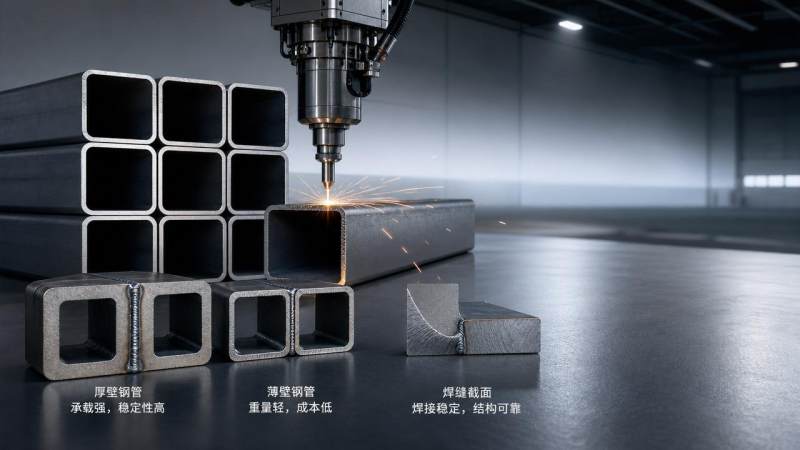
In steel fabrication and structural use, 2 tube steel often looks simple on paper. In practice, however, small differences in wall thickness, steel grade, dimensional tolerance, and surface condition can change how a part carries weight and how cleanly it welds.
For operators, the biggest risk is assuming that all 2 tube steel performs the same. A tube with inconsistent thickness may distort during welding. A lower-grade section may pass visual inspection yet underperform under repeated loading or impact.
This is especially important in frames, support brackets, machinery bases, guard structures, industrial platforms, and secondary structural members. In these applications, weld quality and load response are connected. If the tube is wrong, both problems appear together.
- Poor dimensional accuracy can create fit-up gaps, increasing welding time and filler consumption.
- Uneven wall thickness can cause local weak points and inconsistent heat input during fabrication.
- Improper steel chemistry may reduce weldability or increase the chance of cracking in constrained joints.
- Unsuitable surface condition, scale, or coating residue can interfere with arc stability and weld penetration.
What defines the performance of 2 tube steel?
When buyers compare 2 tube steel, they often focus first on outside size. That is necessary, but not enough. Performance depends on a combination of section geometry, base metal properties, and production consistency.
Key factors operators should check
- Steel grade: Yield strength and tensile strength affect allowable load and resistance to deformation.
- Wall thickness: Thicker walls usually improve stiffness and weld heat tolerance, but they also increase weight and cost.
- Manufacturing route: Hot finished and cold formed sections may behave differently in residual stress and dimensional control.
- Straightness and squareness: Better shape control improves cutting, jig alignment, and welding productivity.
- Surface quality: Clean, stable surfaces support better weld starts, less rework, and easier coating preparation.
For structural steel users, these factors should be reviewed together rather than separately. A tube with higher strength but unstable tolerance may still create fabrication delays. A cheaper tube with poor weld response can raise the total installed cost.
How does 2 tube steel affect load capacity?
Load capacity depends on section modulus, moment of inertia, steel strength, support condition, and connection design. In simple terms, 2 tube steel must resist bending, compression, torsion, and local buckling based on the job it performs.
A common mistake is choosing a section only by outer dimensions. Two tubes may both be called 2 tube steel, but if one has a thinner wall or lower material grade, its actual load performance can be significantly lower.
The table below shows how core selection factors influence structural behavior in daily fabrication and use.
For operators, the practical message is clear: load capacity is not only a design-office issue. It begins with the correct 2 tube steel being sourced and verified before cutting and welding start.
Why weld quality changes with different 2 tube steel grades and tolerances
Weld quality depends on joint design, welder skill, process settings, and the base material itself. Among these, 2 tube steel quality is often underestimated. Yet it strongly affects puddle behavior, penetration consistency, and the amount of post-weld correction required.
Common welding issues caused by poor tube selection
- Burn-through on thin or uneven walls, especially when operators use standard settings based on nominal thickness.
- Lack of fusion at fit-up gaps created by poor dimensional consistency or out-of-square sections.
- Distortion and twisting after welding due to residual stress from cold forming or poor section uniformity.
- Surface contamination, mill scale, or unsuitable coating residue that interrupts weld stability and requires extra preparation.
For many fabrication teams, welding efficiency is a hidden cost center. If a batch of 2 tube steel causes rework, slow fit-up, or alignment problems, the price advantage of low-cost sourcing disappears very quickly.
What helps achieve more stable weld results?
Choose tubes with reliable wall tolerance, consistent chemistry, and good straightness. Match the tube specification to the welding process. For heavier joints or restrained assemblies, verify whether preheating, filler selection, and joint preparation need adjustment.
Which 2 tube steel options fit different applications best?
Not every project needs the same 2 tube steel configuration. Operators working on support frames need different priorities than teams making transport racks, machine enclosures, or outdoor galvanized structures.
The comparison below helps connect application needs with practical selection priorities.
This is where supplier capability matters. A manufacturer that understands structural steel use can recommend the right balance of grade, tolerance, and processing route instead of pushing a one-size-fits-all section.
What should buyers and operators check before ordering?
A good procurement decision is not just about the lowest unit price. It should reduce fabrication uncertainty, avoid downtime, and support compliance with project specifications. For 2 tube steel, that means confirming both technical and supply-side details.
Practical pre-order checklist
- Confirm the exact outside dimension, wall thickness range, and length tolerance required by the drawing.
- Ask which standard applies, such as ASTM, EN, JIS, or GB, and verify that mechanical properties align with the project need.
- Review whether the tube will be welded, drilled, bent, galvanized, or powder coated after fabrication.
- Check straightness, corner profile, and surface condition expectations before shipment.
- Clarify batch consistency, mill documentation, lead time, and packing method for export handling.
Global buyers often deal with different regional requirements. Hongteng Fengda supports this process by supplying structural steel products and OEM solutions aligned with common international standards, helping reduce sourcing risk and communication gaps during execution.
How do standards and manufacturing control influence reliability?
Reliable 2 tube steel is built before it reaches the site. Production control affects chemical consistency, dimensional accuracy, mechanical performance, and traceability. For users and operators, this means fewer surprises during cutting, welding, and installation.
Why standards matter in cross-border steel sourcing
Projects in North America, Europe, the Middle East, and Southeast Asia may reference different standards. A capable structural steel exporter should understand how to supply according to ASTM, EN, JIS, or GB requirements where applicable, especially for dimensional tolerance, grade designation, and inspection expectations.
For buyers, standards are not paperwork only. They affect whether a 2 tube steel section will match engineering assumptions, pass incoming checks, and integrate smoothly with other structural members in the assembly.
Cost, alternatives, and the hidden price of poor 2 tube steel
The lowest quotation for 2 tube steel can be the most expensive option after fabrication starts. Hidden costs appear through rework, slower welding, scrap, misalignment, coating repair, and schedule disruption.
Where total cost usually increases
- Extra man-hours for grinding, straightening, and re-welding distorted parts.
- Material loss from sections that fail tolerance checks or cannot be assembled accurately.
- Production slowdowns when operators must reset jigs or modify welding parameters between batches.
- Field installation delays caused by mismatch between fabricated parts and design dimensions.
Alternatives such as different wall thicknesses, other section profiles, or custom cold formed structural members may provide better value depending on load path, weld access, and corrosion exposure. A supplier with engineering awareness can help compare these options before orders are finalized.
FAQ: common questions about 2 tube steel for operators and end users
How do I know if a thicker wall is really necessary?
Check whether the tube faces bending, compression, dynamic load, or concentrated weld heat. If the section is part of a loaded frame or sees repeated service, extra wall thickness may improve stiffness and reduce distortion. If the member is lightly loaded, better tolerance control may be more valuable than simply adding mass.
Is higher strength 2 tube steel always better?
Not always. Higher strength can improve design efficiency, but it may also require closer welding control and may not solve poor dimensional accuracy. The best choice depends on the balance between load requirement, fabrication method, and total project cost.
What causes weld defects on square or rectangular tube sections?
Frequent causes include wall variation, poor fit-up, contaminated surfaces, incorrect heat input, and residual stress from forming. The issue is rarely only the welder. Often, material consistency and section preparation are the root causes.
What should I ask a supplier before placing a bulk order?
Request the applicable standard, grade range, tolerance control, production capability, delivery time, inspection method, and whether custom lengths or OEM processing are available. These points matter more than a simple price list when 2 tube steel is used in welded structural assemblies.
Why choose a structural steel partner with export and customization experience?
When your project depends on consistent 2 tube steel performance, supplier experience becomes part of risk control. Hongteng Fengda manufactures and exports structural steel for global construction, industrial, and manufacturing applications, with support for standard specifications and OEM requirements.
This matters when you need more than raw material. It matters when you need reliable lead times, stable quality, clear communication on ASTM, EN, JIS, or GB expectations, and practical support on product selection, fabrication suitability, and delivery planning.
What you can consult us about
- Parameter confirmation for size, wall thickness, and grade selection
- Product matching for welded frames, supports, beams, channels, and cold formed profiles
- Lead time planning for export orders and project schedules
- Custom processing or OEM solution discussion based on drawings and end use
- Documentation and standard alignment for international sourcing requirements
- Sample support and quotation communication for technical evaluation
In some projects, steel selection also extends beyond sections and profiles into lifting, handling, marine, mining, or corrosion-exposed support systems. If your application also requires rope solutions, you may review Hot dipped Galvanized Steel Wire Rope for uses such as cranes, elevators, drilling, railways, forestry, marine industries, cableways, and loading systems.
This product is available in steel and stainless steel options, common constructions such as 6X7+FC, 6X19+IWR, and 8x19S+FC, sizes from 1.0mm to 22mm, and normal tensile strength from 1470Mpa to 1960Mpa. It can also be considered according to corrosion conditions through plain, electro galvanized, or hot dipped galvanized finishes, with reference standards including GB/T 20116-2008, DIN, EIPS, ISO 9001, and ABS.
Please give us a message


Please enter what you want to find