When sourcing steel plate — especially for precision cutting in structural applications like H beam fabrication or galvanized steel assemblies — many engineers and procurement teams overlook a critical hidden factor: residual stress in ‘as-rolled’ steel plate. Unlike stress-relieved or normalized steel plate, as-rolled material retains internal forces from hot rolling, leading to warping, dimensional inaccuracy, or even safety risks during laser/plasma cutting. This matters deeply whether you’re comparing angle vs channel for load-bearing frames, ordering mill-ordered steel coil or l angle per ASTM A6 tolerances, or specifying galvanized pipe or ss pipe for corrosion resistance. At Hongteng Fengda, we help global buyers mitigate these risks through controlled processing, rigorous QA, and application-aware steel solutions.
Why As-Rolled Steel Plate Carries Hidden Residual Stress
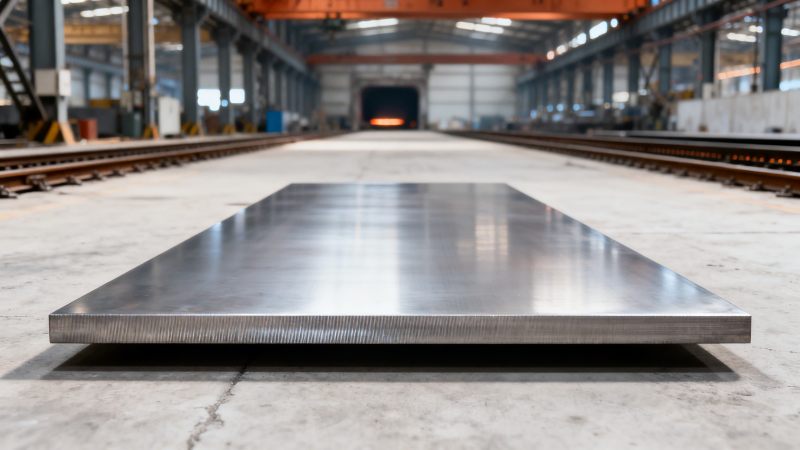
Residual stress forms during hot rolling when uneven cooling, thermal gradients, and plastic deformation lock internal forces into the microstructure. In standard ‘as-rolled’ plates — commonly supplied in thicknesses from 6 mm to 50 mm for structural beams and base plates — these stresses remain unrelieved unless subjected to post-processing such as stress-relief annealing (typically at 600–650°C for 2–4 hours) or normalizing.
Without intervention, residual stress can reach 150–250 MPa near surface layers — enough to distort parts during CNC plasma cutting, cause springback in cold-formed profiles, or trigger unexpected cracking during welding or galvanizing. Field reports from North American bridge fabricators show up to 30% higher rework rates on as-rolled plates used in laser-cut gusset plates versus normalized equivalents.
This is not theoretical: ASTM A6/A6M Section 11 explicitly acknowledges that “residual stresses may affect machining, straightening, or welding behavior.” Yet most mill certificates omit stress-level verification — leaving downstream users to discover consequences only after cutting begins.
How Residual Stress Impacts Real-World Fabrication
The effects manifest differently across operations — and vary significantly by plate thickness, grade, and end-use environment:
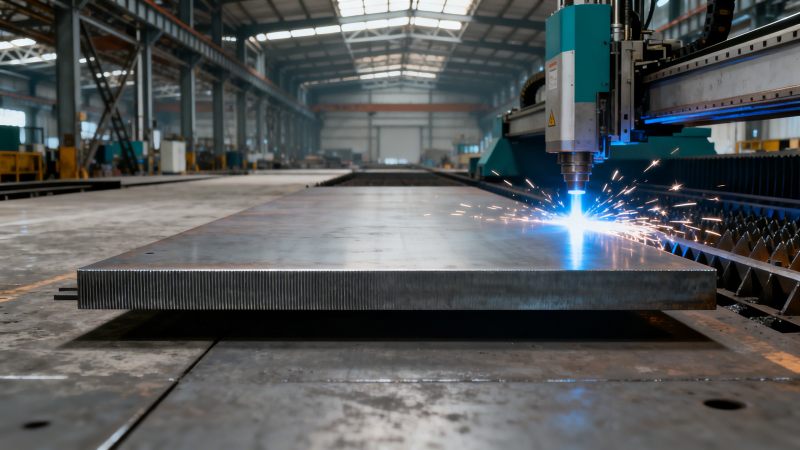
- Laser/Plasma Cutting: Warping occurs within seconds of heat input; thin-section parts (≤12 mm) may lift >2 mm off the table mid-cut, risking torch collision or dimensional drift beyond ±0.8 mm tolerance.
- Welding & Galvanizing: Localized heating triggers stress redistribution — causing buckling in long weld seams or zinc spalling on high-stress zones during hot-dip immersion.
- Cold Forming & Bending: Springback exceeds specification limits (e.g., EN 10162 requires ≤1.5° deviation for 90° bends); DX51D Galvalume Steel Coil DX51D Galvalume Steel Coil with pre-stress-controlled base steel shows 40% lower angular deviation in roll-formed roofing panels.
- Structural Assembly: Bolted connections in H-beam splices exhibit premature preload loss under cyclic loading due to micro-movement from stress relaxation.
For project managers overseeing multi-million-dollar infrastructure builds, this translates to 7–15 days of schedule delay per affected batch — plus scrap costs averaging $120–$280/ton for rejected cut parts.
Key Risk Thresholds by Application
Hongteng Fengda applies inline stress measurement (using X-ray diffraction on sample strips) for all structural plates ≥6 mm thick and guarantees residual stress ≤75 MPa — verified per EN 15305 — before shipment to Europe and North America.
Procurement Checklist: What to Specify Beyond Tolerances
Most purchase orders reference only dimensional tolerances (e.g., ASTM A6), yield strength, and coating weight — missing the critical stress parameter. To avoid field surprises, include these 5 mandatory clauses in RFQs and contracts:
- Residual stress limit: ≤80 MPa measured per EN 15305 or ASTM E915 (surface + subsurface).
- Stress relief method: Normalized (not just “heat-treated”) with full cycle documentation.
- Mill test report requirement: Must include stress measurement date, location, and methodology — not just tensile data.
- Pre-shipment inspection: Third-party verification (e.g., SGS or Bureau Veritas) for ≥10% of lots.
- Traceability: Batch-level traceability linking heat number → rolling log → stress test report → delivery note.
For buyers sourcing DX51D Galvalume Steel Coil, our standard supply includes chromate-free passivation and guaranteed T-bend performance ≤3T — validated across 1250 mm width coils with AZ100 coating (100 g/m² Al-Zn).
Why Partner with Hongteng Fengda for Stress-Sensitive Steel Procurement
As a structural steel manufacturer and exporter based in China, Hongteng Fengda integrates stress control into every stage — from hot-rolling furnace profiling to final coil inspection. Our certified production lines meet ISO 9001:2015 and EN 10025-2 requirements, with dedicated stress-relief annealing lines operating at 620°C ±5°C for precise dwell-time control (2.5 hours minimum for plates ≥12 mm).
We serve over 140 clients across 23 countries — including Tier-1 contractors in Saudi Arabia’s NEOM project and prefabricated housing suppliers in Germany — delivering consistent quality with lead times of 25–35 days for standard structural sections and 18–22 days for pre-stressed galvalume coils.
Whether you need ASTM A653 SS255 GD coils for HVAC ductwork, EN 10219 S355JRH hollow sections for solar mounting, or custom-cut angle steel with certified residual stress levels, our engineering team provides free technical consultation — including cut simulation support, weld procedure review, and coating compatibility analysis.
Contact us today to request: (1) a stress-test report sample for your next order, (2) lead time confirmation for DX51D Galvalume Steel Coil, or (3) OEM design support for non-standard structural components — all backed by 100% quality guarantee and L/C payment terms.
Please give us a message


Please enter what you want to find