Choosing the right steel sheet for construction can directly affect on-site safety, installation speed, and long-term structural performance. For operators and project teams, understanding where each type performs best helps reduce material waste, avoid delays, and improve efficiency. This guide explains the most suitable site applications and key selection factors for reliable results.
On active construction sites, steel sheet selection is rarely just a purchasing decision. It directly influences lifting safety, cutting efficiency, weld quality, fastening accuracy, and how well the finished structure performs under weather, impact, and load. For operators, installers, and site supervisors, the wrong material can create extra handling steps, rework, or edge deformation that slows down the whole workflow.
In practical terms, steel sheet for construction performs best when the sheet grade, thickness, coating, and fabrication method are matched to the actual site task. A sheet used for roofing has different priorities than one used for wall cladding, equipment enclosure panels, floor decking support parts, or temporary site protection. The best result comes from combining application knowledge with reliable supply, stable dimensions, and standard-compliant manufacturing.
How steel sheet for construction is used across typical jobsite tasks
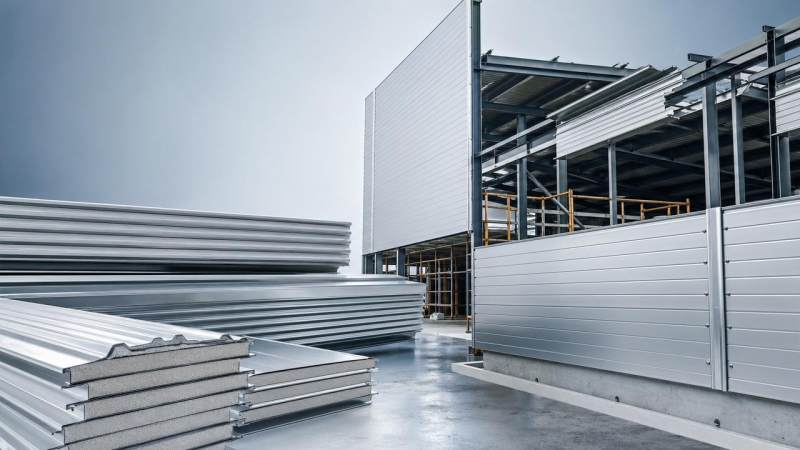
Steel sheet for construction is commonly used in 4 broad site categories: enclosure systems, structural support elements, temporary works, and fabricated components. Each category places different demands on flatness, thickness tolerance, corrosion resistance, and workability. Operators who understand these differences can reduce cutting loss, avoid over-specifying material, and improve installation speed by 10% to 20% in routine projects.
For roofing and wall cladding, lighter-gauge sheet with protective coating often performs best because it balances weather resistance with easier handling at height. In these applications, consistent sheet profile and coating quality matter more than extreme thickness. A panel that is too heavy can slow manual positioning, while uneven coating can shorten service life in coastal, humid, or chemically exposed environments.
For fabricated brackets, cover plates, stiffeners, and equipment housings, thicker hot rolled or cold formed sheet is usually preferred. These uses require better dimensional stability during cutting, punching, and welding. If the sheet surface is too irregular or internal stress is not well controlled, operators may face distortion after welding, especially on components longer than 2 meters or assemblies with multiple heat-affected zones.
Temporary site applications are another important area. Steel sheet is often used for safety barriers, trench covers, storage enclosures, and protective shielding around active work zones. In these cases, durability and reusability are key. A reusable plate or panel that lasts through 5 to 10 site cycles can lower replacement frequency and reduce total material cost, even if the initial unit price is slightly higher.
Best-fit applications by working condition
The table below shows where steel sheet for construction generally performs best based on on-site conditions rather than only on product name. This approach helps users match the material to real operating needs.
The key point is that no single sheet type is best for every job. Performance on site depends on matching the material to the handling method, joining process, weather exposure, and expected service cycle. A reliable structural steel supplier can help users compare these conditions before material reaches the site.
Key selection factors that affect safety, speed, and long-term performance
When selecting steel sheet for construction, operators should focus on at least 5 practical factors: thickness, strength level, surface condition, corrosion protection, and fabrication compatibility. These factors influence not only final performance but also daily operations such as drilling, welding, fastening, stacking, and crane lifting. Even a small mismatch in thickness tolerance can affect fit-up across dozens of panels.
Thickness is usually the first checkpoint because it affects rigidity, dead load, and handling effort. Thin sheet can be efficient for enclosure systems, but it may buckle during transport or installation if unsupported spans are too long. Thicker sheet offers better resistance to impact and deformation, but it increases lifting weight and may require stronger fixings or more labor during alignment. On many sites, reducing one unnecessary handling step can save several labor hours per week.
Surface condition is equally important. Sheets intended for visible architectural use should have fewer scratches, cleaner finish, and more consistent coating appearance. Sheets for welded structural accessories need a surface suitable for preparation and joining. Operators often underestimate the time lost in cleaning oil, scale, or inconsistent edge conditions before welding or bolting. Good upstream quality control can shorten this preparation stage noticeably.
Corrosion protection should always be linked to site environment. Interior dry spaces and enclosed industrial areas usually require less aggressive protection than outdoor plants, coastal buildings, or livestock facilities. In high-humidity or splash-prone areas, a coated or galvanized solution can extend useful service life and reduce repainting frequency. For exported projects, buyers also need to confirm whether ASTM, EN, JIS, or GB based specifications are required for project approval.
A practical checklist before ordering
- Confirm the exact use: roofing, cladding, support plate, temporary cover, enclosure, or fabricated part.
- Check whether the sheet will be cut, bent, punched, or welded on site within 24 to 72 hours of delivery.
- Review exposure conditions such as rain, salt air, chemical splash, or indoor dry storage.
- Define tolerance needs, especially if multiple sheets must align over spans, frames, or pre-drilled connection points.
- Verify packaging and unloading method to avoid edge damage, especially for export shipments and multi-stop transport.
For project teams buying from experienced manufacturers such as Hongteng Fengda, these checks become easier because material can be supplied in standard specifications or adapted for OEM fabrication. Stable production capacity and consistent quality matter most when deliveries must align with phased construction schedules across 2 to 4 weeks or longer.
Where supporting steel products can improve on-site efficiency
Steel sheet is often used together with auxiliary steel products that support tying, fixing, separation, fencing, or lightweight fabrication. In site logistics, storage, and temporary works, products such as Mild Steel Wire Rod can be a practical complement. Made from low carbon steel in Q195 and Q235 grades, it is available in wire diameters from 0.25 mm to 5.0 mm, with tensile strength of 350 to 550 Mpa.
For construction and industrial use, this wire rod is commonly selected for tie ropes, wire mesh, fences, hangers, filter baskets, and barrier isolation. A zinc coating thickness of 8 to 25 g/m2 supports basic corrosion resistance, while the bright and smooth surface and good ductility make handling easier. Packaging options such as 50 to 1,000 kg coils or wire bobbin supply can also simplify storage and phased site use.
This type of insert product does not replace steel sheet for construction, but it improves the wider workflow around sheet installation, temporary securing, and site organization. For operators, combining the right sheet material with practical secondary steel items often reduces small but repeated delays that affect daily productivity.
Comparing steel sheet options for different construction environments
Not every construction environment places the same stress on steel sheet. A dry warehouse, an open-frame factory, a high-humidity utility building, and a coastal structure all expose steel differently. That is why selection should start with the environment, then move to performance requirements, then to cost control. This order usually leads to fewer site complaints than choosing only by price per ton.
In dry interior conditions, workability and dimensional consistency often matter more than heavy protective coatings. In contrast, in outdoor or marine-adjacent areas, coating integrity and edge protection become critical. If the sheet will be drilled or cut on site, exposed edges may need additional treatment depending on the service environment and the project maintenance plan.
For industrial buildings, impact resistance can also be a deciding factor. Sheets installed around loading zones, machine guards, utility rooms, or livestock fencing areas may face repeated contact. In these cases, operators usually benefit from choosing a specification that balances toughness and manageable weight rather than selecting the lightest available option.
Environment-based comparison table
The following comparison helps site users evaluate which steel sheet for construction performs best under common environmental conditions.
This comparison shows why the best-performing sheet is always context-specific. A cost-effective sheet for interior partitions may fail early if used as exposed perimeter cladding near salt air. Good sourcing decisions depend on a clear link between environment, expected service period, and installation method.
Common selection mistakes on site
- Choosing by thickness alone without checking whether bending, punching, or welding will be required after delivery.
- Ignoring surface protection when panels will remain exposed for 12 months or more before repainting or enclosure completion.
- Ordering sheets without confirming stacking, lifting, and storage conditions, which can lead to edge denting or moisture trapping.
- Using one specification for every area of a project, even when interior and exterior zones have very different exposure levels.
Avoiding these mistakes helps operators maintain smoother workflow and reduces disputes between procurement, fabrication, and installation teams. It also improves communication with suppliers when replacement or supplementary orders are needed.
On-site handling, installation, and quality checks that protect steel sheet performance
Even the right steel sheet for construction can underperform if handling and installation are poorly controlled. Many site issues do not come from the base material itself, but from lifting damage, poor storage, incorrect cutting tools, or rushed fastening. For project teams, a simple inspection routine before and during installation can prevent avoidable waste and delays.
Storage should keep sheets dry, level, and separated from standing water or contaminated surfaces. If bundles are stored outdoors for more than 48 hours, breathable covering and slight elevation are usually recommended to reduce trapped moisture. Operators should also inspect corners and edges at unloading because transport compression can create hidden deformation that affects alignment later during assembly.
Tool selection matters. Cutting methods should match the finish and thickness of the sheet. Excessive heat input can damage coatings or create edge conditions that require extra treatment. During welding, heat distortion risk increases with thinner sheets and longer seams, so sequencing, clamping, and gap control become important. For bolted or screwed installation, hole positioning accuracy and torque consistency directly affect fit and panel stability.
Operators should also establish acceptance criteria before installation starts. A 3-stage routine is common: incoming material check, pre-installation verification, and final installed inspection. This approach helps separate supply issues from installation errors and creates clearer feedback for future procurement decisions.
Basic quality control points for site teams
- Check bundle labels, quantity, and specification against the purchase order before moving materials into active work zones.
- Inspect surface condition, flatness, and edge damage on a sample basis, especially for visible or coated sheets.
- Confirm sheet dimensions and hole positions before mass installation if pre-fabricated connection points are involved.
- Separate sheets intended for welding from sheets intended for exposed appearance-sensitive applications.
- Record any coating damage or transport marks immediately so corrective action can be planned early.
These checks do not require complex equipment, but they can significantly improve outcome consistency. On large projects, even a 2% to 3% reduction in rework can save substantial labor, crane time, and replacement logistics.
What buyers and operators should expect from a structural steel supply partner
For steel sheet and related structural steel products, supplier capability has a direct impact on site performance. A dependable manufacturer is not only selling material; it is supporting dimensional consistency, production planning, documentation, and practical communication. This becomes especially important for international projects where delivery timing, standards alignment, and packaging quality affect every downstream step.
Hongteng Fengda, as a structural steel manufacturer and exporter from China, serves global construction, industrial, and manufacturing projects with angle steel, channel steel, steel beams, cold formed steel profiles, and customized structural steel components. For buyers, this broader product range is useful because many projects need coordinated steel solutions rather than a single item category. Working with one capable source can simplify procurement and reduce cross-supplier mismatch.
A practical supplier should also support international standard expectations such as ASTM, EN, JIS, and GB-based compliance where required. That does not mean every project uses the same standard, but it does mean documentation, technical communication, and quality control processes need to be stable. Buyers across North America, Europe, the Middle East, and Southeast Asia often value consistent lead times as much as price because construction schedules depend on predictable delivery windows.
From an operator’s point of view, the best supply partner reduces sourcing risk in 3 ways: fewer dimensional surprises, lower replacement frequency, and better support when customized fabrication is needed. This is where strong manufacturing control and export experience make a measurable difference in project efficiency.
Supplier evaluation points for construction steel orders
Before placing an order, buyers can use the following decision framework to compare potential suppliers more objectively.
A structured evaluation like this helps buyers balance price, technical suitability, and delivery reliability. In many cases, the best value comes from a supplier that can maintain steady output and support custom requirements instead of simply offering the lowest initial quote.
Frequently asked site-level questions
How do I know whether a lighter or thicker sheet is better?
Start with span, exposure, and fabrication method. Lighter sheet may be efficient for cladding and easier manual positioning, while thicker sheet performs better for impact resistance, support parts, or repeated handling. If the material must be welded, drilled, and remain dimensionally stable, a thicker option is often more forgiving during site work.
What is the most common cause of poor steel sheet performance on site?
In practice, the most common causes are specification mismatch, storage damage, and improper installation sequence. A suitable sheet can still fail early if it is exposed to moisture in storage, cut with the wrong method, or installed without checking alignment and coating condition first.
When should customized steel components be considered?
Customized fabrication becomes valuable when the project involves repeated connection details, non-standard geometry, or tight installation windows. Pre-cut or pre-formed components can reduce field labor, improve repeatability, and shorten installation cycles, particularly on multi-zone industrial or commercial builds.
Steel sheet for construction performs best on site when the material is selected according to actual use, environmental exposure, fabrication method, and handling conditions. For operators and project teams, the most reliable results come from matching thickness, coating, and workability to the job instead of choosing a one-size-fits-all solution. With dependable manufacturing, international standard alignment, and customizable supply support, the right structural steel partner can help reduce sourcing risk, control rework, and keep installation on schedule.
If you are planning a construction, industrial, or manufacturing project and need practical guidance on steel sheet selection or related structural steel products, contact Hongteng Fengda for tailored support, product details, and a solution that fits your site conditions and delivery plan.
Please give us a message


Please enter what you want to find