From fencing and enclosures to harsh industrial sites, Stainless Steel Welded Mesh stands out for outdoor durability, corrosion resistance, and low maintenance. For buyers comparing H-beam, Z-beam, Rebar, Wire Products, and Profile solutions, understanding where this mesh performs best helps reduce project risk. Backed by a structural steel manufacturer in China, this guide also addresses whether cheap steel from China is reliable for long-term outdoor use.
For engineers, procurement teams, distributors, project managers, and safety officers, outdoor steel selection is rarely about material price alone. Exposure to rain, chlorides, UV, abrasion, and fluctuating temperatures can shorten service life if the wrong mesh specification is chosen. In most practical environments, the best-performing stainless steel welded mesh is the one matched to the actual corrosion load, mechanical demand, opening size, and installation method.
As a structural steel manufacturer and exporter from China, Hongteng Fengda supports global buyers with steel products built around ASTM, EN, JIS, and GB requirements. That background matters because outdoor projects often combine welded mesh with structural frames, channel steel, beams, cold formed profiles, and anti-slip steel plates. A reliable supply partner helps reduce lead-time uncertainty, quality variation, and avoidable maintenance costs over a 3-year to 15-year service cycle.
Best Outdoor Environments for Stainless Steel Welded Mesh
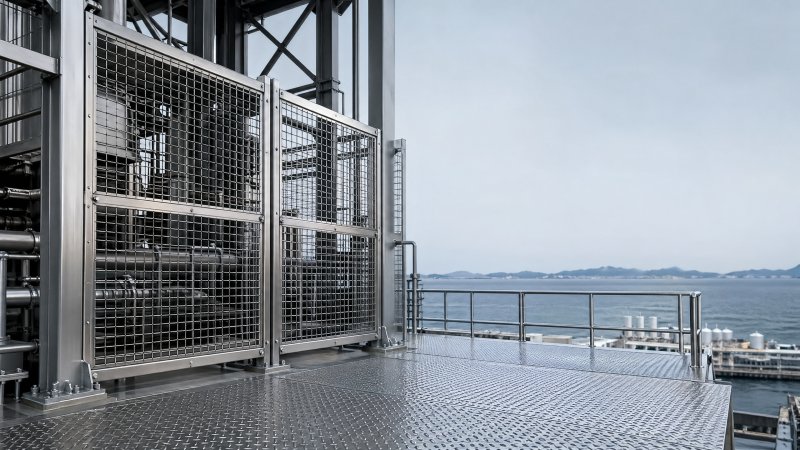
Stainless steel welded mesh performs best outdoors in applications where corrosion resistance and dimensional stability are more important than the lowest initial cost. Typical examples include perimeter fencing, plant safety guarding, animal enclosures, ventilation barriers, marine-side partitions, rooftop screens, and water-treatment protection panels. In these conditions, carbon steel mesh may require repainting every 12–24 months, while properly selected stainless mesh can reduce routine maintenance frequency significantly.
The strongest performance advantage appears in 4 types of environments: coastal areas with salt spray, wet industrial zones, chemically exposed utility sites, and public infrastructure where appearance and hygiene also matter. Grade selection is critical. For light urban exposure, 304 stainless mesh is often sufficient. For chloride-heavy environments, including ports and some chemical plants, 316 is usually the safer option because molybdenum improves pitting resistance.
Outdoor welded mesh also performs well when airflow, visibility, and drainage are necessary. Unlike solid plate barriers, mesh allows ventilation and line-of-sight control while still offering security and separation. This is useful around transformers, HVAC systems, equipment yards, and machine zones where trapped moisture can accelerate surface deterioration on less suitable metals.
Where buyers see the highest value
The economic value is highest when downtime, repainting, or replacement is costly. A mesh panel used in a remote industrial site may cost more upfront than galvanized wire products, but if site access is difficult and maintenance windows are limited to 1–2 shutdowns per year, stainless can lower total lifecycle burden. This matters to both technical evaluators and financial approvers reviewing total installed cost rather than unit price only.
The table below compares common outdoor environments and the suitability of stainless steel welded mesh versus lower-cost alternatives.
The key conclusion is simple: stainless steel welded mesh performs best where corrosion, hygiene, appearance retention, or maintenance access are major concerns. If the environment is dry and low-risk, galvanized mesh may still be acceptable. But once chloride exposure, washdown cycles, or long service life targets enter the specification, stainless becomes the more dependable outdoor solution.
How to Evaluate Outdoor Performance Beyond Material Grade
Many buyers focus only on whether the mesh is “304” or “316,” but outdoor performance depends on at least 5 linked factors: wire diameter, aperture size, weld integrity, surface condition, and connection design. A corrosion-resistant alloy can still fail early if weld heat tint is not properly controlled, if the mesh is too light for impact load, or if dissimilar fasteners trigger localized corrosion.
For example, in equipment enclosures and industrial perimeter systems, wire diameters often fall within a practical range such as 2.0 mm to 6.0 mm, depending on visibility and strength requirements. Openings may range from 12.7 mm to 50 mm. Smaller apertures improve containment and anti-climb performance, while larger openings support airflow and reduce panel weight. The right balance depends on whether the priority is safety, ventilation, or debris control.
Technical points that affect service life
Surface finish matters outdoors. Smooth, clean surfaces generally resist contamination better than rough or poorly processed ones. Buyers should also confirm whether passivation or post-weld cleaning has been applied when the project environment is aggressive. In coastal or chemical locations, even a small fabrication issue can shorten the expected maintenance interval from several years to less than 12 months.
Frame compatibility is another overlooked issue. Stainless welded mesh is often mounted to carbon steel posts, angle frames, or channel supports. If the support steel is not protected properly through galvanizing, coating, or separation methods, the total system may underperform even if the mesh itself remains stable. Good outdoor design evaluates the full assembly, not the infill panel alone.
A practical 6-point evaluation checklist
- Confirm alloy grade based on exposure level: 304 for moderate outdoor use, 316 for salt or higher chemical contact.
- Check wire diameter against impact, anti-cut, and rigidity requirements.
- Verify weld consistency and whether post-weld cleaning is available.
- Match aperture size to visibility, ventilation, and containment needs.
- Review frame, clamp, and fastener materials to avoid system-level corrosion issues.
- Ask for dimensional tolerance, relevant standards, and inspection records before shipment.
This evaluation process is especially useful when sourcing from overseas suppliers. A lower quotation can still be commercially sound if the supplier provides stable tolerances, clear material traceability, and dependable production capacity. In outdoor projects, small quality differences become visible faster because weather exposure continuously tests welds, edges, and coating transitions.
Outdoor Systems Often Need More Than Mesh Alone
In real projects, stainless steel welded mesh is rarely installed as a standalone product. It is usually part of a broader steel system that includes support posts, base plates, anti-slip walkways, machine platforms, or maintenance access flooring. That is why buyers comparing wire products with beams, rebar, and profiles should evaluate how adjacent steel products affect safety and durability in the same outdoor environment.
A common example is an outdoor equipment platform where mesh guards are paired with checker or patterned floor plates. In such layouts, anti-skid performance is as important as corrosion resistance. For maintenance routes around machinery, a patterned steel plate can improve worker footing in wet conditions, especially where oil mist, washdown, or rainwater may collect during operation.
Inserted product option for platform and access zones
For projects that combine mesh enclosures with outdoor steel flooring, A36 Patterned steel plate is a practical complementary product. It is commonly used in transportation, construction, decoration, floor areas around equipment, machinery, and shipbuilding. Typical thickness is 2–8 mm, width is 600–1800 mm, and length is available from 2 m to 12 m, with thickness tolerance around +/-0.02 mm and width tolerance around +/-2 mm.
Its patterned surface supports anti-skid performance and can help improve safety in outdoor access zones. Available material references include Q235B, A36, 235JR, S235, S335JR, SS400, and SM400 series, while common compliance references include ASTM, DIN, JIS, BS, GB/TC, ISO, SGS, and BV. For buyers building integrated steel systems, this type of plate works well with welded mesh, channel supports, and structural frames.
The table below shows how welded mesh and patterned plate can work together in outdoor steel applications.
The main takeaway is that outdoor performance depends on system design. Mesh handles enclosure and corrosion challenges well, while anti-slip plates and structural profiles complete the working platform. For project managers, buying these elements through a coordinated steel supplier can simplify specification review, packaging, and delivery sequencing.
Is Cheap Steel from China Reliable for Long-Term Outdoor Use?
This question matters to procurement teams and decision-makers because price variation in global steel sourcing can be significant. The short answer is that low price alone does not define reliability. Some lower-cost Chinese steel products are reliable when produced under controlled processes, with clear standards compliance, inspection discipline, and stable raw material sourcing. The real risk appears when buyers compare quotations without aligning grade, tolerance, testing scope, or packaging requirements.
For outdoor steel applications, reliability depends on specification clarity. If a buyer requests stainless welded mesh but leaves wire tolerance, opening tolerance, passivation expectations, or packaging protection undefined, suppliers may quote very different products under similar names. A 5% to 12% price gap can reflect genuine process differences rather than simple margin variation. This is why commercial review should be tied to technical review.
What serious buyers should verify
A dependable structural steel manufacturer from China should be able to discuss manufacturing facilities, quality control flow, production capacity, and international standards such as ASTM, EN, JIS, or GB. Buyers should ask for material certificates where applicable, inspection methods, and photos or videos of fabrication stages. For export projects, packaging method and lead time are also essential because edge damage, moisture exposure, and handling deformation can affect site installation.
Hongteng Fengda’s positioning as a structural steel manufacturer and exporter is relevant here because many outdoor buyers need more than a single wire product. They may also require angle steel, channel steel, steel beams, cold formed steel profiles, or customized components under one supply plan. Coordinated sourcing can reduce communication cycles, improve fit-up between parts, and lower the risk of mismatched tolerances during on-site assembly.
4 commercial checks before approval
- Match the quoted steel grade and dimensions to the approved drawing or use environment.
- Confirm inspection scope, including visual checks, dimensional checks, and if needed, third-party verification.
- Review production and shipment lead times, often in the 2–6 week range depending on quantity and customization.
- Check export packaging, marking, and loading method to reduce transit-related damage.
In other words, “cheap steel from China” is not automatically unreliable, but unmanaged sourcing is risky. Buyers who define the right technical baseline, ask the right quality questions, and work with manufacturers experienced in export standards are far more likely to receive outdoor steel products that perform consistently over time.
Selection, Maintenance, and Procurement Advice for Outdoor Projects
For long-term outdoor success, selection should begin with service conditions rather than catalog appearance. Start by defining whether the mesh is for security, machine guarding, livestock control, ventilation protection, or architectural screening. Then identify exposure severity: inland mild weather, heavy rainfall, industrial washdown, or marine chloride exposure. This sequence prevents overbuying in low-risk areas and under-specifying in harsh ones.
Maintenance planning should also be realistic. Even stainless steel welded mesh is not maintenance-free in an absolute sense. In coastal areas, periodic rinsing and inspection can help remove chloride deposits. In industrial sites, inspection every 6–12 months is a practical interval for checking fasteners, weld areas, and frame interfaces. The actual schedule depends on airborne contaminants, cleaning chemicals, and the criticality of the protected area.
Procurement priorities for different stakeholders
Technical evaluators usually focus on grade, wire size, opening, and standards. Project managers care about installation fit, delivery timing, and replacement simplicity. Financial approvers tend to compare lifecycle cost over 3, 5, or 10 years. Safety and quality personnel prioritize edge condition, rigidity, traceability, and consistency between shipment lots. A good purchase package brings these priorities into one approval flow instead of treating them separately.
The table below offers a practical decision guide for outdoor buyers balancing performance, cost, and risk.
For distributors and end users alike, the best purchasing result usually comes from standardizing 3 things early: the environment category, the acceptable tolerance range, and the inspection checklist. That approach shortens quotation comparison time and reduces disputes after delivery. If your project includes structural frames, anti-slip platforms, or custom steel components, it is often more efficient to request an integrated solution instead of placing multiple fragmented orders.
Common questions from outdoor buyers
How long can stainless steel welded mesh last outdoors?
Service life varies with environment and specification. In mild outdoor conditions, well-made stainless mesh can perform for many years with limited maintenance. In coastal or chemically exposed sites, grade selection, cleaning frequency, and frame design become more important than any general lifespan estimate.
Is 304 always enough for exterior use?
No. 304 is widely used outdoors, but if the project is near seawater, de-icing salt, or aggressive chemical exposure, 316 is often the safer choice. The cost difference should be weighed against replacement and maintenance risk over the project life.
What should procurement ask a Chinese supplier before placing an order?
Ask for grade details, dimensional tolerances, inspection process, standards reference, packaging method, and realistic lead time. If the order includes supporting steel sections or flooring, confirm interface dimensions and whether OEM customization is available.
Stainless steel welded mesh performs best outdoors where corrosion resistance, low maintenance, ventilation, and long-term stability are critical, especially in coastal, industrial, utility, and public infrastructure settings. The right result depends not only on choosing 304 or 316, but also on matching wire size, aperture, weld quality, support framing, and adjacent steel components to the environment.
For buyers evaluating outdoor steel systems, Hongteng Fengda offers the advantage of coordinated supply across structural steel, profiles, beams, wire-related products, and customized components, supported by export experience and quality-focused production. If you are planning fencing, safety enclosures, equipment platforms, or integrated outdoor steel structures, contact us to get a tailored solution, review product details, and discuss the most suitable specification for your project.
Please give us a message


Please enter what you want to find