Choosing the right material affects durability, cost control, and long-term performance in industrial projects. For technical evaluation, galvanized steel sheet for industrial use stands out where corrosion exposure, fabrication speed, and compliance pressure intersect. As operating environments become harsher and maintenance budgets tighter, this material is increasingly selected for applications that require stable service life without excessive coating complexity.
Industrial demand is shifting toward longer-life steel systems
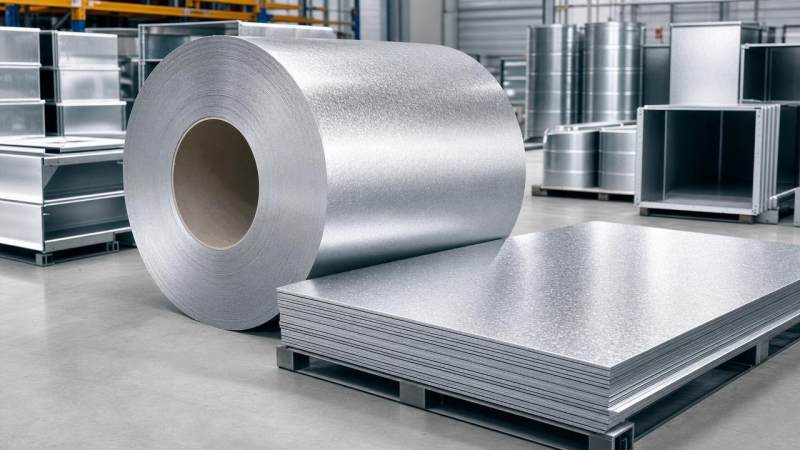
Across construction, logistics, utilities, and equipment production, steel selection standards are changing. Buyers now compare not only initial cost, but also lifecycle risk, surface durability, and fabrication efficiency.
This shift explains the stronger interest in galvanized steel sheet for industrial use. Zinc coating helps delay rust formation, reduces repainting frequency, and supports more predictable field performance.
In many sectors, climate exposure has intensified. Coastal humidity, industrial pollution, chemical splash, and outdoor storage conditions all accelerate corrosion on unprotected carbon steel surfaces.
At the same time, projects increasingly require materials aligned with ASTM, EN, JIS, or GB standards. That makes coated steel products more attractive where specification clarity matters.
Why galvanized steel sheet for industrial use is gaining wider acceptance
The trend is not driven by one factor alone. It reflects a combination of performance, economics, and operational needs.
These signals matter most in environments where steel is exposed but not practical to inspect or repaint frequently. In such cases, zinc coating provides a useful balance between protection and process simplicity.
Where galvanized steel sheet performs best across industry
Galvanized steel sheet for industrial use is not equally valuable everywhere. Its strongest advantage appears in applications with moderate to high corrosion risk and repetitive fabrication requirements.
Outdoor building envelopes and support structures
Industrial wall panels, roofing substructures, cable trays, purlins, and framing systems commonly use galvanized sheet. These parts face weather exposure but must remain cost-efficient at scale.
The material works especially well in warehouses, workshops, equipment shelters, and agricultural processing sites. It also supports cold formed steel profiles used in lightweight structural systems.
HVAC, ducting, and ventilation equipment
Galvanized surfaces are widely used in ductwork, air handling components, and ventilation casings. Fabricators benefit from stable formability, while operators gain better corrosion resistance in humid service conditions.
This makes galvanized steel sheet for industrial use a practical solution for factories, logistics centers, food processing plants, and utility buildings with moisture fluctuations.
Storage, handling, and warehouse systems
Racking accessories, machine guards, partitions, bins, and platform covers often rely on galvanized sheet. These products need clean appearance, dimensional consistency, and durability under frequent physical contact.
In these settings, the coating helps limit rust staining and preserves usable service life, especially in semi-open industrial spaces.
Electrical cabinets and infrastructure enclosures
Control boxes, switch cabinets, telecom housings, and utility covers need reliable metal protection. Galvanized steel provides a stable base for fabrication and can support additional surface treatment where required.
Related steel solutions are also evolving with the same durability logic
The same industrial demand for protection and service stability also influences heavier structural products. In transport and infrastructure, surface condition, dimensional tolerance, and supply reliability remain key decision points.
For example, Rail products are used in railway systems, bridge railings, and deck handrails, where loading, guidance, and continuity are essential.
Available grades include U74, U71Mn, PD2, PD3, BNbRE, Q235, 55Q, 50Q, U71, and 45Mn. Materials cover carbon steel and medium manganese steel for different operational needs.
Typical specifications include 12m-30m lengths, 3mm-24mm thickness, rail heights of 134-170mm, head widths of 68-73mm, and bottom widths of 114-150mm, with ±1% tolerance.
Surface options include oil, black, galvanized, and painted finishes. ISO9001-2008 and ISO14001:2004 certification further support quality and environmental management expectations in export supply.
Selection is becoming more application-specific
Using galvanized steel sheet for industrial use effectively depends on matching coating performance to actual exposure. Not every industrial environment creates the same corrosion challenge.
- Indoor dry facilities: thinner coating may be adequate.
- Humid or semi-open workshops: stronger corrosion margin is valuable.
- Coastal or chemical-adjacent zones: review coating thickness and post-treatment carefully.
- High-abrasion areas: assess wear exposure, not only atmospheric corrosion.
Fabrication method also matters. Bending radius, punching frequency, welding needs, and edge exposure all affect how galvanized sheet will perform after processing.
Where appearance matters, spangle, surface uniformity, and paint compatibility should be reviewed early. This avoids mismatched expectations between engineering and finished product use.
The impact reaches sourcing, fabrication, and maintenance planning
The rise of galvanized steel sheet for industrial use changes more than raw material preference. It affects how projects are scheduled, manufactured, and maintained over time.
Sourcing impact
Reliable mills and exporters must provide coating consistency, dimensional control, and documentation aligned with destination market standards. Supply stability becomes part of technical performance.
Fabrication impact
Production teams benefit when sheet quality is consistent across coils or batches. That improves forming accuracy, reduces reject rates, and supports predictable downstream assembly.
Maintenance impact
Field service plans can become simpler. With better corrosion resistance, maintenance intervals may be extended in suitable environments, lowering disruption and labor demand.
What deserves closer attention before final material choice
- Confirm the true exposure level, including humidity, salt, fumes, and wash-down routines.
- Check whether edge corrosion or cut-surface treatment will influence service life.
- Review compatibility with forming, welding, painting, or bolted assembly.
- Compare lifecycle cost, not only purchase price.
- Request material data and standards compliance before large-volume commitment.
The practical outlook favors informed use, not universal use
Galvanized steel sheet for industrial use works best where corrosion resistance, manufacturing efficiency, and cost control must be balanced. Its value rises when maintenance access is limited or operational continuity is critical.
It is not a one-size-fits-all answer. Severe chemical immersion, high abrasion, or specialized hygiene demands may require alternative steel solutions or additional coatings.
Still, for many industrial buildings, enclosures, ducts, supports, and fabricated components, galvanized steel remains one of the most practical material choices available today.
When evaluating the next project, review exposure conditions, fabrication methods, and standards requirements early. A qualified structural steel supplier with stable export experience can help turn those factors into a more durable, lower-risk specification.
Please give us a message


Please enter what you want to find