When corrosion resistance, weld integrity, and long-term reliability matter, 316L stainless steel pipe often outperforms 304L in demanding industrial environments. For technical evaluators comparing material grades, understanding where 316L delivers better value can reduce maintenance risk, improve service life, and support more dependable project decisions across chemical, marine, and high-humidity applications.
What Technical Evaluators Usually Need to Decide First
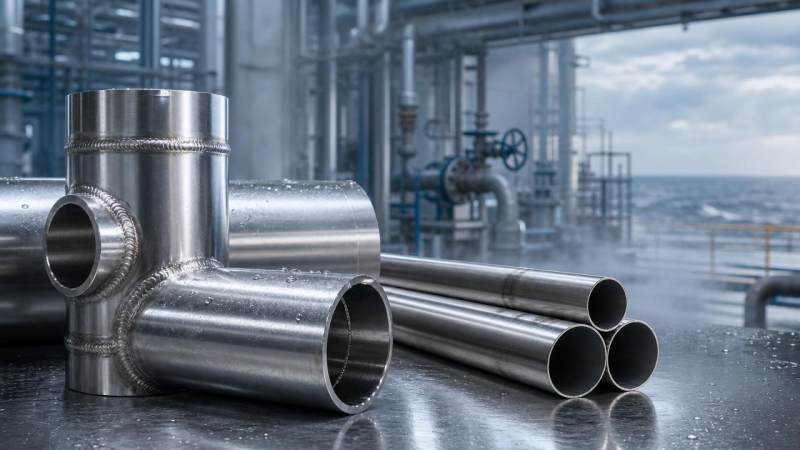
The core search intent behind “Where 316L Stainless Steel Pipe Performs Better Than 304L” is practical material selection. Readers usually want to know when the price premium of 316L is justified.
For technical evaluation teams, the question is rarely whether 316L is generally “better.” The real issue is whether its performance advantage matters enough in the intended service environment.
That means comparing not only corrosion resistance, but also weld behavior, contamination risk, maintenance frequency, downtime cost, and the expected lifecycle of the piping system.
In short, 316L stainless steel pipe performs better than 304L where chloride exposure, aggressive cleaning chemicals, marine humidity, or higher corrosion consequences make 304L a higher-risk option.
Why 316L Has a Performance Advantage in Harsh Service
The main difference comes from alloy chemistry. 316L contains molybdenum, which significantly improves resistance to pitting and crevice corrosion compared with 304L in chloride-bearing environments.
The “L” in both grades indicates low carbon content. That helps reduce the risk of sensitization after welding and supports better corrosion performance in the heat-affected zone.
However, because 316L has stronger corrosion resistance from its alloy design, it usually provides a larger safety margin when fabrication quality, cleaning conditions, or operating exposure are not perfectly controlled.
For technical evaluators, this safety margin matters. Real projects often face mixed environments, inconsistent maintenance, splash exposure, stagnant areas, and unexpected chemical contact over time.
Where 316L Stainless Steel Pipe Clearly Outperforms 304L
The most common case is chloride exposure. If the piping system will face saltwater, coastal air, brine, chlorinated process water, or chloride-bearing cleaning media, 316L is usually the stronger choice.
304L may perform acceptably in mild indoor service, but chlorides can trigger pitting that starts locally and becomes difficult to detect before leaks, contamination, or wall loss develop.
In marine and offshore settings, 316L stainless steel pipe is often preferred for external atmospheric exposure because salt deposits and persistent humidity create a more aggressive corrosion condition.
It also performs better in chemical processing lines handling certain acids, solvents, or mixed media where corrosion risk is moderate but continuous, especially at welds, joints, and dead-leg regions.
Food, beverage, and pharmaceutical facilities may also favor 316L when frequent washdown, disinfectants, or strict hygiene expectations increase the consequences of surface attack or contamination retention.
Another strong use case is high-humidity industrial infrastructure. Condensation, airborne contaminants, and cleaning cycles can create recurring wet-dry exposure, which is more demanding than many buyers initially expect.
How Corrosion Risk Changes the Real Cost Comparison
Initial material cost often drives attention toward 304L. But technical evaluators should compare total installed value rather than mill price alone, especially in lines where corrosion failure is expensive.
If a pipe leak can stop production, damage adjacent equipment, contaminate product, or trigger safety reporting, the cost difference between 304L and 316L becomes much less important.
This is why 316L stainless steel pipe often delivers better long-term economics in critical service. It may reduce inspection frequency, repair events, replacement cycles, and shutdown-related losses.
Even where direct corrosion rates are low, localized pitting risk matters because a single small failure can create disproportionate operational consequences in pressurized or hygiene-sensitive systems.
Technical teams should therefore model material choice against lifecycle scenarios: normal operation, upset cleaning conditions, stagnant liquid retention, seasonal humidity changes, and maintenance quality variation.
Welding, Fabrication, and Field Reliability Considerations
Both 304L and 316L are widely weldable, but field reliability depends on more than basic weldability. Post-weld corrosion performance is often where grade selection becomes more meaningful.
Because 316L combines low carbon with molybdenum-enhanced corrosion resistance, it generally performs better where welded systems are exposed to chlorides or difficult-to-clean process conditions.
This can be especially important in fabricated spools, branch connections, supports, and areas with geometry that promotes crevice formation or traps moisture after operation or cleaning.
For projects with extensive shop welding and export delivery, material consistency and fabrication control matter as much as grade selection. Reliable sourcing reduces variability in final performance.
That broader sourcing logic applies across structural and industrial steel procurement as well. For example, buyers managing complete project packages may also need items like Z-beam components for lightweight roof systems, wall beams, brackets, or mechanical support frames.
Such profiles are commonly supplied in perforated or non-perforated forms, with galvanized coating, roll forming technology, and standards-oriented quality control that support efficient international project execution.
Environments Where 304L Is Often Still Sufficient
To make a sound recommendation, technical evaluators should also identify where 304L remains reasonable. Not every application needs 316L, and over-specification can raise unnecessary cost.
304L is often sufficient in clean indoor service, dry environments, non-chloride water systems, and mildly corrosive applications where maintenance access is easy and failure consequences are low.
For architectural, low-humidity, or general industrial uses without significant chloride contact, 304L may provide acceptable service life at a lower upfront cost.
This matters because the best engineering decision is not always the highest alloy grade. It is the grade that aligns performance, risk tolerance, regulatory expectations, and budget discipline.
Still, when the actual environment is uncertain, many evaluators prefer 316L for critical piping because uncertainty itself is a risk factor, particularly in exported or remotely installed systems.
Questions Evaluators Should Ask Before Choosing 316L or 304L
A good material decision starts with the service environment. Is the pipe exposed to chlorides, salt air, disinfection chemicals, stagnant moisture, or repeated wet-dry cycling?
Next, consider process consequence. If corrosion leads to leakage, contamination, shutdown, or difficult field replacement, the threshold for selecting 316L should be lower.
Then review fabrication details. Will there be many welds, crevices, supports, or dead zones? Will installation quality vary by contractor, location, or schedule pressure?
Cleaning and maintenance also matter. Harsh cleaning agents, incomplete rinsing, and irregular inspections can push an otherwise moderate application into a higher-risk category for 304L.
Finally, evaluate design life and ownership model. Long-service infrastructure, export projects, and systems with difficult replacement access often benefit more from the durability margin of 316L.
How to Present the Choice Internally
Technical evaluators often need to justify material selection to procurement, project managers, or end users. The most effective approach is to frame the decision around risk and lifecycle value.
Instead of saying 316L is simply “more corrosion resistant,” explain which failure modes are more likely with 304L under the actual service conditions and what those failures would cost.
Support the recommendation with exposure factors such as chloride concentration, humidity level, cleaning chemistry, weld density, hygiene sensitivity, or replacement difficulty.
This makes the comparison more decision-ready. Stakeholders can see that the extra cost of 316L stainless steel pipe is tied to measurable reliability benefits, not generic conservatism.
When buyers source broader steel packages, supplier capability also matters. A manufacturer with stable production, international standards compliance, and customized support can help reduce procurement and execution risk.
Common Mistakes in 304L vs 316L Evaluation
One common mistake is assuming stainless steel is universally corrosion-proof. In reality, local environmental conditions can sharply change performance, especially when chlorides are involved.
Another mistake is focusing only on average corrosion resistance instead of localized pitting and crevice attack. Small localized failures often create the biggest operational consequences.
Some teams also rely too heavily on nominal indoor classification without accounting for washdown, condensation, trapped moisture, or coastal air entering through ventilation systems.
Weld zones are another blind spot. A piping system may look acceptable on paper, yet weld-adjacent corrosion becomes the first point of service failure when exposure is more aggressive than expected.
Finally, buyers sometimes compare only material price per ton or per meter. That approach can overlook fabrication complexity, inspection burden, service interruption cost, and replacement access difficulty.
Practical Decision Rule for Technical Buyers
If the application involves chlorides, marine exposure, frequent sanitizing chemicals, persistent humidity, or high consequence of failure, 316L is usually the more reliable specification.
If the environment is clean, dry, low-chloride, and easy to maintain, 304L may remain an efficient and technically acceptable choice.
Where conditions fall in the middle, technical evaluators should weigh uncertainty carefully. In many borderline cases, the added resilience of 316L can be worth the premium.
This is especially true when service life expectations are long, operating conditions may shift over time, or the piping forms part of a critical process or utility network.
Conclusion
316L stainless steel pipe performs better than 304L where corrosion risk is real, weld reliability matters, and failure carries meaningful operational or quality consequences.
Its strongest advantages appear in chloride-bearing, marine, chemical, sanitary, and high-humidity environments where 304L may still work initially but offers less long-term protection.
For technical evaluators, the best decision is not based on catalog hierarchy. It comes from matching material behavior to actual service conditions, fabrication realities, and lifecycle risk.
When the environment is demanding or uncertain, 316L often provides the better-value answer by reducing future maintenance, protecting system integrity, and supporting more dependable project performance.
Please give us a message


Please enter what you want to find