Choosing the right structural steel profile is critical for light framing efficiency, cost control, and long-term durability. When should you opt for angle steel instead of channel or I-beam? This guide explores key technical and practical considerations — from load distribution and connection simplicity to fabrication flexibility like steel angle bending. Whether you're sourcing DX51D steel for corrosion resistance, hot dip galvanized coil for outdoor applications, or carbon steel pipe stockist solutions, understanding what is angle steel — including its strength-to-weight ratio and versatility in steel metal angle configurations — helps procurement, engineering, and project management teams make confident, standards-compliant decisions (ASTM/EN/GB). Hongteng Fengda delivers precision-engineered angle steel and 304L stainless steel pipe globally.
When Angle Steel Delivers Better Value in Light Framing
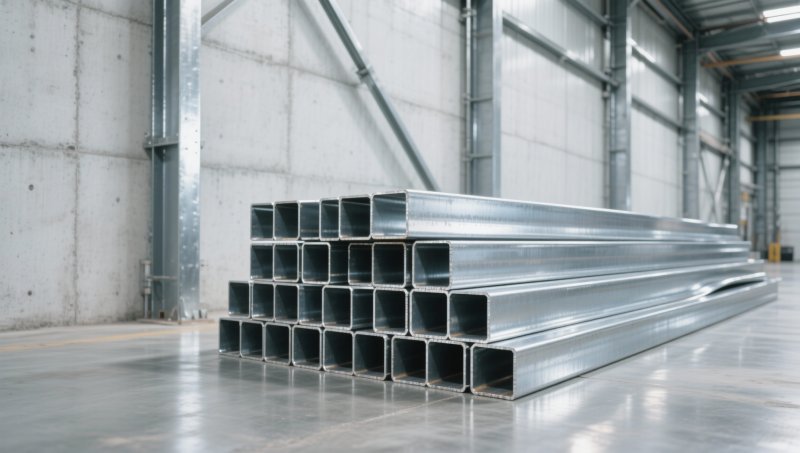
Angle steel excels where structural simplicity, rapid assembly, and localized reinforcement matter most — especially in non-primary load-bearing roles. Unlike I-beams (optimized for high-span bending) or channels (designed for uniform vertical/horizontal load transfer), angle sections provide asymmetric rigidity ideal for bracing, corner framing, and component anchoring in lightweight roof systems, wall cladding supports, and modular equipment frames.
Typical light framing applications include purlin-to-rafter connections, solar mounting brackets, HVAC duct supports, and mezzanine guardrail bases — all requiring predictable torsional stability, minimal welding prep, and compatibility with bolted or clip-based fastening. Angle steel’s L-shape allows dual-plane fixity with just one fastener point per leg, reducing labor time by up to 30% compared to channel or I-beam alternatives needing flange alignment and multi-point bolting.
From a procurement standpoint, standard equal-leg angles (e.g., 50×50×5 mm) are stocked globally in carbon (Q235B), galvanized (HDG), and stainless (304) grades — enabling lead times as short as 7–15 days for standard sizes. In contrast, custom channel profiles such as Channel In Steel may require 3–4 weeks for non-stock dimensions or surface treatments like hot-blown galvanizing.
Key Structural Advantages of Angle Steel
- Connection efficiency: Single-bolt shear resistance ≥ 45 kN at M12 grade 8.8 — verified per EN 1993-1-8 for 60×60×6 mm Q235B;
- Bending stiffness: Moment of inertia (Ix) ranges from 11.2 cm⁴ (40×40×4 mm) to 82.4 cm⁴ (80×80×8 mm), sufficient for spans ≤ 2.5 m under distributed loads ≤ 1.2 kN/m;
- Fabrication agility: Cold bending radius ≥ 12× thickness without cracking — critical for curved façade framing or bespoke bracket geometry;
- Corrosion readiness: Hot-dip galvanized coating thickness ≥ 65 µm (per ASTM A123), matching performance of pre-galvanized Channel In Steel in coastal or industrial atmospheres.
How Load Path & Geometry Influence Your Choice
The decision between angle, channel, and I-beam hinges on how force travels through the system. I-beams handle pure bending over long spans (≥ 4 m); channels suit uniform vertical loading with lateral restraint (e.g., wall beams); angles thrive in eccentric or torsional scenarios — think diagonal wind braces transferring lateral load into columns via double-angle cleats.
In lightweight roof construction, purlins often use channel sections (e.g., 100×45×3 mm) for optimal moment capacity. But when attaching those purlins to rafters, angle steel (63×63×5 mm) provides superior torsional resistance at the connection node — preventing twist-induced bolt loosening during thermal cycling or wind gusts.
Hongteng Fengda supplies both standardized and cut-to-length angle steel with mill-certified mechanical properties (tensile strength ≥ 370 MPa for Q235B, elongation ≥ 26%), ensuring compliance across ASTM A6/A6M, EN 10025-2, and GB/T 706. This traceability supports third-party QA audits required by North American and EU infrastructure projects.
This comparison shows why angle steel is not “inferior” — but contextually optimized. For example, in Southeast Asian solar farm projects, Hongteng Fengda supplied 50×50×5 mm hot-dip galvanized angles for racking support brackets, cutting onsite welding time by 40% versus channel-based alternatives requiring flange drilling and alignment jigs.
Procurement Checklist: 5 Critical Factors Before You Specify
Selecting angle steel isn’t just about dimensions — it’s about integration readiness. Here’s what global buyers consistently verify before finalizing orders:
- Grade traceability: Request mill test reports (MTRs) showing tensile/yield values per batch — mandatory for EN 10204 3.1 certification in EU tenders;
- Surface consistency: Verify galvanizing thickness (65–85 µm) and adherence (no bare spots > 1 mm² per 100 cm²) — critical for 20+ year service life in humid climates;
- Tolerances: Confirm dimensional accuracy: ±0.5 mm on leg length, ±0.3 mm on thickness — tighter than typical channel tolerances (±2 mm height, ±0.02 mm thickness);
- Cut quality: Check end squareness (≤ 1.5° deviation) and burr height (< 0.2 mm) — ensures clean fit-up for automated bolted assemblies;
- Logistics packaging: Confirm bundled weight ≤ 2.5 tons per pallet — meets standard container floor load limits for sea freight to Middle East ports.
Why Global Buyers Choose Hongteng Fengda for Angle Steel Sourcing
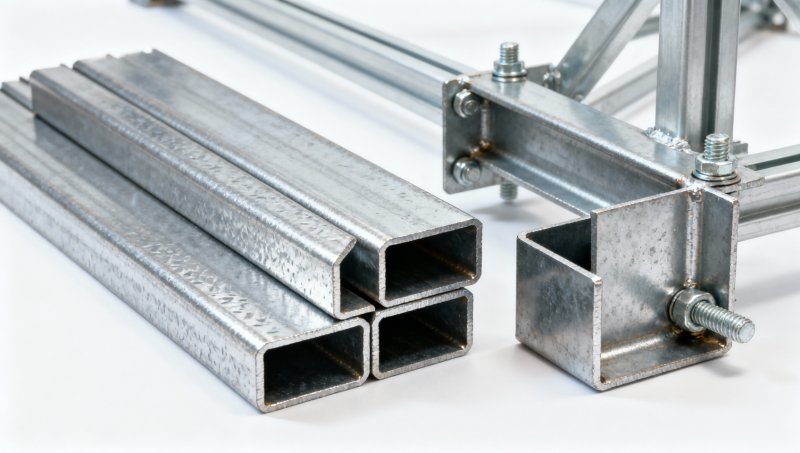
As a certified structural steel manufacturer exporting to 30+ countries, Hongteng Fengda bridges the gap between international standards and local project realities. We offer:
- Multi-standard compliance: All angle steel produced to ASTM A6/A6M, EN 10025-2, JIS G3101, and GB/T 706 — with full documentation provided in English, Spanish, and Arabic;
- Customization without delay: CNC plasma cutting, precision bending (±0.5°), and HDG coating applied in-house — reducing total lead time by 2–3 weeks versus outsourced finishing;
- Risk-mitigated supply: Dual production lines (Q235B and Q345B) ensure continuity even during raw material volatility — backed by 98.7% on-time delivery rate (2023 audit data);
- Technical partnership: Free engineering support for connection design, load calculations, and weld procedure specification (WPS) development — delivered within 48 business hours.
Whether you need 5-ton trial shipments for ASEAN warehouse validation or 200-ton bulk deliveries for European solar EPC contracts, our team helps you confirm exact specifications — from bend radius requirements and galvanizing adhesion test protocols to EN 1090-2 execution class (EXC2/EXC3) compliance. Contact us today for a no-obligation review of your next light framing bill of materials — including comparative quotes for angle steel vs. Channel In Steel, delivery timelines, and OEM labeling options.
Please give us a message


Please enter what you want to find