Choosing high strength structural steel depends on load demands, span length, safety targets, and cost efficiency. For engineers, buyers, and project managers, understanding structural steel properties helps compare lightweight structural steel options and related materials such as rebar for retaining wall applications, ensuring the right balance of strength, durability, compliance, and project performance.
When Is High Strength Structural Steel the Right Choice?
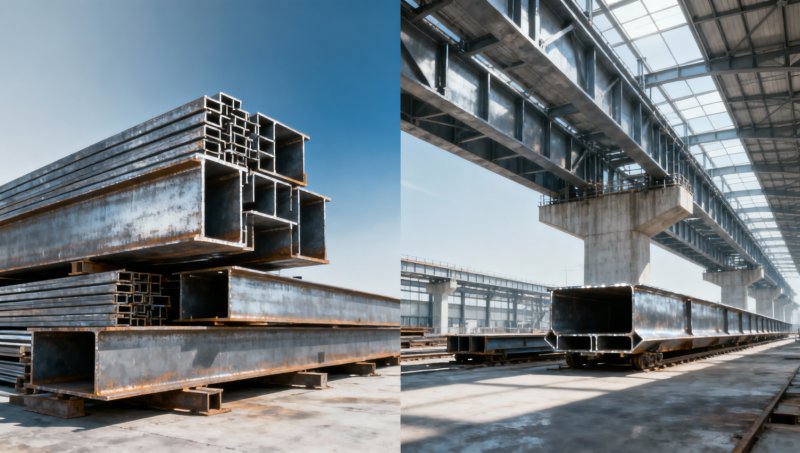
High strength structural steel is most useful when a project needs more load capacity without simply increasing section size or total weight. In practical terms, it becomes the better option when designers need longer spans, slimmer members, lower dead load, or better material efficiency in demanding structural applications.
For most buyers and project teams, the key question is not “Is high strength steel stronger?”—it clearly is. The real question is whether its added strength creates measurable project value. That value usually appears in situations such as:
- Long-span buildings and industrial structures, where reducing member size improves usable space and architectural flexibility
- High-rise construction, where lower structural self-weight can help reduce foundation demands
- Bridges and transport infrastructure, where strength-to-weight ratio directly affects performance and erection efficiency
- Heavy equipment platforms and industrial plants, where high loads must be carried safely within limited space
- Projects with transport or lifting limits, where lighter fabricated assemblies reduce handling difficulty
- Retrofit and strengthening works, where higher capacity may be needed without major dimensional changes
If the structure is relatively simple, spans are short, and standard grades already meet performance targets at acceptable weight, then high strength structural steel may not be necessary. In many routine buildings, conventional structural steel remains the more economical choice after fabrication, welding, and inspection costs are considered.
What Problems Does It Solve for Engineers, Buyers, and Project Managers?
The strongest reason to use high strength structural steel is that it helps solve project constraints, not just design calculations. Different stakeholders typically evaluate it from different angles:
- Engineers focus on yield strength, load paths, deflection limits, buckling behavior, weldability, and code compliance.
- Procurement teams care about availability, lead time, standard compliance, supplier reliability, and total delivered cost.
- Project managers look at erection speed, handling efficiency, fabrication complexity, and schedule impact.
- Quality and safety personnel pay attention to traceability, testing, consistency, and performance under actual service conditions.
- Decision-makers and financial approvers want to know whether using a higher grade will reduce lifecycle cost, project risk, or structural tonnage enough to justify the premium.
In this context, high strength steel often creates value in four ways:
- Reducing steel weight while maintaining required load-bearing performance
- Improving design efficiency in space-constrained or architecturally demanding structures
- Supporting longer spans or higher loads without excessive member enlargement
- Helping optimize total project cost when savings in tonnage, transport, installation, or foundations offset higher material price
However, the decision should never be made on strength alone. Designers also need to confirm stiffness, fatigue performance, connection behavior, heat-affected zone properties, corrosion environment, and fabrication practicality.
How to Decide: Use Strength, Span, Weight, and Total Cost Together
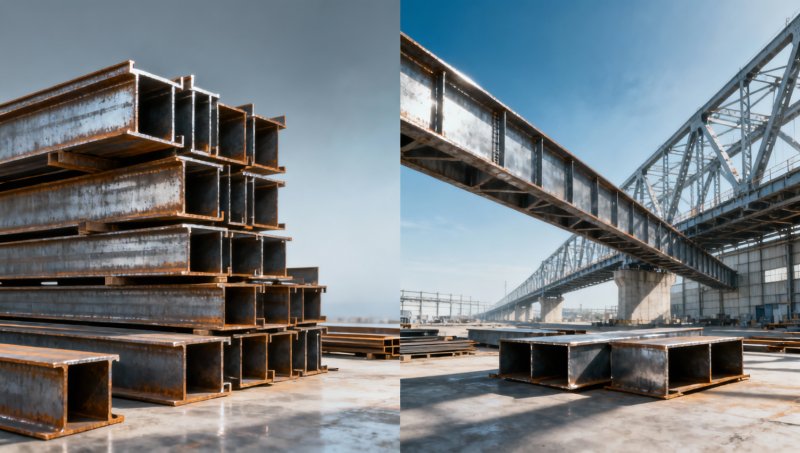
A good decision framework is to evaluate high strength structural steel against four practical filters.
1. Load demand
If axial force, bending moment, or combined loading pushes standard grades toward inefficiently large sections, upgrading to a higher strength grade can be justified. This is common in industrial buildings, equipment supports, and bridge elements.
2. Span length and member depth limits
Where headroom is limited or a clean architectural profile is required, high strength steel can help achieve capacity with shallower or slimmer sections. This is especially important in commercial buildings, factories, terminals, and warehouse systems.
3. Weight reduction goals
For structures that must be transported, lifted, or assembled under site limitations, lightweight structural steel strategies can reduce crane requirements, shipping burden, and installation time. In offshore, modular, and prefabricated construction, this can significantly improve project execution.
4. Full project economics
The right comparison is not just “price per ton.” It should include:
- Material tonnage reduction
- Fabrication complexity
- Welding procedure requirements
- Transport and lifting costs
- Installation speed
- Foundation savings
- Maintenance and service life expectations
In some projects, a higher steel grade lowers total cost. In others, it only raises procurement cost without enough downstream savings. That is why technical and commercial evaluation should be done together.
What Risks Should Be Checked Before Specifying High Strength Structural Steel?
Even when high strength structural steel looks attractive on paper, several risks need to be reviewed before approval:
- Weldability and fabrication control: Higher strength grades may require tighter welding procedures, preheating, and process discipline.
- Buckling and deflection: A stronger material does not automatically solve stiffness issues. Serviceability can still govern design.
- Connection design: Bolts, welds, and connection plates must be checked so the joint does not become the weak point.
- Availability and sourcing stability: If a grade is difficult to source consistently, procurement risk may outweigh structural benefit.
- Inspection and standards compliance: Material certificates, chemical composition, mechanical properties, and dimensional tolerances must align with project standards such as ASTM, EN, JIS, or GB.
- Corrosion environment: Strength alone is not enough in outdoor, coastal, chemical, or humid service conditions.
This last point is especially important. Some projects require not only structural capacity but also reliable corrosion resistance in exposed or utility-related applications. In such cases, complementary products may be needed for non-primary structural systems, fluid transfer, support frames, or corrosion-prone installation zones. For example, Galvanized Pipe can be used in construction, industrial buildings, bridges, agricultural systems, low-pressure fluid pipelines, and support frame applications where long-term surface protection and service life matter. With galvanized steel material, multiple international standard options, and dimensions from 1-12m or customized lengths, it can support projects that need both structural practicality and anti-corrosion performance.
How Does It Compare with Other Structural Material Choices?
Readers researching this topic often compare high strength structural steel with other options rather than evaluating it in isolation.
High strength steel vs standard structural steel
Choose high strength steel when weight reduction, longer spans, or constrained geometry create clear value. Choose standard structural steel when design demands are moderate and fabrication simplicity is more important than material optimization.
High strength steel vs lightweight structural steel concepts
Lightweight structural steel is not always a separate material category; often it is the result of smarter structural optimization, better section selection, cold formed profiles where appropriate, and, in some cases, higher steel grades. The goal is reduced dead load without sacrificing safety.
High strength steel vs rebar for retaining wall applications
These materials serve different functions. Structural steel sections are used for frames, beams, columns, supports, and major load-bearing members, while rebar for retaining wall systems is primarily intended to reinforce concrete against tensile stresses. They may appear in the same project, but they are not interchangeable. The correct choice depends on the structural system being designed.
What Should Buyers Ask Suppliers Before Making a Final Decision?
To reduce sourcing risk, buyers and technical reviewers should ask the following questions:
- Which international standards can the steel comply with?
- Are mill test certificates and traceability documents available?
- Can the supplier support custom sizes, fabricated components, or OEM requirements?
- What are the realistic lead times for the required grade and section?
- How stable is quality across production batches?
- What inspection, coating, or surface treatment options are available for the project environment?
- Has the supplier served similar export markets and project types before?
For global buyers, supplier capability matters as much as material grade. A reliable structural steel manufacturer should be able to support standard products and customized solutions, maintain quality control, and meet international compliance requirements consistently. This is especially important when projects involve multiple stakeholders across engineering, procurement, finance, and onsite execution.
Conclusion: Use High Strength Structural Steel When It Improves the Whole Project, Not Just the Specification
The best time to use high strength structural steel is when it solves a real project problem: higher loads, longer spans, lower dead weight, tighter space limits, or better total cost efficiency. It is most valuable when its strength advantage translates into measurable benefits in design, transport, installation, foundations, or lifecycle performance.
For engineers, the decision should balance capacity, stiffness, buckling, and connection design. For buyers and managers, it should include sourcing reliability, compliance, fabrication practicality, and total project economics. In short, high strength structural steel is not automatically the best choice for every job—but in the right application, it can deliver a safer, leaner, and more cost-effective structure.
Please give us a message


Please enter what you want to find