Selecting the right corrosion resistant steel plate is a technical decision that affects service life, maintenance cost, and structural safety in demanding environments.
The key is matching material properties with moisture, chemicals, marine atmosphere, abrasion, temperature, fabrication method, and load requirements.
This guide explains when corrosion resistant steel plate should be used, what to check, and how specification reduces lifecycle risk.
Why Corrosion Resistant Steel Plate Requires a Checklist
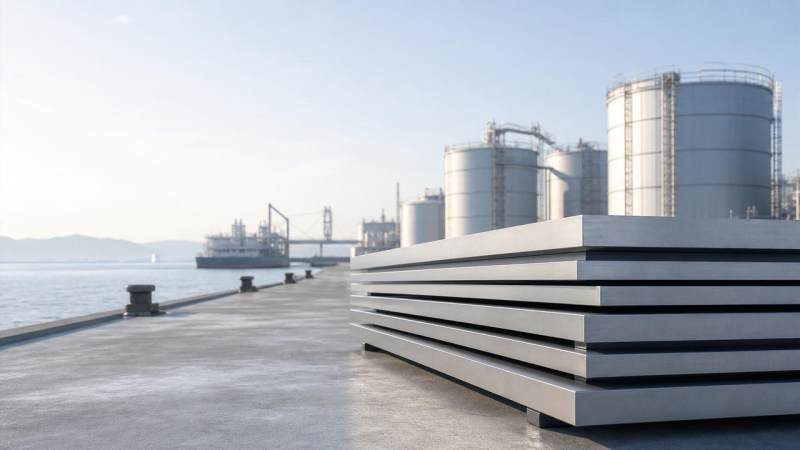
Corrosion is not only a surface issue. It can reduce section thickness, weaken connections, contaminate processes, and shorten inspection intervals.
A corrosion resistant steel plate helps maintain mechanical performance where ordinary carbon steel may need frequent coating repair or replacement.
However, no single steel grade fits every corrosive environment. Chlorides, acids, alkalis, humidity, and abrasion create different failure mechanisms.
A checklist approach prevents overspecification and underspecification. It connects exposure, strength, fabrication, standards, and budget into one decision path.
Core Checklist for Using Corrosion Resistant Steel Plate
- Define the exposure source, including seawater, deicing salt, industrial fumes, wastewater, fertilizer, chemicals, condensation, or outdoor weathering conditions.
- Confirm whether corrosion is uniform, pitting, crevice, galvanic, intergranular, or erosion-corrosion before selecting corrosion resistant steel plate.
- Check required yield strength, tensile strength, impact toughness, and plate thickness against design loads and safety factors.
- Review temperature range because high heat, thermal cycling, and low-temperature impact requirements can change grade selection.
- Evaluate fabrication needs, including cutting, bending, drilling, welding, forming, machining, and post-weld cleaning requirements.
- Compare coating strategy with base metal resistance when deciding between painted carbon steel and corrosion resistant steel plate.
- Specify applicable standards such as ASTM, EN, JIS, or GB to avoid unclear grade substitution and inconsistent test results.
- Request mill certificates, heat numbers, chemical composition, mechanical properties, and surface condition records for traceability.
- Consider inspection access because hidden surfaces, lap joints, and enclosed spaces often require stronger corrosion allowance.
- Calculate lifecycle cost, including purchase price, coating maintenance, downtime, cleaning, inspection, repair, and replacement intervals.
When Corrosion Resistant Steel Plate Is the Better Choice
Marine and Coastal Structures
Use corrosion resistant steel plate when structures face salt spray, tidal zones, brackish water, or long-term coastal humidity.
Chloride exposure can cause pitting and crevice corrosion. This risk increases around bolts, welds, drainage points, and damaged coatings.
For docks, offshore supports, shipyard platforms, and coastal equipment bases, corrosion resistant steel plate can improve durability and reduce shutdowns.
Chemical and Process Facilities
Use corrosion resistant steel plate where acidic, alkaline, or solvent-rich environments attack conventional steel surfaces.
Storage areas, containment zones, equipment foundations, and processing platforms may need plate grades compatible with specific chemicals.
Chemical compatibility should be verified with concentration, temperature, aeration, impurities, and cleaning procedures before final material approval.
Mining, Cement, and Bulk Handling
Use corrosion resistant steel plate when wet minerals, slurry, dust, impact, and abrasion act together.
In hoppers, liners, chutes, screens, and conveyor zones, corrosion and wear often accelerate each other.
If abrasion is dominant, corrosion resistant steel plate should be assessed with hardness, toughness, and wear allowance.
Infrastructure and Outdoor Construction
Use corrosion resistant steel plate in bridges, utility supports, exposed frames, access platforms, and transport infrastructure.
Rainwater retention, polluted air, road salts, and poor ventilation can turn simple outdoor exposure into a severe service condition.
Good drainage, proper detailing, and compatible fasteners are still essential even when corrosion resistant steel plate is specified.
How to Match Plate Performance with Structural Design
Material selection should begin with both corrosion severity and structural demand. Resistance alone is not enough.
A corrosion resistant steel plate must also satisfy strength, stiffness, fatigue, weldability, dimensional tolerance, and forming requirements.
- Start with exposure classification, then select candidate grades that have proven resistance in comparable service environments.
- Check design loads and confirm that the selected corrosion resistant steel plate meets required mechanical properties.
- Assess connection details because bolted joints, weld toes, and trapped moisture zones commonly become corrosion initiation points.
- Specify surface condition, edge processing, flatness, dimensional tolerance, and inspection records before production begins.
- Plan maintenance intervals based on exposure severity rather than assuming corrosion resistant steel plate requires no inspection.
Related Steel Profiles in Corrosion-Controlled Structures
Corrosion control often involves more than plate selection. Secondary members, purlins, brackets, and light structural profiles must also fit the environment.
For roof, wall, and workshop structures, Z-beam profiles can support lightweight framing requirements.
Available options include Z-shaped steel profiles in Q235B, Q345B, Q420C, Q460C, SS400, SS540, S235, S275, S355, A36, and A572.
Typical thickness ranges from 6 mm to 25 mm, with lengths from 2 m to 12 m or customized sizes.
Galvanized coated and perforated specifications help align structural framing with corrosion resistant steel plate assemblies in suitable applications.
Certifications such as CE, SGS, BV, and ISO can support project documentation, inspection, and international procurement requirements.
Common Mistakes When Specifying Corrosion Resistant Steel Plate
Ignoring Localized Corrosion
Uniform corrosion rates may look acceptable, but pitting can penetrate rapidly and create serious leakage or fatigue risks.
When chlorides or stagnant water are present, specify corrosion resistant steel plate with proven pitting resistance and suitable detailing.
Overlooking Weld Areas
Weld heat input can affect microstructure, surface condition, and corrosion performance near the heat-affected zone.
Use qualified welding procedures, compatible consumables, and cleaning practices when fabricating corrosion resistant steel plate.
Mixing Incompatible Metals
Galvanic corrosion may occur when dissimilar metals are connected in the presence of an electrolyte.
Check fasteners, anchors, washers, cladding, and adjacent profiles before installing corrosion resistant steel plate assemblies.
Choosing Only by Initial Price
A lower purchase cost can become expensive if maintenance shutdowns, coating repair, or early replacement are frequent.
Compare total service cost when deciding whether corrosion resistant steel plate provides better project value.
Practical Specification Steps
- Write the operating environment clearly, including chemicals, humidity, temperature, cleaning agents, and expected exposure duration.
- State the required standard, grade, thickness, tolerance, surface finish, edge condition, and testing documentation.
- Define fabrication operations so the corrosion resistant steel plate supplier can confirm suitability before production.
- Request chemical and mechanical test certificates linked to heat numbers for traceability and quality control.
- Confirm packaging, marking, loading method, and moisture protection for export transportation and storage.
- Review samples, drawings, or inspection plans when the plate will be used in critical structural assemblies.
How Supplier Capability Affects Material Reliability
Reliable sourcing depends on stable production, clear communication, and consistent quality control.
For international projects, corrosion resistant steel plate should be supplied with documentation aligned to ASTM, EN, JIS, or GB requirements.
Structural steel projects also require dependable lead times, accurate cutting, correct labeling, and packaging suitable for long-distance shipping.
Hongteng Fengda supports global construction, industrial, and manufacturing projects with structural steel products and customized solutions.
The company supplies angle steel, channel steel, steel beams, cold formed profiles, and customized components under strict quality control.
This manufacturing background helps align corrosion resistant steel plate decisions with broader structural steel requirements and project schedules.
Final Decision Guide
Use corrosion resistant steel plate when corrosion can reduce safety, increase maintenance, contaminate operations, or shorten service life.
Do not select it by name alone. Match grade, surface condition, thickness, welding method, and inspection plan to the actual environment.
Before ordering, prepare exposure data, design drawings, applicable standards, quantity, tolerances, and required certification documents.
A clear specification allows the supplier to recommend suitable corrosion resistant steel plate and compatible structural steel solutions.
The next step is to review the service environment, define performance priorities, and confirm material availability before fabrication planning begins.
Please give us a message


Please enter what you want to find