When load-bearing strength, flange stability, and structural efficiency matter most, the H-beam is often the smarter choice over alternatives like the Z-beam or other Profile options. For engineers, buyers, and project teams comparing steel solutions, understanding where H-beam performance excels can reduce risk, improve safety, and support cost-effective sourcing—even when asking whether cheap steel from China is reliable.
In structural steel projects, beam selection affects more than static load capacity. It influences fabrication complexity, connection design, transport weight, installation speed, long-term maintenance, and compliance with ASTM, EN, JIS, or GB requirements. For warehouses, factories, mezzanines, bridges, equipment platforms, and modular steel buildings, choosing the wrong profile can create avoidable redesign costs and safety concerns.
For technical evaluators, procurement teams, project managers, distributors, and end users, the practical question is not whether H-beams are universally better. The real issue is when their geometry delivers measurable value. In many medium- to heavy-load applications, the combination of wide flanges, balanced section properties, and easier structural detailing makes the H-beam the preferred option.
As a structural steel manufacturer and exporter from China, Hongteng Fengda supplies steel beams, channel steel, angle steel, cold formed profiles, and customized structural components to buyers across North America, Europe, the Middle East, and Southeast Asia. That global supply experience matters because the best beam choice is rarely about shape alone; it is about standards, tolerances, lead time, quality control, and fit for the final application.
Where H-Beams Deliver a Clear Structural Advantage
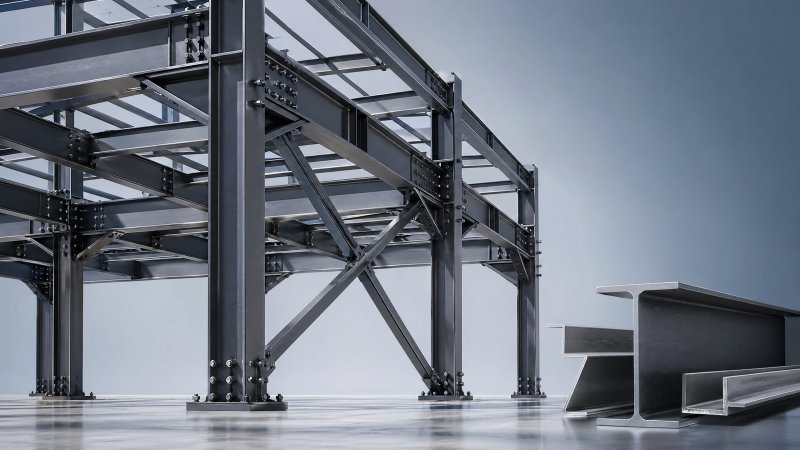
An H-beam is defined by its wide flanges and relatively thick web, which together create strong resistance to bending and improved stability under vertical loads. In practical terms, this means the section can support heavier loads over longer spans than lighter cold-formed alternatives in many building frames. For example, in industrial structures with spans of 6–12 meters, an H-beam often provides a more direct load path and a safer margin for concentrated equipment loads.
Compared with Z-sections, which are frequently used in purlins, girts, and lighter secondary framing, H-beams are more suitable for primary load-bearing members such as columns, transfer beams, crane-support structures, and floor beams. A Z profile performs efficiently in thin-gauge applications, but its geometry is not optimized for the same level of flange stability when the project requires high axial load support or repeated heavy service conditions.
Another key advantage is connection practicality. Wider flanges give fabricators and erectors more working area for bolted end plates, welded brackets, stiffeners, and splice connections. On projects with tight site schedules, that can reduce fit-up errors and shorten installation time by 5%–15%, especially when standardized node details are repeated across multiple bays.
H-beams also perform well in applications where load direction may vary or where structural members must remain stable during handling and erection. In heavy workshops, logistics centers, and steel platforms, beam performance is not judged only by design strength. Torsional behavior, local buckling resistance, and fabrication tolerance all matter, particularly when the structure supports machinery, racks, conveyors, or overhead systems.
Primary situations where H-beams are preferred
- Building frames carrying medium to heavy loads, especially when columns and beams must resist both dead load and live load with low deflection.
- Mezzanine floors and equipment platforms where point loads may exceed typical light-frame design assumptions.
- Industrial and warehouse projects using repeated spans of 6 m, 9 m, or 12 m where connection consistency is important.
- Structures exposed to vibration, impact, or variable operating loads, such as manufacturing lines and material handling systems.
The following comparison helps clarify the decision between H-beams and other common steel profiles used in structural work.
The key takeaway is simple: H-beams are not the lightest option, but when the structure needs reliable primary support, better flange bearing area, and more forgiving connection geometry, they usually justify the material weight with lower structural risk and better project predictability.
How Engineers and Buyers Should Evaluate Beam Choice
A good H-beam selection process starts with design conditions, not catalog size alone. Engineers usually review at least 4 core variables: span, load type, connection method, and service environment. Procurement teams then add 4 more: standard compliance, dimensional tolerance, surface condition, and lead time. When these eight factors are aligned early, projects avoid costly substitutions during fabrication or installation.
Load type is especially important. Uniformly distributed floor loads behave differently from concentrated machine loads or dynamic forklift traffic. In a mezzanine or industrial platform, a section that looks acceptable for a 3 kN/m² live load may be insufficient when local point loads, vibration, or future equipment upgrades are introduced. This is why conservative structural selection often favors H-beams for mission-critical support zones.
Buyers should also distinguish between nominal section size and usable project value. A lower unit price per ton does not always mean a lower total installed cost. If a profile requires more stiffeners, more complex connection plates, or tighter erection control, fabrication hours can rise quickly. In many B2B projects, reducing shop modifications by even 1–2 steps per connection delivers meaningful savings across 100 or more repetitive nodes.
For imported steel, quality verification is part of beam evaluation. Reliable suppliers should be able to match orders to the required standards, provide mill test documentation where applicable, maintain consistent tolerances, and control production through clear inspection procedures. Hongteng Fengda supports international buyers with standard structural steel supply and OEM solutions, which is useful when projects need both stock sections and customized components in the same shipment.
A practical 5-step evaluation method
- Define the member role: primary load beam, column, secondary support, or bracing element.
- Confirm span and load range, including live load, equipment load, and possible future reserve capacity.
- Review connection details such as bolting access, plate thickness, weld sequence, and erection conditions.
- Check compliance needs against ASTM, EN, JIS, or GB standards and project documentation requirements.
- Compare total installed cost, not only material price, including fabrication, coating, freight, and lead time.
Decision factors that often change the final choice
Two projects with the same theoretical span can end up with different beam choices because operating conditions differ. A dry warehouse with static pallet storage may allow a leaner section strategy, while a production line with moving equipment, maintenance traffic, and heat exposure may need a more robust solution. Decision-makers should therefore compare use conditions over a 10–20 year service horizon rather than only the initial procurement phase.
In some projects, H-beams are also selected to simplify future modifications. If an owner plans to add suspended systems, intermediate platforms, or heavier utilities later, the wider flange geometry gives more flexibility for attachment points and retrofit detailing without major disruption to the frame.
Material Matching in Real Projects: Structural Carbon Steel and Stainless Components
Beam selection does not happen in isolation. Many facilities combine carbon structural members with stainless steel plates, covers, guards, or processing surfaces depending on the operating environment. For example, a food plant, chemical workshop, or transport-related facility may use H-beams for the main load-bearing structure while adding corrosion-resistant stainless steel in localized contact, enclosure, or hygiene-sensitive areas.
This mixed-material approach is common because each steel type solves a different problem. Structural beams handle frame loads efficiently, while stainless plate serves where corrosion resistance, cleanability, or fabrication flexibility is required. In projects involving conveyors, food processing zones, electrical equipment housings, or transport interiors, buyers may source both categories from suppliers that understand dimensional control, fabrication needs, and export documentation.
One example is 304L Stainless Steel Plate, which is widely used in high temperature and electrical industry applications, medical equipment construction, chemical systems, the food industry, agriculture and ship parts, kitchen supplies, trains, airplanes, conveyor belts, vehicles, bolts, nuts, springs, and screens. Its typical tensile strength is ≥520, yield strength is ≥275, elongation is about 55–60, hardness is ≤183HB or ≤100 HRB, and density is 7.93.
For project teams, these properties matter because they support manufacturing flexibility. Thickness options can range from 0.3 mm to 200 mm, with common lengths such as 2000 mm, 2438 mm, 3000 mm, 6000 mm, and 12000 mm, and width options from 40 mm to 3500 mm depending on the requirement. Available finishes may include BA, 2B, NO.1, NO.4, 4K, HL, and 8K, while common certifications include ISO, SGS, and BV.
Why this matters in H-beam projects
In industrial design, a structure often succeeds because the right material is assigned to the right function. An H-beam may carry the building load, but stainless plate may be used for machine guards, corrosion-prone partitions, or sanitary contact surfaces. This reduces overdesign and helps control cost instead of forcing one material family to solve every requirement.
The table below shows how structural steel and stainless components are often matched in actual project planning.
The main conclusion is that smart sourcing is not limited to selecting one beam shape. Strong project outcomes usually come from combining structural steel strength with application-specific materials where corrosion resistance, hygiene, heat, or fabrication demands are higher.
Procurement Risks, China Sourcing, and Quality Control Priorities
Many buyers ask whether lower-cost steel from China can still be reliable. The answer depends far more on supplier capability and process control than on origin alone. In steel procurement, the main risks are usually inconsistent chemical composition, dimensional deviation, incomplete traceability, uncontrolled subcontracting, and weak packaging or shipment planning. These risks can be managed with a disciplined supplier review process.
For H-beams, dimensional consistency matters because flange thickness, web thickness, straightness, and length tolerance all affect fit-up during fabrication and erection. Even a small cumulative deviation across multiple members can create alignment issues in bolted frames. A practical acceptance plan should cover section size verification, appearance inspection, marking, quantity check, and document review before loading or at goods receipt.
Lead time is another procurement factor that can shift the final supplier decision. Standard beam orders may move faster than custom fabricated components, while OEM sections or special cut lengths may require additional production windows. Buyers commonly plan around 2–4 weeks for standard supply readiness depending on quantity and specification complexity, and longer for mixed orders requiring coating, machining, or assembled packages.
Hongteng Fengda focuses on structural steel manufacturing and export, supplying standard specifications as well as customized structural steel components. For overseas buyers, that matters because supplier stability, communication speed, and quality discipline are often as important as section price. A dependable partner helps reduce sourcing risk, supports schedule control, and improves coordination between engineering, purchasing, and site teams.
6 checkpoints before placing a structural steel order
- Confirm applicable material standard and whether the beam must align with ASTM, EN, JIS, or GB project documents.
- Review dimensional tolerances, cut lengths, hole requirements, and any welded accessory details before production release.
- Ask for inspection scope, including visual checks, dimensional verification, and material documentation procedures.
- Check packaging and loading methods for long sections such as 6000 mm or 12000 mm members to reduce transit damage.
- Clarify delivery schedule by batch, especially if the project depends on phased installation over 2 or 3 site milestones.
- Align communication channels for drawing approval, change control, and issue response time during the order cycle.
Common sourcing mistakes
One frequent mistake is comparing only per-ton price across suppliers without checking whether the quoted beam matches the same standard, tolerance level, surface condition, or accessory scope. Another is ignoring packing and logistics for export lengths, which can increase damage risk or port handling delays. Good procurement teams compare at least 5 dimensions: material, processing, inspection, delivery, and service responsiveness.
A second mistake is delaying technical clarification until after the purchase order is issued. If drawings, connection details, and inspection requirements are not frozen early, revisions can affect both lead time and cost. On heavy structural work, a few days of clarification before production can save weeks of correction later.
Implementation Tips, FAQs, and When to Move Forward
Once the decision leans toward H-beams, successful implementation depends on coordination from design through installation. A practical project flow usually includes 3 stages: technical confirmation, production and inspection, then shipment and site execution. Each stage should have named responsibilities and approval points so that structural members arrive ready for fabrication or direct erection instead of becoming a source of rework.
For project managers, it is useful to define acceptance criteria before the first batch ships. This may include member count, marking logic, section verification, straightness review, document package completeness, and packaging condition. For high-volume projects, batch-based delivery can improve site organization, especially when steel is installed by zone over 2–6 weeks rather than all at once.
For distributors and resellers, H-beams are often attractive because they serve a wide customer base across construction, industrial, and fabrication markets. However, stocking strategy should reflect local demand patterns. Fast-moving sizes may justify inventory, while special dimensions are usually better handled through scheduled production and export planning.
Below are common questions that often influence final beam selection and supplier engagement.
How do I know whether an H-beam is oversized for my project?
If the member functions only as a light secondary support, and loads are low, a channel or cold formed section may be more efficient. But if the beam serves as a primary load path, supports equipment, spans around 6 m or more, or requires robust connection surfaces, the H-beam is usually a justified choice. Final sizing should always follow structural calculations and applicable codes.
Are H-beams suitable for export projects with mixed standards?
Yes, provided the specification is clearly locked. International projects often align material and dimensional expectations across ASTM, EN, JIS, or GB references. The critical point is to define which standard governs the order, what tolerance level is acceptable, and what inspection documents are required before production begins.
What should financial approvers focus on besides price?
They should review total cost of ownership over the project cycle: material cost, fabrication hours, freight efficiency, installation time, potential rework risk, and schedule impact. A beam with a slightly higher unit price can still lower total project cost if it simplifies connections, reduces field adjustment, and improves delivery reliability.
How can buyers reduce quality disputes on imported steel?
Use clear drawings, agreed standards, documented inspection points, and batch-level identification. It is also wise to confirm packaging details, length grouping, and marking format before shipment. These simple controls reduce ambiguity and make receiving inspection much smoother at destination.
When the project demands strong load support, stable flanges, efficient framing, and dependable sourcing, H-beams are often the better choice for primary structural members. With experience in structural steel manufacturing and export, Hongteng Fengda supports buyers who need standard beams, customized steel components, and reliable coordination across quality, lead time, and international delivery requirements.
If you are evaluating beam options for a warehouse, industrial plant, platform, modular building, or mixed-material project, now is the right time to compare specifications and supply plans in detail. Contact us to get a customized solution, discuss product details, or explore more structural steel options for your next project.
Please give us a message


Please enter what you want to find