For manufacturers and procurement leaders, the main reason angle plate steel for manufacturing remains widely used is simple: it delivers dependable strength, easy fabrication, and cost-effective structural performance across many production environments.
Whether it is used in frames, supports, brackets, guards, or custom assemblies, this steel profile helps balance mechanical reliability with practical sourcing and processing advantages. That combination matters when material decisions affect quality, lead times, and total project cost.
For business decision-makers, the real question is not only what angle plate steel is, but why it repeatedly proves useful in manufacturing settings where durability, flexibility, and repeatability are essential. The answer lies in how well it fits both engineering and commercial priorities.
Why manufacturers continue to choose angle plate steel
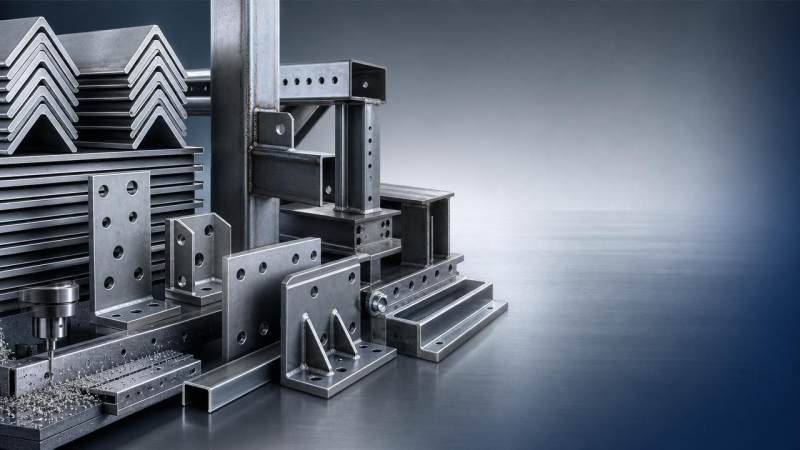
Angle plate steel is useful because it offers a strong section shape without unnecessary material mass. Its L-shaped geometry gives effective support at corners, edges, and load-bearing junctions where rigidity is needed.
In manufacturing, this translates into practical value. Companies can create frames, machine bases, racks, reinforcement sections, and mounting brackets with a material that is easier to handle than more complex structural profiles.
It is also highly adaptable in workshops and factories. Angle sections can be cut, welded, drilled, punched, and assembled into both standard and custom components without introducing excessive fabrication complexity.
For buyers, that means angle plate steel for manufacturing often reduces design friction. It supports faster prototyping, easier production changes, and more predictable fabrication costs compared with materials that require specialized processing.
What problem does angle plate steel solve for business decision-makers?
Enterprise buyers usually care less about the profile itself and more about what it helps them achieve. In most cases, angle plate steel solves four core problems: structural reliability, fabrication efficiency, sourcing flexibility, and budget control.
First, it supports stable structures in equipment and industrial assemblies. When a component must resist bending, support distributed loads, or reinforce a joint, angle steel provides a practical engineering solution.
Second, it improves manufacturing efficiency. Because angle steel is a familiar profile in metal fabrication, production teams can process it with common shop equipment and established welding procedures.
Third, it is widely available in different grades, sizes, and standards. This helps procurement teams reduce supply risk and align purchases with project specifications across domestic and export markets.
Fourth, it offers a favorable cost-to-performance ratio. For many applications, angle steel provides enough strength and durability without the higher material or fabrication cost associated with more specialized sections.
Where angle plate steel creates the most value in manufacturing
The value of angle plate steel becomes clearest when reviewing actual use cases. In manufacturing facilities, it is commonly selected for machine frames, equipment stands, structural supports, shelving systems, and safety barriers.
It is also useful in conveyor structures, electrical mounting assemblies, reinforcement corners, transport racks, and customized housings. In these applications, the steel section works as both a structural member and a fabrication-friendly component.
For OEM and industrial equipment manufacturers, angle steel often supports modular design. Teams can combine standardized sections with welded plates or fasteners to build repeatable assemblies without overcomplicating the bill of materials.
This matters commercially because repeatable assemblies improve quoting accuracy, reduce scrap, and simplify replacement part planning. Decision-makers benefit when materials support both production consistency and after-sales service efficiency.
How its mechanical and fabrication properties support production goals
Angle plate steel is not chosen only because it is common. It is chosen because its material behavior and processing characteristics fit the realities of industrial manufacturing.
One major advantage is strength. Structural steel grades used for angle sections can handle significant loads in support and reinforcement applications, especially when properly sized for the design requirement.
Another important advantage is weldability. In many manufacturing projects, time lost in fabrication creates more cost pressure than the base material price itself. Steel that welds cleanly and consistently supports better throughput.
Machinability and cuttability also matter. Fabricators can prepare angle sections for holes, slots, trims, end cuts, and custom joints using established methods, which helps maintain process control.
Durability is equally important. Depending on the grade and finish, angle steel can be used in indoor industrial settings, heavy-duty support structures, or environments where corrosion protection is required.
Why shape efficiency matters more than many buyers expect
Many material decisions focus mainly on grade and price, but profile geometry has a major effect on performance. The angle shape is especially useful because it provides directional stiffness while remaining relatively simple and economical.
Its two perpendicular legs naturally support corner reinforcement and connection points. This makes it effective in assemblies where flat plate alone would need additional stiffeners or where tubular sections would complicate access and joining.
For manufacturers, this shape efficiency can reduce part count. Fewer added reinforcements may be needed, and assembly layouts can be simplified. That often leads to lower labor input and more stable quality outcomes.
From a managerial perspective, simpler assemblies usually mean fewer production variables. Fewer variables help reduce rework, improve consistency, and support easier scaling across production batches.
How angle plate steel helps control total manufacturing cost
Business leaders should evaluate angle plate steel based on total cost, not only purchase price per ton. Material that looks cheaper on paper may become more expensive if it creates cutting waste, longer weld time, or difficult assembly.
Angle steel often performs well in total-cost analysis because it is broadly available, straightforward to process, and suitable for a wide range of design tasks. Those factors help reduce hidden production expenses.
Its standardization also supports efficient procurement. Buyers can source common sizes more easily, compare suppliers more clearly, and reduce delays caused by uncommon specifications or complex secondary processing.
In many projects, cost control improves because angle steel balances raw material affordability with workshop productivity. That is especially valuable in competitive manufacturing sectors where margin pressure is constant.
When production teams can work faster with fewer issues, procurement savings become operational savings as well. That is why the usefulness of angle plate steel for manufacturing should be measured across the full value chain.
What decision-makers should check before selecting a supplier
Choosing the right steel profile is only half of the decision. Supplier capability directly affects whether the expected value is actually realized in production, delivery, and long-term quality performance.
Decision-makers should first verify compliance with target standards such as ASTM, EN, JIS, or GB. International buyers need confidence that mechanical properties, tolerances, and documentation match project requirements.
Second, assess consistency in manufacturing and inspection. Stable thickness, dimensional accuracy, and surface quality are especially important for buyers who depend on repeat production or automated fabrication workflows.
Third, consider export experience and communication efficiency. A supplier serving multiple international markets is typically better prepared to handle packaging, shipping schedules, certification, and custom specifications.
Fourth, ask whether the supplier can support related structural profiles. In many projects, angle steel is used alongside channels, beams, or custom formed sections, so broader supply capability can simplify sourcing.
Why related structural profiles also matter in project planning
Although angle steel is highly versatile, it is not always the only profile needed in a manufacturing project. Many assemblies combine angles with channels, beams, or cold formed sections to optimize strength and fabrication flow.
For example, a machine support system may use angle steel for brackets and edge reinforcement while channel sections provide primary frame depth or span capacity. This mixed-profile approach often improves both performance and cost efficiency.
That is why experienced buyers often prefer suppliers with integrated structural steel capability. A manufacturer that can provide multiple compatible profiles can help reduce procurement complexity and improve specification alignment.
In applications such as construction, automobile manufacture, wall beams, lightweight roof systems, brackets, mechanical columns, and light manufacturing beams, channel products can complement angle assemblies effectively.
For buyers evaluating broader sourcing options, Channel Steel Supplier solutions may also be relevant, especially when high strength, weldability, and corrosion resistance are required across connected structural components.
Which material and finish choices influence long-term performance?
The usefulness of angle plate steel also depends on selecting the right grade and surface treatment. This is where procurement decisions can significantly affect lifecycle value.
Carbon structural steel is widely used for general manufacturing applications because it offers a practical balance of strength, workability, and cost. For many indoor and protected environments, this is the most economical choice.
However, if the steel will face moisture, chemicals, or outdoor exposure, galvanized or corrosion-resistant options may offer better long-term results. Higher upfront cost can be justified when maintenance reduction and service life are considered.
In related structural applications, buyers often compare options such as Q195, Q235, Q345B, and stainless or duplex materials depending on load requirements, fabrication processes, and environmental conditions.
Decision-makers should also confirm tolerances, thickness range, and dimensional consistency. Reliable specifications are essential when the steel must fit precisely into repetitive assemblies or integrated structural systems.
How to judge whether angle plate steel is the right choice for your application
Not every project needs the same profile, so buyers should evaluate angle steel against clear operational criteria. The most useful questions are practical rather than theoretical.
Start by asking what the component must do. Is it mainly reinforcing a corner, carrying a moderate structural load, providing mounting support, or creating a stable frame connection? Angle steel is strongest where efficient edge and joint support are needed.
Next, examine fabrication requirements. If your production process depends on fast cutting, easy welding, and straightforward assembly, angle steel is often a highly suitable option.
Then compare alternatives based on total system cost. A heavier or more complex section may provide extra capacity, but that added capacity is not always necessary and may not improve business outcomes.
Finally, review future service conditions. If corrosion risk, maintenance access, or replacement frequency is a concern, grade and coating decisions should be made early rather than after procurement.
What makes a reliable structural steel partner in global supply
For international buyers, product utility is closely tied to supplier reliability. Even the right material can create risk if lead times slip, quality varies, or documentation is incomplete.
A dependable structural steel manufacturer should offer stable production capacity, clear quality control procedures, and the ability to support standard as well as custom specifications. These capabilities are especially valuable for project-based and repeat-order customers.
Manufacturers with export experience can also help reduce sourcing uncertainty. Better packaging, schedule control, and standards familiarity contribute to smoother project execution and fewer procurement disruptions.
When angle steel is part of a larger industrial or construction requirement, a partner that understands both technical and commercial expectations is more valuable than a supplier competing on price alone.
That broader service model is often what helps buyers reduce sourcing risk, control costs, and keep projects moving on schedule in competitive global markets.
Conclusion: why angle plate steel remains a smart manufacturing material
Angle plate steel remains useful in manufacturing because it solves real operational problems. It provides structural support, fabrication flexibility, sourcing convenience, and cost efficiency in one practical profile.
For decision-makers, its value is not just in mechanical strength. It is in the way that strength translates into easier production, more predictable costs, simpler assemblies, and dependable performance across multiple industrial applications.
When selected in the right grade, size, and finish, angle plate steel for manufacturing can improve both engineering outcomes and commercial results. That is why it continues to be a preferred material in factories, workshops, and industrial projects worldwide.
If your goal is to balance performance, manufacturability, and supply reliability, angle steel deserves serious consideration as part of a well-planned structural steel strategy.
Please give us a message


Please enter what you want to find