Corrosion resistant steel—unlike standard carbon sheet steel—offers superior durability in harsh environments, making it essential for structural integrity in global construction and industrial projects. Whether you're comparing galv steel tube vs. hot rolled steel sheet, evaluating i beam weight for load calculations, or sourcing to ASTM, EN, or GB steel standards, understanding the difference between corrosion resistant steel and regular carbon steel is critical. As a trusted structural steel manufacturer & exporter from China, Hongteng Fengda delivers certified solutions—from stainless steel welded mesh to custom I-beams—ensuring safety, compliance, and long-term value for procurement teams, engineers, and project managers worldwide.
What Exactly Makes Steel “Corrosion Resistant”?
Corrosion resistant steel isn’t a single material—it’s a functional category defined by how the base steel interacts with aggressive environments. At its core, resistance stems from either alloying (e.g., chromium in stainless grades) or protective surface treatment (e.g., zinc coating). Unlike regular carbon steel—which relies solely on paint or coatings that degrade over time—corrosion resistant variants integrate protection into their structure or surface layer.
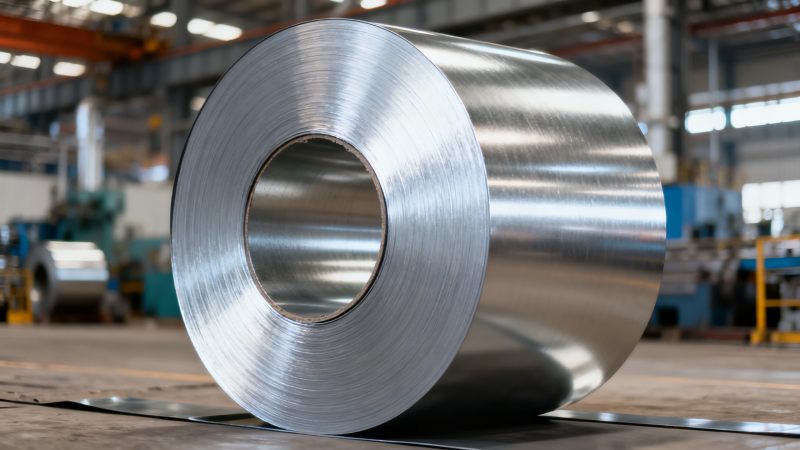
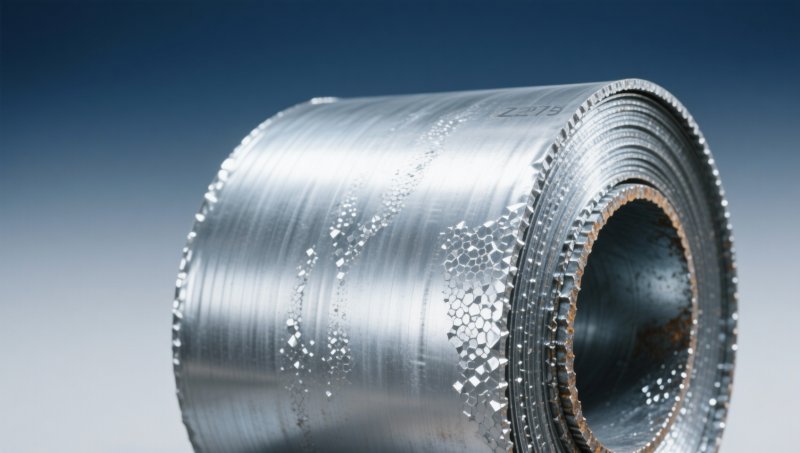
For structural applications where maintenance access is limited or lifecycle cost matters, this distinction is decisive. A typical carbon steel section exposed to coastal humidity may show red rust within 6–12 months; a properly galvanized counterpart—such as Steel Coil Galvanized with Z275 coating—can withstand 20+ years before first red rust appears under ISO 9223 C3 exposure conditions.
The mechanism varies: stainless steels form passive chromium oxide films; galvanized steels use sacrificial zinc that corrodes preferentially, protecting underlying iron even at scratches or cut edges. This electrochemical behavior is why zinc-coated products remain the most cost-effective solution for large-scale infrastructure—bridges, transmission towers, HVAC ducts, and cold-formed framing.
How Does It Compare to Regular Carbon Steel in Real-World Use?
The difference isn’t theoretical—it translates directly into performance, lifecycle cost, and risk management. Below is a side-by-side comparison of key decision metrics across five critical dimensions:
This table reflects real-world procurement trade-offs—not just unit price, but total cost of ownership. For projects with 10+ year design life (e.g., solar mounting structures, warehouse mezzanines, or modular housing), the upfront investment pays back within 2–4 years through avoided repainting, labor downtime, and warranty claims. Hongteng Fengda supports buyers with precise lifecycle cost modeling—factoring in local corrosion class, expected maintenance frequency, and regional labor rates.
Key Technical Parameters You Must Verify
When specifying corrosion resistant steel, three parameters drive performance—and are often misaligned during procurement:
- Zinc Coating Mass: Ranges from 80 g/m² (pre-galvanized DX51D+Z) to 275 g/m² (hot-dip Z275)—higher values extend service life but reduce formability.
- Base Steel Strength: Grades like S350GD+Z (yield ≥350 MPa) allow thinner sections while maintaining load capacity—critical for weight-sensitive applications.
- Surface Finish Consistency: Measured via ASTM A924 flatness tolerances (±0.3 mm/m)—impacts welding fit-up and bolted joint integrity.
Which Applications Demand Corrosion Resistant Steel—And Why?
Not all projects need it—but when failure means safety risk, regulatory noncompliance, or unplanned shutdown, specification becomes non-negotiable. The following scenarios require verified corrosion resistance:
- Coastal & Offshore Infrastructure: Salt-laden air accelerates pitting. Hot-dip galvanized coils (Z275, S550GD+Z) meet ASTM A653 Grade 55 and EN 10346 S550GD requirements for offshore platform support frames.
- Food & Pharma Processing Plants: Humidity + cleaning agents demand uniform, non-toxic passivation. Pre-galvanized SGCC coils comply with FDA 21 CFR 178.3860 and EN 10142 for conveyor components.
- Renewable Energy Mounting Systems: 25-year PV warranties require zero substrate corrosion. Hongteng Fengda supplies custom-cut Steel Coil Galvanized in widths 600–1500 mm and thicknesses 0.4–2.0 mm, optimized for roll-forming into solar racking profiles.
In each case, the choice isn’t about “better steel”—it’s about matching material behavior to environmental aggressivity, design life, and operational constraints. That’s why our technical team works directly with engineers to validate coating selection against ISO 9223 corrosion categories (C1–C5) and local atmospheric data.
Why Global Buyers Choose Hongteng Fengda for Corrosion Resistant Structural Steel
Sourcing corrosion resistant steel isn’t just about specs—it’s about mitigating supply chain risk across geographies, standards, and timelines. As a structural steel manufacturer & exporter from China, Hongteng Fengda bridges the gap between international compliance and on-the-ground execution:
- Multi-standard Certification: Every coil batch carries mill test reports compliant with ASTM A653, EN 10346, JIS G3302, and GB/T 2518—verified by SGS, BV, or TÜV upon request.
- Production Flexibility: From 0.12 mm ultra-thin pre-galvanized strips (for precision stamping) to 3.5 mm heavy-gauge hot-dip coils (for structural decking), we adjust zinc mass (60–275 g/m²) and tensile strength (≥220–550 MPa) per your OEM drawings.
- Logistics Certainty: With 3 dedicated export terminals in Tianjin, Qingdao, and Ningbo, we guarantee ≤25-day lead time for standard orders—and ≤45 days for custom width/thickness combinations.
Whether you’re validating material for an EN 1090-2 certified steel structure, preparing documentation for U.S. DOT bridge projects, or scaling production for Middle East solar farms—we align technical delivery with commercial terms. Contact us today to request: (1) Mill test report samples, (2) Zinc coating thickness verification protocol, (3) Custom coil cutting quote for your next batch, or (4) Lead time confirmation for ASTM A653 Grade 55 coils in DX54D+Z grade.
Please give us a message


Please enter what you want to find