What is angle steel, and why is it widely used in construction and manufacturing? Angle steel is a versatile structural steel product known for its strength, durability, and cost efficiency. From building frames and support brackets to industrial equipment and infrastructure projects, it plays a key role in many applications. Understanding its features and common uses can help buyers and project planners make more informed sourcing decisions.
For most information-focused buyers, the short answer is simple: angle steel is an L-shaped steel section used whenever a project needs practical strength, easy fabrication, and economical structural support.
Its popularity comes from a balance of performance and affordability. It is strong enough for load-bearing uses, flexible enough for fabrication, and available in many sizes and standards for global projects.
If you are researching what is angle steel, the most useful approach is not just learning the definition. It is understanding where it fits, why engineers choose it, and how to evaluate it.
What Is Angle Steel in Practical Terms?
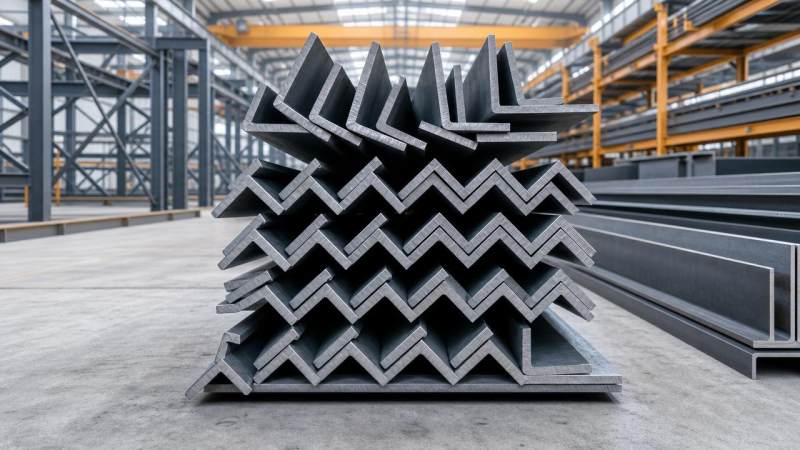
Angle steel is a long steel product with an L-shaped cross-section. It is made with two legs joined at a right angle, and those legs may be equal or unequal.
In practical use, angle steel is valued because the shape provides good rigidity without excessive weight. That makes it suitable for frames, reinforcements, supports, and connection structures.
There are two common types. Equal angle steel has two legs of the same width, while unequal angle steel has legs of different widths for more specific design needs.
Depending on the project, angle steel may be hot rolled or processed for special requirements. Surface treatment can also vary, including black steel, painted steel, or galvanized steel for corrosion resistance.
For global buyers, angle steel is usually specified according to standards such as ASTM, EN, JIS, or GB. Standard compliance matters because it affects dimensions, tolerances, and expected mechanical performance.
Why Is Angle Steel So Widely Used?
The main reason is efficiency. Angle steel delivers useful structural strength with a relatively simple shape, which helps control material costs, fabrication time, and installation complexity.
It is also easy to cut, drill, weld, and bolt. This makes it practical for both factory manufacturing and on-site construction work, especially where customized fitting is required.
Another advantage is versatility. A single product category can support everything from light brackets and equipment bases to heavy structural framing and infrastructure reinforcement.
Buyers also like its stable supply profile. Because angle steel is a standard structural product, it is widely produced, easier to source internationally, and often available in multiple grades and sizes.
From a cost-performance perspective, angle steel often becomes the preferred option when a project needs durability and structural reliability without moving to more complex fabricated sections.
Where Is Angle Steel Usually Used?
The most common applications are in construction, manufacturing, infrastructure, and equipment support. Its shape makes it especially useful where edge reinforcement or corner stability is needed.
In building construction, angle steel is used for roof trusses, wall bracing, stair frames, platform supports, lintel supports, and secondary structural members.
In industrial facilities, it is often used for machinery frames, racks, shelves, maintenance platforms, conveyor supports, protective guards, and workshop structures.
In infrastructure projects, angle steel may appear in transmission towers, bridge components, fencing systems, utility supports, and transportation-related steel assemblies.
In manufacturing, it is commonly selected for trailers, agricultural equipment, storage systems, cabinets, and fabricated metal products that need a balance of strength and workable geometry.
Because angle steel can be used in both large and small assemblies, it serves not only major contractors but also fabricators, OEM buyers, maintenance teams, and industrial distributors.
How Do Engineers and Buyers Decide Whether Angle Steel Is the Right Choice?
Most decision-making starts with load requirements. If the part must carry force efficiently while remaining simple to fabricate, angle steel is often a strong candidate.
The second factor is connection method. Angle steel works well in bolted and welded assemblies, so it is useful when installation speed or workshop fabrication efficiency matters.
Corrosion exposure is another key consideration. In indoor dry environments, standard carbon steel angle may be enough. In outdoor or humid conditions, galvanized options are often preferred.
Buyers should also look at size availability and standard compatibility. Choosing sections that align with local design codes and fabrication practices can reduce delays and sourcing mistakes.
Finally, the real question is not only what is angle steel, but whether it offers the best overall project value compared with channels, beams, tubes, or custom-formed profiles.
What Are the Key Features That Affect Performance?
Angle steel performance depends on several practical variables: steel grade, leg dimensions, thickness, length, straightness, dimensional tolerance, and surface protection.
Leg width and thickness influence load capacity and stiffness. Larger or thicker sections provide greater strength, but they also increase weight and material cost.
The steel grade affects yield strength, weldability, and suitability for different environments. Buyers should match the grade to the actual structural and fabrication demands of the project.
Tolerance control is especially important for projects involving repetitive fabrication or assembly. Poor dimensional consistency can slow production and increase rework during installation.
Surface condition matters as well. If the steel will be exposed to weather, moisture, or industrial chemicals, protective treatment can significantly affect service life and maintenance cost.
Common Mistakes Buyers Make When Sourcing Angle Steel
One common mistake is focusing only on unit price. A cheaper section may lead to quality variation, poor tolerances, coating issues, or extra fabrication cost later.
Another mistake is ordering based on vague size descriptions without confirming the standard system. Similar nominal sizes can differ depending on ASTM, EN, JIS, or GB specifications.
Some buyers also underestimate the importance of intended use. Indoor supports, offshore structures, factory equipment, and civil buildings do not all require the same performance profile.
Logistics planning is another weak point. Length limitations, container loading, lead times, and packaging methods can directly affect project scheduling and landed cost.
Finally, not verifying mill documentation or inspection procedures can create risk. For international sourcing, reliable quality control is often as important as the product itself.
How Angle Steel Compares with Other Structural Steel Products
Angle steel is not always the only option. In many projects, buyers compare it with channel steel, steel beams, square tubes, and cold formed profiles.
Compared with channel steel, angle steel is usually simpler and lighter for brackets, braces, and edge supports. Channel sections may be preferred when more directional strength is needed.
Compared with I-beams or H-beams, angle steel is less suitable for major primary load-bearing spans. Beams are typically selected for heavier structural framing.
Compared with hollow sections, angle steel is often easier to connect at corners and edges. Hollow sections, however, may offer better torsional performance in some designs.
This comparison matters because informed sourcing is about fit, not just familiarity. The best product is the one that meets performance, fabrication, and budget goals together.
Related Steel Products Often Used Alongside Angle Steel
In real projects, angle steel is rarely used alone. Buyers often source it together with channels, beams, plates, tubes, and custom steel components to complete a structure.
For example, corrosion-resistant tube products are widely used in support systems, fluid transport, industrial frames, and outdoor applications where longer service life is important.
A relevant example is Galv Steel Tube, which is used in construction, light industry, automobiles, agriculture, storage systems, and low-pressure fluid pipelines.
It is also suitable for oil-related piping, chemical equipment, trestle support frames, and mining pit structures. Its anti-corrosion function helps extend service life in demanding environments.
Available with standards such as AISI, ASTM, DIN, JIS, GB, and EN, and with customizable dimensions from 1 to 12 meters in length, it supports many cross-project sourcing needs.
For buyers managing multiple steel categories, combining angle steel with galvanized tube products can simplify procurement and improve consistency across structural and utility applications.
How to Evaluate an Angle Steel Supplier
When choosing a supplier, buyers should look beyond catalog listings. The first question is whether the manufacturer can provide consistent quality across batches and order volumes.
Production capability matters because large or repeat orders require schedule reliability. Delayed structural steel delivery can disrupt fabrication and create downstream project losses.
Quality systems are equally important. Ask about dimensional control, chemical and mechanical testing, coating inspection, and compliance with international standards.
Export experience also matters for global buyers. Proper documentation, packaging, loading practice, and communication can significantly reduce sourcing risk and customs complications.
A dependable structural steel partner should also support customization when needed, especially for non-standard lengths, processing, or integrated project supply requirements.
What Should Buyers Clarify Before Placing an Order?
Before purchasing, confirm the exact angle type, dimensions, steel grade, standard, length, quantity, and surface treatment. These details directly affect quotation accuracy and production planning.
You should also clarify whether the material will be welded, drilled, painted, or galvanized after delivery. Processing requirements may influence the most suitable grade and finish.
For international projects, ask for test certificates, inspection terms, packing method, delivery schedule, and tolerance range. These points help avoid misunderstandings later.
If the project is cost-sensitive, compare not only ex-factory price but also freight efficiency, scrap rate, fabrication efficiency, and expected service life in the end-use environment.
Good sourcing decisions come from complete technical alignment. The more precisely the requirement is defined, the easier it is to control quality, budget, and delivery performance.
Conclusion: Why Understanding Angle Steel Matters
If you came here searching what is angle steel, the most useful takeaway is that it is far more than a basic L-shaped steel section.
It is a practical structural product chosen because it combines strength, versatility, easy fabrication, and cost efficiency across construction, industrial, and infrastructure applications.
Its usual uses include framing, bracing, supports, brackets, equipment structures, and utility assemblies. The right choice depends on load, environment, fabrication method, and standard requirements.
For buyers and project planners, understanding these factors makes sourcing decisions clearer. It helps you compare alternatives, avoid common mistakes, and select materials that fit the real job.
When supported by a reliable manufacturer with strong quality control and export experience, angle steel becomes a dependable solution for efficient and durable structural performance.
Please give us a message


Please enter what you want to find