Welded stainless tubing for food use must deliver hygiene, corrosion resistance, and reliable performance in demanding processing environments. From welded stainless tubing and corrosion-resistant pipe options to seamless steel tube alternatives, buyers need materials that meet quality standards, support easy fabrication, and help control long-term operating costs across food production, handling, and fluid pipe systems.
Why food-grade welded stainless tubing matters in processing lines
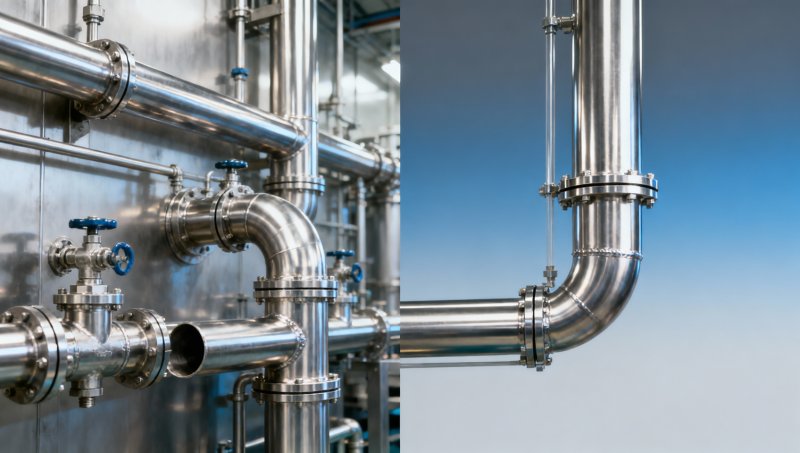
In food factories, tubing is not just a transport component. It directly affects product hygiene, cleaning efficiency, downtime risk, and maintenance cost. For operators, the concern is smooth flow and easy washdown. For quality and safety teams, the focus is contamination control. For procurement and finance teams, the key question is whether the tubing can balance initial cost with service life over 3–10 years of operation.
Welded stainless tubing is widely used in food handling systems because it offers a practical combination of corrosion resistance, dimensional consistency, and fabrication efficiency. In many standard food applications, properly produced welded tubing can meet process demands for water, CIP lines, low-to-medium pressure transfer, and equipment frames. It is often selected when buyers need repeatable quality, shorter lead times, and controlled budgets for small, medium, or large production lines.
The real buying challenge is not simply welded versus seamless. It is application matching. Acidic media, chloride exposure, sanitation frequency, weld finish requirements, and operating temperature all change the best choice. In typical food environments, tubing may face daily cleaning cycles, intermittent hot water exposure in the 60°C–90°C range, and regular chemical contact. That means surface condition, weld integrity, and material grade deserve close review before purchase.
For global buyers, another issue is supply reliability. Delayed material arrival can affect installation schedules by 2–4 weeks, especially in plant expansion or retrofit projects. Hongteng Fengda supports international industrial buyers with stable production planning, international standard awareness, and customized steel solutions. Even when a project includes food-use tubing together with structural steel supports, frames, brackets, and fabricated components, centralized sourcing can reduce coordination risk and simplify quality control.
- Hygiene requirement: interior surface should support efficient cleaning and reduce residue retention.
- Corrosion requirement: grade selection should match water chemistry, cleaning media, and salt exposure.
- Fabrication requirement: tubes should allow cutting, bending, welding, and fitting without excessive scrap.
- Commercial requirement: lead time, batch consistency, and documentation should fit project milestones.
Which buyers care most about tubing performance?
Different teams evaluate the same tubing from different angles. Technical assessors review wall tolerance, material grade, and weld quality. Project managers focus on installation compatibility and delivery timing. Distributors compare stock turnover and specification breadth. End users and operators care about leakage risk, cleaning convenience, and long service intervals. Understanding these perspectives helps avoid a mismatch between low unit price and high lifecycle cost.
In practice, most food-processing purchases are decided by at least 4 groups: engineering, procurement, quality assurance, and management. If one group only checks price while another later requires stricter finishing or certification records, the project can slow down. A better process is to define 5 key checkpoints early: grade, surface, dimensions, joining method, and compliance documents.
How to compare welded stainless tubing, seamless options, and food-use pipe systems
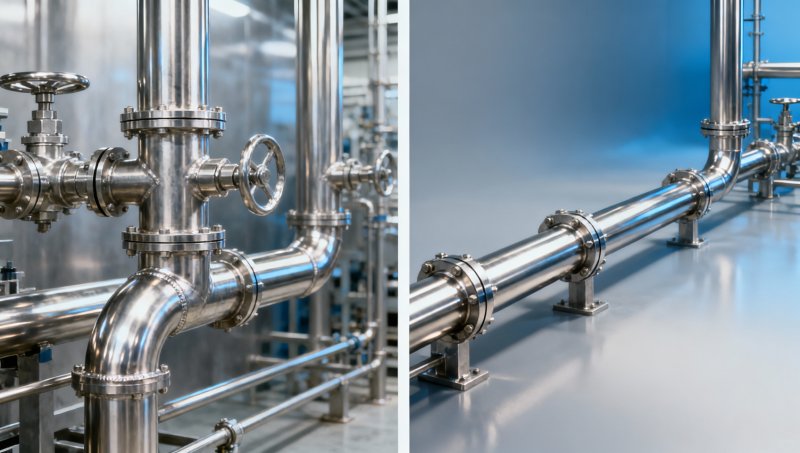
Many buyers begin with a simple assumption that seamless is always better. In reality, food-use systems should be selected according to process pressure, sanitary finish, fabrication needs, and budget discipline. Welded stainless tubing is often appropriate for general liquid transfer, process equipment, and hygienic frameworks. Seamless steel tube alternatives may be preferred in higher-pressure service, highly critical process lines, or applications with stricter mechanical requirements.
Another common confusion is between tube and pipe. Tubing is usually specified by outside diameter and wall thickness with tighter dimensional control, which is useful for fittings and equipment integration. Pipe is often used for bulk fluid transport and may follow nominal pipe size conventions. For food projects, this distinction matters because installation accuracy can affect seal performance, dead-leg risk, and long-term cleanability.
The table below gives a practical comparison for procurement teams evaluating welded stainless tubing against seamless and general corrosion-resistant pipe choices. These are decision guidelines, not universal rules, because actual selection still depends on medium, pressure, fabrication route, and compliance requirements.
The main lesson from this comparison is straightforward: do not pay for seamless if the application does not require it, and do not downgrade to general pipe if hygienic performance or fitting precision matters. A disciplined selection process can lower total ownership cost over 12–36 months by reducing rework, early replacement, and sanitation-related downtime.
What technical points should be checked first?
Start with 4 questions. What is the product medium? How often is the line cleaned? What temperature range does it face? Which standard or customer specification applies? For example, tubing used for water, dairy, beverage, or mild food slurry may require different surface and fitting expectations. If chloride exposure is frequent, grade selection becomes more important than simply choosing any stainless material.
Practical first-round screening
- Material grade: commonly 304 or 316 series depending on corrosion environment and cleaning chemistry.
- Wall thickness: should match pressure, handling impact, and fabrication method.
- Surface condition: interior smoothness matters in product-contact zones and CIP effectiveness.
- Documentation: confirm mill test records, standard references, and inspection scope before order release.
What standards, dimensions, and inspection points affect food-use tubing purchases?
Food processors, OEM equipment builders, and project contractors usually evaluate tubing through a mix of dimensional, material, and compliance criteria. Common reference systems include ASTM, EN, JIS, and GB depending on export destination and project specification. For practical buying, the difference often lies not in the label alone, but in whether the supplier can maintain repeatable tolerance, traceable raw material, and inspection consistency across multiple batches.
A sound review typically covers 6 checkpoints: material grade confirmation, outside diameter tolerance, wall thickness tolerance, weld seam quality, surface finish, and documentation package. For projects with installation windows of 7–15 days, missing one of these items can create costly site delays. This is why many buyers request pre-shipment dimensional checks and packing details before container loading.
The table below summarizes typical review dimensions for welded stainless tubing used in food-related systems. Exact values depend on specification and destination market, but the framework helps technical teams, purchasers, and quality managers align before final approval.
This checklist is especially useful for cross-border orders. A project may involve not only tubing but also supporting steel items such as frames, channels, brackets, and custom fabricated sections. Hongteng Fengda works with international standards including ASTM, EN, JIS, and GB, which helps buyers organize mixed steel procurement more efficiently and reduce communication gaps between structural and process-support materials.
A useful mid-project sourcing reference
Food and industrial projects often require more than tubing alone. During plant expansion, marine-side unloading works, water-retaining temporary structures, or foundation support may also be needed. In such cases, buyers sometimes coordinate different steel categories through one export partner to reduce handling complexity and documentation overlap.
For example, when a project includes waterfront civil work or deep excavation support around a processing facility, Steel Sheet Piles may be relevant for cofferdams or deep-water construction. Available grades include S275, S355, S390, S430, SY295, SY390, and ASTM A690, with production standards such as EN10248, EN10249, JIS5528, JIS5523, and ASTM. Single lengths can reach over 80m, and the product is used where high strength, reusability, and good waterproof performance are important.
This kind of inserted sourcing reference matters to project managers and commercial evaluators. It shows the practical advantage of working with a manufacturer that understands both product-specific requirements and broader steel supply coordination. Even if the primary topic is food-use tubing, integrated steel support can improve project timing, especially when procurement involves 2–3 parallel work packages.
How should buyers balance cost, lead time, and long-term reliability?
The lowest quoted price is rarely the lowest project cost. Buyers should consider at least 5 commercial factors: material grade, finish requirement, fabrication loss, packaging, and delivery risk. If tubing arrives with inconsistent dimensions or poor weld seam finishing, the cost of rework, rejection, and schedule disruption can exceed the original savings. This is particularly true in food plants where shutdown windows may be limited to 1–3 days.
Lead time also deserves realistic planning. Standard specifications may move faster, while custom cut lengths, special surface requirements, or mixed-container shipments often need additional coordination. In international sourcing, a practical planning model is to divide the order into 4 stages: technical confirmation, production, inspection and packing, then shipment. This helps project owners and finance approvers understand where delays can occur and which approvals should be completed early.
From a lifecycle perspective, it is useful to compare 12-month, 24-month, and 36-month operating implications rather than only unit price. A slightly higher-grade tubing with better corrosion performance may reduce replacement frequency and cleaning-related maintenance, especially where chloride exposure or aggressive washdown is routine. For distributors, this also reduces claim risk and improves repeat order confidence.
Hongteng Fengda supports buyers that need more than a catalog quotation. As a structural steel manufacturer and exporter from China, the company offers standard specifications and OEM-oriented support, backed by modern manufacturing facilities and strict quality control. For customers managing global construction, industrial, and manufacturing projects, this means a better ability to align product specification, quality expectations, and shipment schedules within one procurement conversation.
A practical procurement checklist for food-use tubing
- Confirm whether the tube is for direct product contact, utility service, or equipment support. The answer changes grade and finish expectations.
- Define 3 essential dimensions clearly: outside diameter, wall thickness, and supply length. Ambiguity here often creates installation problems.
- State the required standard or destination market reference such as ASTM, EN, JIS, or GB before production starts.
- Agree on inspection scope, especially for weld seam appearance, dimensional tolerance, and packing protection during export transport.
- Ask for a delivery schedule with key milestones rather than only a final shipping date. This improves project tracking and internal approvals.
Common purchasing mistakes to avoid
- Selecting by price alone without matching grade to cleaning chemistry and service environment.
- Treating tube and pipe as interchangeable even when sanitary fittings and tolerances are critical.
- Approving a sample but not defining batch consistency requirements for the full order.
- Ignoring packaging and loading details for long-distance transport, which may affect appearance and handling quality.
FAQ and next-step guidance for decision makers
The questions below reflect common concerns from information researchers, operators, technical reviewers, procurement teams, distributors, project managers, and business decision makers. They are also useful for aligning internal teams before RFQ release, especially when delivery timing, specification matching, and budget control all matter at the same time.
Is welded stainless tubing safe for food use?
It can be suitable when the correct stainless grade, weld quality, finish, and processing standard are selected for the actual application. Food-use suitability depends on the whole specification package, not on the word welded alone. For many transfer and utility-related food systems, properly controlled welded stainless tubing performs well. Buyers should review product-contact status, cleaning method, and corrosion conditions before final approval.
When should seamless stainless tube be considered instead?
Seamless is more often considered when the system has higher pressure, more critical mechanical requirements, or stricter customer specifications. It may also be evaluated for special chemical service. However, it is not automatically the better economic choice for every food line. In many standard installations, welded stainless tubing provides an effective balance of performance and cost.
What delivery timeline is realistic for international buyers?
A realistic schedule depends on whether the order is stock-based, mill-produced, or customized. Buyers should plan around 4 stages: technical review, production, inspection and packing, then shipment. Standard items generally move faster than special lengths or mixed-specification orders. The best approach is to confirm milestone dates in advance instead of relying on a single final ETA.
What should quality teams inspect before shipment?
At minimum, inspect 5 points: material identification, dimensions, surface condition, weld seam appearance, and packing integrity. If the project has strict traceability demands, confirm document format in advance. For longer logistics routes, packing and bundle protection are especially important because surface damage during transport can create rejection issues even when the base material is acceptable.
Why work with a supplier that also understands structural steel?
Many industrial and food projects require more than one steel category. A supplier with experience in structural steel, custom fabrication, and export coordination can help reduce sourcing fragmentation. Hongteng Fengda manufactures and exports structural steel products including angle steel, channel steel, steel beams, cold formed steel profiles, and customized components, while supporting global buyers with standard compliance, stable production capacity, and dependable lead times. This is valuable when a project combines tubing-related procurement with supports, frames, or site steel packages.
Why choose us for project discussion and quotation support?
If you are comparing welded stainless tubing for food use, the right next step is a technical and commercial review, not a generic price request. Hongteng Fengda can support parameter confirmation, standard matching, structural steel coordination, and customized supply planning for international projects. Buyers can discuss 6 practical topics in one inquiry: material grade, dimensions, application environment, quantity range, delivery schedule, and document requirements.
Contact us if you need help with tubing selection logic, mixed steel procurement, OEM-based fabrication support, certification-related document alignment, sample evaluation, or export packing and lead-time planning. This approach helps procurement teams, project owners, and technical reviewers make faster decisions with fewer specification gaps and lower sourcing risk.
Please give us a message


Please enter what you want to find