Choosing the right sus pipe size is essential for strength, flow efficiency, and long-term durability in industrial and construction projects. From stainless steel square pipe and welded stainless tubing to seamless steel tube and corrosion-resistant pipe options, each specification serves different pressure, structural, and environmental needs. This guide explains common sizes, applications, and key selection factors to help buyers, engineers, and project teams make informed decisions.
In steel procurement, pipe size is never just a dimensional detail. It affects load capacity, fluid velocity, weldability, installation efficiency, and total project cost over a service life that may extend 10 to 30 years. For B2B buyers, technical evaluators, quality teams, and project managers, understanding sus pipe sizes helps reduce rework, avoid mismatched fittings, and improve delivery planning.
For global construction and industrial supply chains, consistent specification control is equally important. A reliable structural steel manufacturer and exporter must align production with ASTM, EN, JIS, or GB requirements, while also supporting customized dimensions, finishing options, and OEM requirements. That is especially relevant when a project combines structural members, stainless piping, and reinforcing steel in one procurement package.
Understanding Sus Pipe Sizes and Core Dimension Terms
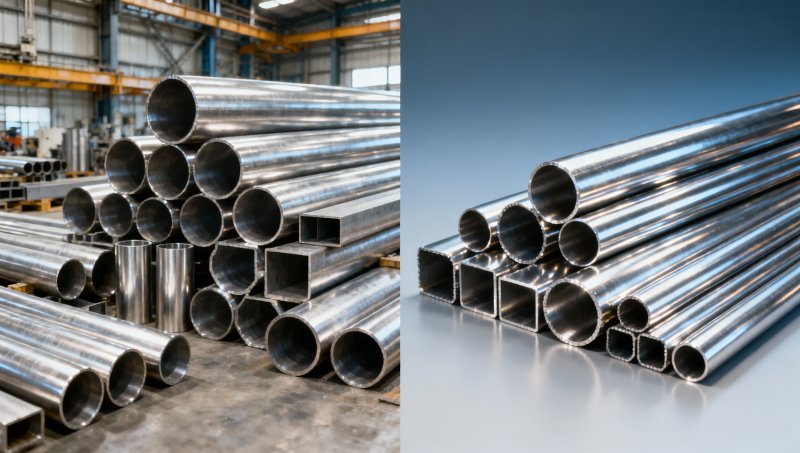
The term “sus pipe” is commonly associated with stainless steel pipe and tubing, especially in markets influenced by JIS terminology. In practical sourcing, buyers usually compare outside diameter, wall thickness, schedule, length tolerance, and end condition. These factors determine whether the pipe is suitable for pressure transport, decorative fabrication, sanitary systems, or structural support.
For round stainless pipe, common outside diameters range from 13.7 mm to 323.9 mm in many industrial projects, while wall thickness often falls between 1.2 mm and 12 mm depending on pressure class and service conditions. In square and rectangular stainless tubing, sizes such as 20×20 mm, 40×40 mm, 50×50 mm, and 100×50 mm are widely used in frames, supports, railings, and light structural assemblies.
A frequent mistake is selecting size based only on visible diameter. In fact, the internal flow area changes significantly when wall thickness increases by 1–2 mm. For fluid systems, that directly influences pressure drop and pump load. For structural use, the thicker wall generally improves stiffness and local impact resistance, but also raises material weight and transport cost.
Standards also matter. ASTM and EN pipe dimensions may use nominal pipe size and schedule references, while JIS and GB specifications can be presented differently. A procurement team should verify not only the listed diameter, but also the governing standard, material grade, and inspection requirement before issuing a purchase order.
Key dimensional elements buyers should verify
- Outside diameter and wall thickness, because these affect strength, fittings, and fabrication.
- Length supply mode, such as 5.8 m, 6 m, or custom cut-to-length for easier site installation.
- Tolerance range, often critical when pipes connect to flanges, supports, or automated welding lines.
- Surface finish, including pickled, polished, or mill finish, especially for visible or corrosion-sensitive applications.
The table below summarizes common size formats and where they are usually preferred in steel-related projects.
The key takeaway is that size selection should combine dimension, service condition, and standard compatibility. The most economical option on paper may not be the lowest-cost option after fitting losses, fabrication time, and inspection requirements are considered.
Common Uses of Sus Pipe in Construction and Industrial Projects
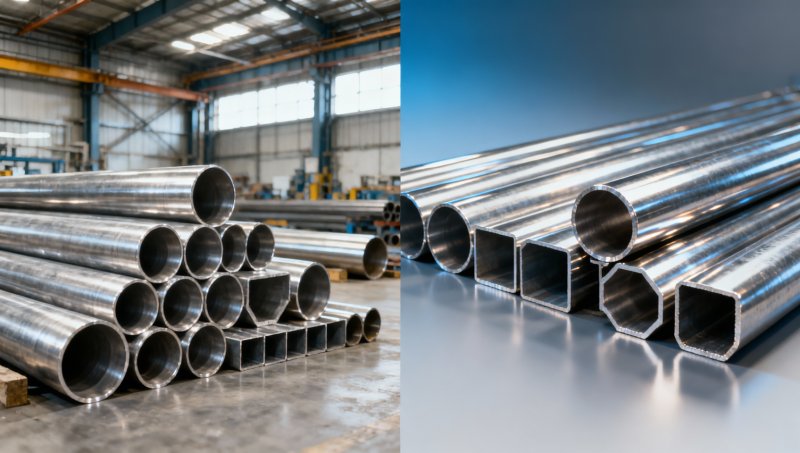
Sus pipe is used across building services, machinery, food processing, energy support systems, chemical plants, and public infrastructure. In construction, stainless steel pipe and tubing are often selected for exposed environments where corrosion resistance, clean appearance, and low maintenance justify a higher initial material price. In industry, the same products are valued for stable performance under moisture, heat, and mildly corrosive media.
Round pipe is usually preferred for fluid transport because it handles internal pressure more efficiently. Square or rectangular tubing is often chosen for support frames and structural accessories because flat surfaces simplify connection and alignment. In many projects, both formats are used together, especially in modular plant construction and fabricated steel assemblies.
Typical applications include handrail systems, HVAC condensate lines, drainage, equipment skids, protective barriers, marine-adjacent structures, and light to medium-duty support frames. Depending on the environment, grades and wall thicknesses are adjusted to balance corrosion resistance with fabrication cost. Coastal zones, for example, may require stricter material review than dry inland installations.
Project teams should also consider operating conditions over at least 3 dimensions: load, pressure, and exposure. A pipe carrying low-pressure water at ambient temperature does not need the same specification as a pipe in a hot chemical line or a structural member exposed to repeated vibration. That difference is why application-based sizing remains more reliable than generic rule-of-thumb selection.
Where common sizes are typically used
The following comparison helps clarify which size ranges are commonly matched to specific jobs. These are typical industry references rather than fixed design rules, so engineering review is still necessary for critical applications.
For distributors and procurement managers, grouping pipe sizes by application can also improve stock planning. Keeping 4 to 6 commonly requested dimensions in regular inventory often shortens response time and helps control urgent freight costs on repeat orders.
Complementary steel products in integrated projects
Many industrial and construction packages do not involve stainless pipe alone. Reinforcement steel, beams, channels, and formed profiles are often procured together to simplify vendor management. In reinforced concrete zones, for example, project teams may pair piping supports with HPB300 Rebar for load-bearing, structural, and stirrup scenarios.
This rebar category typically includes models such as HPB300, HRB300, HRB400, HRB500, A615 GR40, GR60, and BS4449 GR460. A standard yield strength of no less than 300 MPa makes it suitable for routine reinforcing applications, while size options from 6 mm to 50 mm support different project scales. Coiled supply is common for 6 mm to 12 mm, and straight bars are widely used from 10 mm to 22 mm.
For buyers evaluating bundled steel procurement, certifications such as API, ISO9001-2008, SGS, and BV can support internal approval workflows when combined with dimensional checks and mill documentation. Matching piping materials with reinforcement and structural steel from one experienced exporter may reduce communication gaps, shorten lead coordination by 1 to 2 weeks, and improve shipment consolidation.
How to Select the Right Sus Pipe Size for Performance and Cost Control
A practical sizing decision starts with the service requirement. Buyers should define whether the pipe is carrying liquid, gas, or acting as a structural component. That first step narrows the choice between welded stainless tubing, seamless steel tube, and square or rectangular hollow sections. In many cases, an oversized pipe raises cost unnecessarily, while an undersized option increases operating risk and maintenance frequency.
For flow systems, calculate the target throughput and acceptable pressure loss over the actual route length. A line that runs 30 meters with multiple elbows may need a larger internal diameter than a straight 8-meter installation carrying the same volume. For supports and fabricated frames, deflection, connection spacing, and local impact loads should be checked in addition to simple section size.
Wall thickness should be selected with fabrication in mind. Thin-wall tubing may lower material cost, but it can distort more easily during welding or cutting. Thick-wall pipe improves robustness, but may require more labor, higher welding heat input, and stronger lifting arrangements. On medium-sized projects, these processing factors can shift the real installed cost by 5% to 12%.
Procurement teams should also compare standard lengths, MOQ, packing, and shipping method. For export supply from China to North America, Europe, the Middle East, or Southeast Asia, a realistic lead time for standard steel items may fall in the 15 to 35 day range depending on size mix, finish, and inspection scope. Customized sections or OEM fabrication often require additional drawing confirmation and production planning.
A 5-step selection workflow
- Define service type: pressure transport, drainage, sanitation, structural support, or decorative use.
- Confirm material and standard: ASTM, EN, JIS, or GB, plus required grade and finish.
- Check dimensions: diameter or section size, wall thickness, length, and tolerance.
- Review fabrication factors: bending, welding, end preparation, and fitting availability.
- Verify supply terms: quantity, lead time, inspection, packing, and export documentation.
Common decision mistakes
- Choosing by outer appearance without confirming wall thickness or internal bore.
- Ignoring standard mismatch between the pipe and connected fittings or flanges.
- Using polished decorative tubing in a duty that requires verified pressure performance.
- Focusing only on unit price instead of freight efficiency, yield loss, and rework risk.
A capable steel supplier can support this process by translating engineering requirements into manufacturable dimensions, suggesting practical substitutions when stock sizes are available, and maintaining quality control across production, inspection, and shipment. That support is valuable for decision-makers who must balance technical reliability with budget discipline.
Quality Control, Standards, and Inspection Points for Sus Pipe Orders
Quality control is a major factor in stainless steel pipe procurement because dimensional deviation, surface defects, or incomplete documentation can delay installation and trigger rejection at the site. For project managers and quality teams, inspection should begin before production, not after cargo arrival. The specification sheet should clearly define size, standard, grade, finish, quantity, and any testing requirements.
Dimensional inspection usually covers outside diameter, wall thickness, straightness, length, and end condition. In practical terms, even a small tolerance drift can create connection problems when multiple pipe sections must align with valves, supports, or prefabricated modules. Surface review is equally important for stainless materials used in visible, hygienic, or corrosion-sensitive environments.
Document control matters for cross-border steel supply. Buyers commonly request mill test certificates, packing lists, heat identification, and third-party inspection when the order is tied to public infrastructure, industrial plants, or strict internal approval systems. The inspection scope should match the project risk level rather than being applied as a generic checklist.
For exporters serving multiple regions, compliance with major international standards such as ASTM, EN, JIS, and GB supports smoother technical communication. It also allows buyers to compare alternatives on a more consistent basis, especially when sourcing stainless pipe together with structural steel products like angle steel, channel steel, beams, and cold formed profiles.
Recommended inspection checklist
The table below outlines practical checkpoints that procurement, QC, and site teams can use before shipment release or incoming acceptance.
When these checks are performed early, buyers can reduce dispute risk and improve receiving efficiency. In many projects, a structured inspection process saves more time than reacting to specification issues after the material reaches the fabrication shop or installation site.
Risk control points before order confirmation
- Confirm whether the quoted size is nominal, actual outside diameter, or section size.
- Request tolerance information if the pipe will connect to pre-machined parts.
- Clarify whether testing is visual, dimensional, hydrostatic, or third-party witnessed.
- Align packing with route conditions, especially for sea freight lasting 20 to 45 days.
Procurement Tips, Delivery Planning, and Supplier Selection
For commercial evaluators and decision-makers, the best sus pipe supplier is not simply the one offering the lowest ex-works price. A stronger partner provides stable production capacity, specification consistency, and realistic lead times. This is especially important when a project requires mixed steel products, phased deliveries, or custom fabrication support.
A professional structural steel manufacturer and exporter from China can add value by supplying not only stainless pipe, but also angle steel, channel steel, steel beams, cold formed steel profiles, and customized components. That broader capability simplifies communication for EPC contractors, distributors, and industrial buyers who prefer consolidated sourcing rather than managing 3 to 5 separate vendors for one project package.
When comparing suppliers, ask practical questions: Can they produce to ASTM, EN, JIS, and GB standards? Do they maintain strict quality control? Can they support OEM drawings and customized lengths? Are lead times dependable during peak demand periods? The answers often reveal more about project risk than the unit price alone.
For global buyers across North America, Europe, the Middle East, and Southeast Asia, dependable delivery can be as important as metallurgical quality. Delays of even 7 to 10 days may affect labor scheduling, crane booking, module assembly, or handover milestones. A supplier with stable export handling and clear communication helps partners reduce sourcing risk and control total project cost.
What to include in a pipe inquiry
- Pipe type and application, such as welded round pipe, square tubing, or seamless tube.
- Dimensions and quantity, including OD, wall thickness, section size, length, and order volume.
- Required standard and grade, plus finish, testing, and document expectations.
- Delivery terms, destination port, packing preference, and target schedule.
- Any related structural steel or reinforcement items needed in the same shipment.
FAQ for buyers and project teams
How do I choose between welded stainless tubing and seamless steel tube? Welded tubing is often sufficient for architectural, light industrial, and many utility applications, while seamless tube is generally preferred for higher-pressure or more critical process service. The final choice should consider pressure, code requirement, inspection scope, and budget.
What lead time is common for standard pipe orders? For common sizes and standard finishes, many export orders can be arranged within 15 to 35 days, though this depends on quantity, destination, and inspection requirements. Custom sections or mixed-product orders may take longer.
Which indicators matter most in procurement approval? Most organizations focus on 4 core areas: dimensional compliance, material documentation, unit and landed cost, and supply reliability. For public or industrial projects, traceability and inspection records may carry additional weight.
Can one supplier support both structural steel and pipe needs? Yes, that is often practical for projects requiring beams, channels, angle steel, formed profiles, custom parts, and stainless pipe together. It can streamline sourcing, reduce administrative workload, and improve delivery coordination.
Selecting the correct sus pipe size means balancing pressure performance, structural demand, corrosion resistance, fabrication efficiency, and procurement practicality. Buyers who review dimensions, standards, application conditions, and inspection requirements early are far more likely to avoid costly mismatches and delivery disruptions.
For companies seeking a dependable steel supply partner, Hongteng Fengda provides structural steel products, customized solutions, and export support for global construction, industrial, and manufacturing projects. If you need help comparing sus pipe sizes, coordinating related steel items, or reviewing project specifications, contact us now to get a tailored solution, detailed product information, and practical sourcing support.
Please give us a message


Please enter what you want to find