When comparing structural steel grades across ASTM, EN, JIS, and GB standards, equivalent names can create costly misunderstandings. Similar labels do not always mean identical chemical composition, mechanical properties, or project performance. For buyers and engineers researching global sourcing options, understanding these differences is essential to avoid specification risks, control costs, and choose structural steel that truly matches application requirements.
Why equivalent structural steel grades often cause specification mistakes
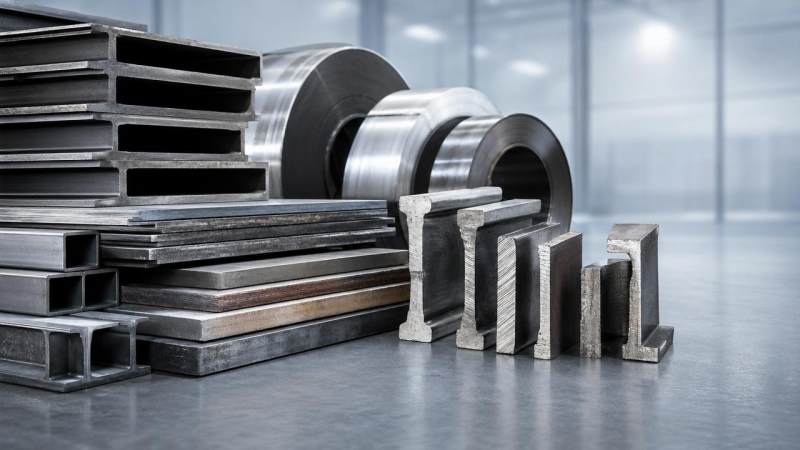
Many buyers begin a sourcing project by searching for equivalent structural steel grades across ASTM, EN, JIS, and GB systems. That approach is understandable, but it becomes risky when the comparison stops at a name chart. In steel procurement, an “equivalent” grade usually means roughly comparable use, not full identity in chemistry, strength range, weldability, impact toughness, or delivery condition.
This matters most in B2B projects with tight compliance requirements. A beam specified for building structures, a cold formed profile used in industrial racks, and a fabricated component for export may all use structural steel grades, yet they can require different yield strength classes, different thickness tolerances, and different testing expectations. A mismatch discovered after production can delay schedules by 2–6 weeks and create extra inspection or replacement cost.
Another source of confusion is that standards are written with different design philosophies. ASTM often groups steel by minimum strength and intended product form. EN places strong emphasis on grade designation linked to yield strength and impact testing classes. JIS and GB include their own naming logic, dimensional conventions, and acceptable variation ranges. As a result, one grade may look familiar on paper but behave differently in actual fabrication or service.
For information researchers, the practical question is not “Which grades have similar names?” but “Which grade combination is acceptable for my load case, fabrication route, certification path, and delivery schedule?” That shift in thinking helps reduce sourcing risk before RFQ, before mill booking, and before third-party inspection.
Three reasons equivalent names can mislead
- The same apparent grade family may have different chemical limits for carbon, manganese, silicon, or microalloying elements, which affects welding and forming behavior.
- Mechanical properties can be measured with different thickness rules. Yield strength may decrease as section thickness increases, so a “match” at 6 mm may not be a safe match at 40 mm.
- Supplementary requirements such as Charpy impact testing, surface condition, galvanizing suitability, or normalized rolling are not automatically included when only a base grade name is referenced.
How to compare structural steel grades correctly across ASTM, EN, JIS, and GB
A reliable comparison starts with application first, then standard, then product form. Buyers often compare plate to section, or hot rolled material to cold formed material, as if they were directly interchangeable. In reality, structural steel grades should be checked in at least 5 dimensions: product type, yield strength, tensile strength, chemistry, and required testing. For many export projects, a sixth point matters too: documentation format.
The table below shows why name-based comparison is only a starting point. It does not claim one-to-one equivalence. Instead, it highlights what should be reviewed before approving substitution in a purchase order, fabrication drawing, or engineering deviation request.
The key lesson is simple: equivalent structural steel grades are a screening tool, not a final approval tool. Engineering teams should treat comparison charts as a first filter, then review mill standard clauses, section dimensions, and project code requirements before substitution. This reduces the chance of receiving steel that passes paperwork but creates fabrication problems later.
A practical 4-step comparison method
- Define the product form clearly: angle, channel, H-beam, plate, coil, or cold formed profile.
- Match the required property range by thickness, not only by nominal grade name.
- Confirm fabrication needs such as punching, welding, bending radius, or galvanizing.
- Request mill test certificates and, if needed, third-party inspection before shipment.
For global buyers working across North America, Europe, the Middle East, and Southeast Asia, this process is especially important because local design codes and approval bodies may interpret substitution differently. A grade that is acceptable in one market may need extra documentation in another.
What procurement teams should verify before approving alternative structural steel grades
If you are evaluating multiple quotations, the biggest mistake is comparing price before technical alignment. Lower cost steel may still become more expensive once requalification, rework, coating adjustments, or delayed site installation are included. A disciplined review should cover at least 6 checkpoints before the purchase order is released.
For structural steel grades used in frames, supports, purlins, brackets, machinery bases, or fabricated assemblies, the procurement review should connect engineering drawings to manufacturing reality. This is where experienced suppliers add value. A manufacturer that works with ASTM, EN, JIS, and GB standards can often identify risk areas early, especially when buyers are requesting OEM dimensions or mixed-standard projects.
Six key checks before substitution approval
- Check whether the quoted steel is hot rolled, cold formed, coated, or bare, because processing route affects final performance.
- Confirm thickness range and dimensional tolerance. A section supplied at 1 mm, 3 mm, or 12 mm can have very different forming and load behavior.
- Verify coating or surface treatment when corrosion protection is part of the design intent.
- Review whether the steel will be welded, bent, punched, or roll formed, and whether the grade supports that process without cracking.
- Confirm standard certificates required by the project, such as ASTM, EN, or JIS documentation and related test records.
- Align delivery schedule, lot size, and inspection timing. Typical export planning may require 2–4 weeks for production plus shipping lead time.
In some cases, the right answer is not a direct grade substitution but a different product solution. For example, when corrosion resistance and heat reflectivity matter in light structural or enclosure-related applications, a coated steel product may provide better lifecycle value than a plain structural grade with secondary finishing.
A good example is DX51D Galvalume Steel Coil , which is used in structural use, roofing, commercial applications, household appliances, industry, and food storage. It is based on Aluzinc steel and is available in models such as DX51D, DX52D, DX53D, SGLCC, ASTM A792M CS-A, CS-B, CS-C, and EN grades including S220GD through S550GD, depending on specification needs.
Why coated steel may be relevant in certain structural discussions
This type of coil is not a universal replacement for all structural steel grades, but it is highly relevant when the project combines load-bearing requirements with corrosion exposure, appearance, and forming needs. Typical thickness ranges can run from 0.23 mm to 3.0 mm, with widths from 900 mm to 1250 mm, coating classes such as AZ40–AZ150, and surface treatments including chromate treatment or anti-fingerprint finishes.
For buyers comparing lifecycle cost, key performance features include corrosion resistance, high heat resistance up to 315°C, good abrasion resistance, and strong formability for profiling, deep drawing, and bending. In practical sourcing terms, that means one material route may reduce the need for additional painting or improve durability in roofing and light structural envelope applications, provided the design engineer confirms suitability.
Comparison table: what matters more than grade names in real steel sourcing
The next table helps information researchers compare decision criteria that affect cost, compliance, and downstream fabrication. This is especially useful when two suppliers offer different structural steel grades that appear close in strength but differ in processing route or certification scope.
This comparison shows why structural steel grades should be selected as part of a system decision, not as an isolated name match. Processing route, surface condition, and compliance paperwork often determine whether the delivered steel is practical for the intended project. In many RFQs, those hidden variables explain the largest cost differences.
Common sourcing scenarios where mistakes happen
Scenario 1 is cross-border substitution during budget control. A buyer receives a lower quotation based on a “similar” standard grade, but the supplied steel lacks the expected impact test class or equivalent coating basis. The initial savings disappear when reapproval is required. Scenario 2 is fabrication mismatch. The grade meets strength targets but cracks during forming because bendability was not checked.
Scenario 3 is documentation mismatch. This often appears in government, infrastructure, or industrial projects where traceability and standard references must be exact. If the purchase order, packing list, and mill certificates use different grade notations, customs clearance or site acceptance can slow down by several days or even 1–2 weeks.
Scenario 4 is over-specification. Some buyers choose a higher nominal grade to be safe, but that can increase cost and reduce forming ease without improving real project performance. Good sourcing means meeting the requirement accurately, not buying the highest strength number available.
Standards, compliance, and supplier review: how to reduce risk before ordering
For structural steel grades used in international projects, compliance is not only a material issue. It is also a supplier capability issue. Buyers should review whether the manufacturer can produce to the specified standard, maintain stable dimensional control, issue clear test documentation, and support custom processing when needed. This is especially important for mixed orders covering angle steel, channel steel, beams, cold formed steel profiles, and customized structural components.
Hongteng Fengda supports this kind of procurement by combining manufacturing and export experience with broad standard familiarity. For buyers sourcing from China, that means the conversation can move beyond simple grade naming to practical details such as tolerances, OEM fabrication, packing methods, and expected delivery windows. In many projects, avoiding one wrong substitution is worth more than a small unit-price discount.
A supplier review checklist for information researchers
- Can the supplier manufacture or source to ASTM, EN, JIS, and GB requirements with consistent documentation?
- Can they support standard specifications and OEM solutions for sections, profiles, and custom components?
- Do they discuss application needs such as welding, coating, or forming before confirming grade substitution?
- Can they align production capacity with the project timeline, whether the order is a small trial lot or a repeated shipment schedule?
- Are inspection, marking, packing, and export communication handled clearly enough to reduce sourcing friction?
FAQ for buyers researching structural steel grades
How should I choose between equivalent structural steel grades from different standards?
Start with the application, not the name. Confirm product form, actual thickness range, minimum yield and tensile requirements, fabrication method, corrosion environment, and documentation needs. A 3-step screen works well: shortlist by standard, verify by properties, then approve by certificates and processing suitability.
Are equivalent grades safe for direct substitution in construction projects?
Not automatically. Direct substitution may be acceptable in some non-critical applications, but bridges, seismic structures, low-temperature environments, and projects with strict code references usually need detailed engineering review. Even for routine structures, check impact class, thickness effect, and welding performance before approval.
What documents should I request from a steel supplier?
Ask for the standard designation, mill test certificate, chemical composition, mechanical properties, ordered dimensions, coating details if applicable, and any third-party inspection arrangement. For export jobs, also confirm packing, marking, and shipment lead time. Many buyers use a 5-item checklist before deposit payment to avoid avoidable disputes.
When does coated steel become a better option than bare structural steel?
It becomes worth evaluating when the project combines structural function with corrosion exposure, appearance requirements, heat resistance, or roll forming needs. In roofing, light structural envelope systems, commercial panels, and equipment housings, a pre-coated route can simplify downstream processing and maintenance planning.
Why work with a structural steel manufacturer that understands cross-standard sourcing
For information researchers, the real value of a supplier is not only supply capacity. It is the ability to translate project intent into the right steel solution. Hongteng Fengda manufactures and exports structural steel products from China for global construction, industrial, and manufacturing projects, with experience in angle steel, channel steel, steel beams, cold formed profiles, and customized components.
This matters when your project needs more than a simple price list. If you are comparing structural steel grades across multiple standards, you may also need help with product selection, OEM dimensions, coating choices, lead time planning, or certificate matching. A supplier familiar with ASTM, EN, JIS, and GB workflows can help reduce sourcing ambiguity before it becomes a production or site problem.
If you are currently reviewing alternative structural steel grades, you can consult on 6 practical topics: parameter confirmation, grade comparison, application suitability, coating or corrosion strategy, delivery schedule, and documentation requirements. You can also ask about sample support, customized fabrication, or quotation comparison for mixed-standard orders.
The best time to resolve grade confusion is before finalizing the order. Share your drawings, target standard, thickness range, end use, and required certificates, and the technical team can help identify whether the proposed steel is a true fit, a workable alternative, or a risk that should be avoided.
Please give us a message


Please enter what you want to find