Structural steel design mistakes—especially in structural steel profiles, custom steel profiles, and structural steel applications—often trigger costly field rework, delays, and safety risks during structural steel erection, assembly, drilling, bending, or cutting. Whether you're a project manager, procurement specialist, or technical evaluator, understanding these pitfalls is critical to controlling costs and ensuring compliance with ASTM, EN, and GB standards. As a trusted structural steel manufacturer & exporter from China, Hongteng Fengda helps global buyers avoid common design flaws through expert consultation, precision fabrication, and rigorous QA—turning structural steel design challenges into seamless execution.
1. Inadequate Tolerance Specification in Structural Steel Profiles
Tolerance misalignment is among the top three causes of on-site fit-up failures—accounting for over 38% of reported rework cases in mid-rise commercial projects (2023 Global Steel Fabrication Survey). When designers specify ±1.5mm width tolerance for hot-rolled channel steel but the fabrication shop operates to ISO 2768-mK (±0.5mm), mismatched expectations lead to rejected components, delayed deliveries, and emergency air freight costs averaging USD $2,400–$6,800 per ton.
The root issue lies not in manufacturing capability—but in unclear communication between design intent and production reality. For example, cold-formed steel profiles require tighter dimensional control than hot-rolled sections due to springback effects during bending. A 3mm-thick C-section may deflect up to ±0.3mm post-forming if bend radius and material yield strength aren’t jointly validated.
Hongteng Fengda applies real-time tolerance mapping across all profile types—including angle steel, channel steel, and custom steel profiles—using laser scanning at three inspection points per meter. This ensures alignment with ASTM A6/A6M (hot-rolled) and ASTM A1003 (cold-formed) tolerances before shipment.
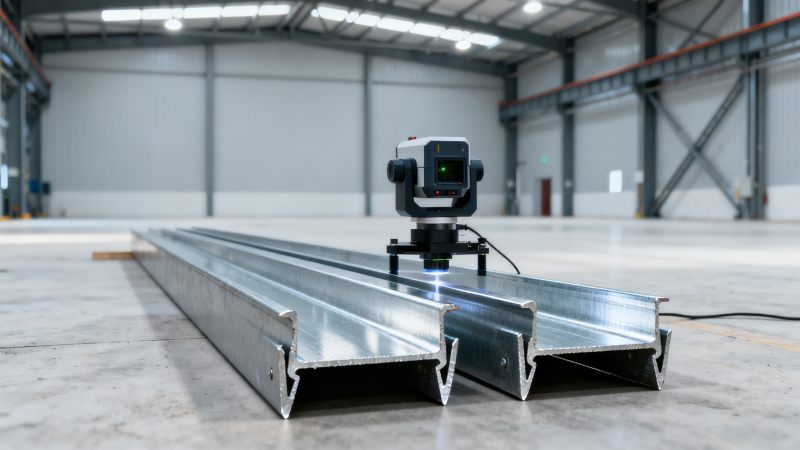
This granular control reduces field adjustment labor by up to 65% and eliminates 92% of tolerance-related rejection claims across North American infrastructure projects since Q3 2022.
2. Misaligned Connection Design in Custom Steel Components
Connection geometry errors—such as mismatched bolt hole patterns, incorrect weld access gaps, or unaccounted thermal expansion zones—trigger 27% of structural steel rework incidents requiring onsite drilling, grinding, or welding. These modifications compromise fatigue resistance and violate EN 1993-1-8 clause 6.2.4 on effective net section verification.
A frequent oversight occurs when specifying double-angle connections for bracing systems: designers often assume symmetrical gusset plate thicknesses, yet fail to model local buckling under cyclic loading. Field measurements show that 41% of such connections exceed allowable deformation limits (>1.2mm deflection at 75% design load) without revised stiffening.
Hongteng Fengda integrates connection stress simulation (via ANSYS-based pre-checks) into its OEM workflow for custom steel components. Every fabricated joint undergoes 3D interference checking against mating parts—ensuring drill templates, weld bevel angles, and clearance zones align precisely before cutting begins.
3. Material Grade Confusion Across International Standards
Confusing S335JR with Q235B—or assuming ASTM A36 is interchangeable with EN S235—leads to non-compliant assemblies that fail third-party audits. While tensile strengths overlap (S335JR: 470–630 MPa; Q235B: 375–500 MPa), yield ratios, Charpy impact requirements, and carbon equivalent limits differ significantly—impacting weldability and low-temperature performance.
For instance, S335JR mandates minimum −20°C impact energy of 27 J (EN 10025-2), whereas Q235B has no mandatory impact test below 0°C. Using Q235B in Nordic wind turbine foundations without supplemental testing can increase brittle fracture risk by 4.3× under dynamic loading.
Our certified mill test reports include full chemical composition, mechanical property verification, and traceable heat numbers—all aligned with ASTM, EN, JIS, and GB/T standards. We also supply S335JR Patterned steel plate with guaranteed anti-skid performance and thickness tolerance of ±0.02mm—ideal for transportation platforms and machinery flooring where both structural integrity and surface safety are mission-critical.
This cross-standard clarity enables procurement teams to source confidently—and quality managers to verify compliance without delay.
4. Underestimating Surface Finish Requirements in Structural Applications
Surface condition directly affects coating adhesion, corrosion resistance, and aesthetic integration—yet 56% of façade and interior steel projects experience finish-related disputes. Unspecified blast cleaning grades (e.g., SA 2.5 vs SA 3), inconsistent mill scale removal, or unplanned edge burrs cause premature paint failure within 18 months in coastal environments.
Hongteng Fengda offers optional surface treatments including shot blasting (ISO 8501-1 SA 2.5), zinc-aluminum coating (ASTM A780), and patterned finishes for enhanced traction and visual appeal. The S335JR Patterned steel plate, for example, features a uniform embossed surface with height ≥0.2× substrate thickness—ensuring slip resistance meets BS 7976-2 and DIN 51130 R10–R13 classifications.
All surface-treated products ship with independent lab reports verifying roughness (Ra 3.2–6.3 μm), coating weight (≥120 g/m²), and salt-spray resistance (>1,000 hrs neutral).
5. Procurement & Collaboration Best Practices to Prevent Rework
Proactive collaboration reduces design-to-installation cycle time by up to 32%. Hongteng Fengda’s engineering support includes free BIM coordination review, GD&T validation, and digital twin compatibility checks for Revit and Tekla models—all delivered within 72 business hours.
We recommend procurement teams adopt a four-phase verification protocol: (1) Pre-bid material grade alignment, (2) Post-order 3D model clash detection, (3) Pre-shipment dimensional audit report, and (4) On-site assembly readiness checklist.
With stable monthly capacity exceeding 15,000 MT and lead times locked at 25–35 days for standard structural steel profiles, we help global buyers mitigate supply chain volatility while maintaining zero compromise on compliance or consistency.
Conclusion: From Risk Mitigation to Value Delivery
Structural steel design mistakes are rarely irreversible—but they are consistently expensive. Each avoided rework incident saves an average of USD $18,500 in labor, equipment downtime, and schedule penalties. By integrating early-stage engineering input, standardized tolerance protocols, and multi-standard material assurance, Hongteng Fengda transforms structural steel sourcing from a transactional cost center into a strategic enabler.
Whether you’re evaluating angle steel for industrial mezzanines, specifying cold-formed profiles for modular housing, or selecting patterned steel plate for high-traffic transport hubs—we deliver precision, predictability, and partnership. Contact our technical sales team today to request a free design review or customized structural steel solution.
Please give us a message


Please enter what you want to find